I personally have grown accustomed to the different gameplay styles I find on different Nintendo consoles. For example, 3DS and Wii U I love having a map and inventory system on the bottom screen so that I do not have to constantly pause the game or look at a tiny mini-map on the TV. I was also sold on Wii U once I saw all the fun things you could do on the gamepad in games such as Game & Wario. You cannot do a lot of these things on systems like the PS4; at least you could not do them as well all the while paying a lot more money.
The problem with Nintendo is that they cannot communicate their system properly. You do not launch your brand new HD console by hiding the system and not showing the most unique aspects of its controller in almost every ad while showing New Super Mario Bros U running on the Gamepad (which frankly in every ad looks like a Wii game and does not do anything else but make the system look like a tethered tablet). The reveal trailer they showed at E3 2011, while not perfect, told me more about the system and why I should have it than any of their other recent ads. This is where they need focus rather than thinking about going third-party. There are other things they have do to stay relevant in the hardware business, but I will get to that in a moment.
Furthermore, I looked at some of these comments that stated Nintendo is unable to carry its own games and I believe that sentiment is wrong. The GC and N64 might have sold less than the competition, but they were both profitable for Nintendo, not only because the hardware was profitable but also because people who purchased both of these systems did so in order to primarily play Nintendo games. In my opinion, of course Nintendo should always aim higher, but having people purchase your system only for your games is very powerful and very few companies have that. Even if Wii U does only sell between 20-30 million units in its life time, Nintendo can still be successful because those people will most likely invest in Nintendo games.
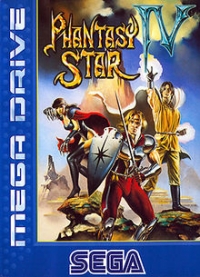
If Nintendo does go third-party there will be some big risks. Firstly, much like what happened with Sega, Nintendo's fan base will become fragmented because they will move to different platforms; some will go to Xbox, others will go to Playstation, while others will decide to stick with their PCs and mobile devices. This means that Nintendo will need the resources to develop, port, and test their games on many different platforms in order to reach the audience they got on their own platform (which is expensive). Secondly, they would have to compete on different platforms with the likes of EA, Ubisoft, Activison Blizzard, and Square Enix who started as software companies and have evolved over the years in order to be able to handle the expense of developing games for multiple platforms (and even they are having financial issues right now); Nintendo is facing delays and constraints developing for one HD console at the moment, imagine having to develop and port for PS4, Xbox One, and PC.
One other key point I would like to make against Nintendo going third-party at this time is their track record and the overall trends in the industry and the moment regarding the marriage of hardware and software. Nintendo might not always have had the best selling hardware but in most cases their hardware business was still profitable for the company (again looking at N64 and GC). Moreover, Nintendo's hardware, with the success of Wii and DS, has provided the company with long-term financial stability and they have been more successful than many large-scale software companies in the past 7 years; this success could not have been managed if they decided to call it quits after the Gamecube. In the technology market as a whole, look at Apple, they had far more troubles than Nintendo is having now back in the 1990s and they were advised by many analysts and so called market experts to go software only (like licensing the Mac OS to hardware vendors like Microsoft was doing); they decided to not do that instead opting to sell hardware and software together (even if they moved smaller units with less support from other companies) in order to increase value in their brand (not putting their shiny software on dull grey boxes and Steve Jobs quipped) and avoiding fragmentation issues and competition from larger software companies; having a hardware department and software department and a closed-off non-conforming platform made the company turn-over modest profits compared to others in the industry but it gave them an advantage in terms of innovation which helped them in bringing products such as iPod and later other mobile devices which has now made them the most valuable company in the US (not sure about the rest world but they are up there); Apple's biggest profits come from their hardware (much like how Nintendo's biggest profits during the Wii and DS era came from the actual hardware itself). Moreover, companies like Microsoft and even smaller ones like Valve are now becoming more devices oriented rather only focusing on software, because they clearly see the value in this type of model. Whereas, companies like Activision Blizzard, EA, Ubisoft, and Square Enix are making deeper investments in order to stay competitive in the expensive software-only sector with smaller returns and also the lack of control over hardware it is becoming more difficult for them to create very unique experiences. This coupled with the fact that former giants like Atari and Sega have not done well in software (which I blame on audience fragmentation, the lack of resources to properly transform the company into a competitive multi-platform company, and the brain-drain that occurred after the many restructurings that took place within each respective company after the decision to go software only) makes me believe that Nintendo would be better off staying as a cautious hardware and software company.
With all of this being said, Nintendo will need to create more competitive hardware in order to reach larger audiences. Just because they are in competition with mobile devices does not mean they should give up on 3DS (which brings many unique propositions to the table) and their hardware department; one has to realize that Nintendo has the hardware department that is capable of making in-expensive yet quality mobile devices and they should used that to their advantage to compete in the mobile space and create a system that appeals to gamers and those in the mobile space looking for inexpensive solutions. Similarly, Nintendo is capable of making quality unique home console at lower prices; yes these systems may not be as technically powerful as their competition but their platform as whole offers a lot to consumers as well as their internal developers. On a last note, Nintendo has been in the home and portable console market since the 1980s; they were one of the earliest companies to come into the portable and they revived the home console space; they were responsible for the massive growth in the home console space between 2005-2010 and they again helped the industry grow with the 3DS from late 2011-onwards; their hardware department has brought countless standards including the standard controller layout with NES, the analog stick with N64, touch screen implementation in gameplay with DS, motion controls with Wii, and now they are trying 3D with 3DS and asymetric-gameplay and off-screen play with Wii U (the Wii U's innovations are already becoming standards on other systems); they also have the ability to sell profitable hardware, even if not as much as their competition, with their games which made their overall platforms profitable to them. All of this makes me believe their hardware department is very important not only to themselves but the industry as a whole and that it is sustainable for the company and based on what has happened in the industry the combination of hardware and software would actually be beneficial for them in the long-term.
I would like to clarify that in the short-term I am opposed to Nintendo going software only because as I have explained above there is a lot of potential in a company that focuses on a software and hardware combo and also because of the mark Nintendo's hardware and software (and sometimes both when working in sync with each other, like with Wii Sports) have left on the industry. However, if in the next 6-8 years Nintendo's hardware department fails to capture audiences like it did during the GC and N64 era and if their future hardware shows they are incapable of responding to the current mobile market and home entertainment market or evolving their now unified (handheld + home console), then I would say they should change their strategy. However, at this time, if a company like Apple or Sony approached Nintendo with an agreement that gives them extensive power over the development of hardware and guarantees Nintendo's autonomy in exchange for software-exclusivety I would say Nintendo should take that opportunity; the reason why I am not making an argument on this example is that such an extensive agreement has rarely occurred in the industry.