By using this site, you agree to our Privacy Policy and our Terms of Use. Close

Forums - Politics - BLM, police bias and what information to trust. Analysis by Zac Kriegman

RolStoppable said:

These kind of statistics feel similar to how the National Football League has about 70% of its player population being black while the QB position, the most important position in the sport, is dominated by white guys. On the surface it looks like the problem lies with black people, but in reality this is probably merely the result of how the whole sport is set up, beginning at the childhood stage. The system favors white people, so white boys are more likely to be QBs and more likely to get fostered at an early stage, consequently resulting in an off-balance at the adult level.

It may also be worth doing the maths on the first quoted line in the OP: 24 of 457 whites shot and killed were unarmed, that's a bit above 5%. 18 of 243 blacks were unarmed, that's a bit above 7%. That's such an obvious thing to miss that one has to be suspicious of the author's intentions. Could be an oversight, could be cherry-picked statistical data to support a desired conclusion.

For which reason did Zac Kriegman lose his gig?

I do not know about football, but I think I get the analogy: you are talking about a system that favours white people. Especially in light of my op (which is just one guys analysis), I would really appreciate if you could find something that would support this view. The thread could only benefit from it.

To your calculations:
24 of 457 whites killed were unarmed - 5 %. 18 of 243 blacks killed were unarmed - 7 %. That is a 2 % difference. I would like to mention three things about this.

1) The implicit assumption here is that the amount of unarmed people killed will directly correlate with the total amount of people killed. But it could very well be the case, that when the number of blacks killed would reach the highs of whites killed, it would still stay at 18 unarmed blacks killed. We just do not know that. What we do know is that more whites are getting killed than blacks. And more unarmed whites are getting killed than unarmed blacks. Even though the amount of violent crime between the groups is similar (albeit a bit higher among blacks). For that reason it could just as easily be argued that the total amount of blacks killed is unexpectedly low. If it was as high as whites killed (457), the 18 now unarmed black people killed would be just shy of 4 %. But again, we just do not know if that number of unarmed black people killed would go up or not. Even though I can see how it is more likely to go up than to stay flat or go down, when the total amount of balcks killed would rise the highs of whites killed.

2) A 2 % difference does not strike me as all that significant and as a weird take-away in the face of much more striking information and much more startling differences and numbers: whites killed (457 - 65%) and blacks killed (243 - 35%) make 700 people (100%) killed by the police annually. But blacks commit 53 % of homocides and 60 % of robberies. There is a 25 % difference in number of people getting killed by the police between blacks and whites, even though blacks account for slightly more violent crime.

3) Every single person killed by the police (especially unarmed, but also otherwise) is a tragedy. But this is about perspecitve. The additional 2.500 (but perhaps even 10.000) people killed (mostly blacks) due to de-policing directly linked to BLM are also tragic. But the 2 % difference you pointed out is about 5 people (243*5,25 % (-percentage of unarmed whites killed) = 12,75 = 13 unarmed black people that could be killed without showing anti black bias. 13, but the number is actually 18 - so 5 people that "unjustly" got killed when compared to white unarmed people killed by the police. (Perhaps 6 if you round it down.) So, even though I do not agree with your method (point 1) let's say 5 unarmed black people killed annually is actually the anti-black-bias of the police and could not otherwise be explained. Should we really be "suspicious of the author's intentions" because of that? In the face of at least 2.500 additional homocides due to BLM?

It is worth mentioning that Roland Fryer (black by the way), on whose numbers part of Kriegmans analysis is based, was very diligent: Roland Fryer (Harvard) was so shocked by his own findings that he fired pretty much his whole team, hired a new one and redid everything. Same results. This really goes a long way to make things more believable for me.

For which reason did Zac Kriegman lose his gig? - That is explained in the very first paragraph of the analysis:
"This is the post that I made to Thomson Reuters’ internal social media site, called the Hub, that precipitated a barrage of hateful and racially charged attacks from BLM supporters within the company. When I brought those attacks to the attention of Thomson Reuters’ Human Resources department, my post was censored, and I was told I was not allowed to use any company communications channels (email, teams, the Hub, etc.) to discuss the attacks I had experienced. Receiving no support from HR, I raised the issue with my colleagues and senior leadership over email, for which I was fired. Below is the Hub post that precipitated this chain of events, in full."



Around the Network
JuliusHackebeil said:

I do not know about football, but I think I get the analogy: you are talking about a system that favours white people. Especially in light of my op (which is just one guys analysis), I would really appreciate if you could find something that would support this view. The thread could only benefit from it.

To your calculations:
24 of 457 whites killed were unarmed - 5 %. 18 of 243 blacks killed were unarmed - 7 %. That is a 2 % difference. I would like to mention three things about this.

1) The implicit assumption here is that the amount of unarmed people killed will directly correlate with the total amount of people killed. But it could very well be the case, that when the number of blacks killed would reach the highs of whites killed, it would still stay at 18 unarmed blacks killed. We just do not know that. What we do know is that more whites are getting killed than blacks. And more unarmed whites are getting killed than unarmed blacks. Even though the amount of violent crime between the groups is similar (albeit a bit higher among blacks). For that reason it could just as easily be argued that the total amount of blacks killed is unexpectedly low. If it was as high as whites killed (457), the 18 now unarmed black people killed would be just shy of 4 %. But again, we just do not know if that number of unarmed black people killed would go up or not. Even though I can see how it is more likely to go up than to stay flat or go down, when the total amount of balcks killed would rise the highs of whites killed.

2) A 2 % difference does not strike me as all that significant and as a weird take-away in the face of much more striking information and much more startling differences and numbers: whites killed (457 - 65%) and blacks killed (243 - 35%) make 700 people (100%) killed by the police annually. But blacks commit 53 % of homocides and 60 % of robberies. There is a 25 % difference in number of people getting killed by the police between blacks and whites, even though blacks account for slightly more violent crime.

3) Every single person killed by the police (especially unarmed, but also otherwise) is a tragedy. But this is about perspecitve. The additional 2.500 (but perhaps even 10.000) people killed (mostly blacks) due to de-policing directly linked to BLM are also tragic. But the 2 % difference you pointed out is about 5 people (243*5,25 % (-percentage of unarmed whites killed) = 12,75 = 13 unarmed black people that could be killed without showing anti black bias. 13, but the number is actually 18 - so 5 people that "unjustly" got killed when compared to white unarmed people killed by the police. (Perhaps 6 if you round it down.) So, even though I do not agree with your method (point 1) let's say 5 unarmed black people killed annually is actually the anti-black-bias of the police and could not otherwise be explained. Should we really be "suspicious of the author's intentions" because of that? In the face of at least 2.500 additional homocides due to BLM?

It is worth mentioning that Roland Fryer (black by the way), on whose numbers part of Kriegmans analysis is based, was very diligent: Roland Fryer (Harvard) was so shocked by his own findings that he fired pretty much his whole team, hired a new one and redid everything. Same results. This really goes a long way to make things more believable for me.

For which reason did Zac Kriegman lose his gig? - That is explained in the very first paragraph of the analysis:
"This is the post that I made to Thomson Reuters’ internal social media site, called the Hub, that precipitated a barrage of hateful and racially charged attacks from BLM supporters within the company. When I brought those attacks to the attention of Thomson Reuters’ Human Resources department, my post was censored, and I was told I was not allowed to use any company communications channels (email, teams, the Hub, etc.) to discuss the attacks I had experienced. Receiving no support from HR, I raised the issue with my colleagues and senior leadership over email, for which I was fired. Below is the Hub post that precipitated this chain of events, in full."

1) There is no reason to discuss or try to model for future data. That just doesn't make sense.

2) But we aren't dealing with a 2% difference. The two statistics are 5.25% for the percentage of police killings of unarmed white individuals and 7.40% for the percentage of police killings of unarmed black individuals (based on your provided statistics). This data indicates that white victims of police shootings are roughly 30% less likely to be unarmed than black victims of police shootings. When comparing two percentages, they must be compared against each other to find percent difference, not simply subtracted from one another (ex. 2% is 100% larger than 1%). 

Also, as previously noted, if you wish to use baseline criminality as the explanation for higher police killings, you need to prove the robustness of that argument. As the rate of police killings varies wildly seemingly independent of crime rates base on both location and time, I do not believe that is a particularly robust hypothesis. 

Take for example, this data published in The Lancet:

Fatal police violence by race and state in the USA, 1980–2019: a network meta-regression - The Lancet

This is just one part of this study, but it looks at how mortality by police killings have changed over time, further breaking the data down by race (data is standardized for age, to reduce the effect of changes/differences in population age). 

Take the data from '00-'04 for the Non-Hispanic Black population for example. The violent crime rate at this time was roughly 490/100,000. Compare this to '10-'14, when the violent crime rate dropped to about 380/100,000. During this time period, we saw a roughly 23% drop in violent crime, but a 24% increase in police killings of black individuals. 

3) The blame for the deaths in response to police violence should be placed on the police, not the people upset that the police are killing so many people. The easiest way to prevent a situation like we saw in 2020 is the police not killing people, not asking people to perhaps be okay with the state sanctioned murder.


I have little interest in getting into a matter I don't have much expertise in, but there seems to be very little data presented, and what little there is seems to be potentially misinterpreted (either by accident or intentionally). At a quick glance, @sundin13 seems to have a good idea about what's wrong here.

If there's something I've learned over the years, it's that information can be misused and misinterpreted very easily. It's very easy to do either by accident, and it's very easy to do so intentionally. Unfortunately a lot of, if not most, things are quite complex - much more so than you might think at first glance - which means it's extremely easy to miss some relevant viewpoint, which might make a crucial difference. Please be careful when analyzing data, especially when you don't have access to all of the relevant data. It's so easy to get lost in what's convenient and seems to make sense, yet still miss the truth even if you're seeking it.

And just to make it clear: I'm not making many claims about BLM, police bias, and whatnot. I'm just pointing out that the data presented here does not seem to allow for making very strong conclusions, if any.


RolStoppable said:

There's the saying that "there are lies, damned lies and statistics" which means that statistics can be the biggest lies. It's why one has to be wary of them and be critical of the way they are being used. Kriegman brought plenty of numbers to the table in his article, so I am satisfied in that regard.

Is this satire?


JuliusHackebeil said:

"in 2020 there were 457 whites shot and killed by police, compared to 243 blacks.  Of those, 24 of the whites killed were unarmed compared to 18 blacks."

 "...though they are 13% of the population.”

So African Americans comprise only 13% of the population, but according to these stats, they account for 34.7% (243/700) of those who were shot and killed by police (vs whites), and of those who were unarmed, they account for 42.8% (18/42).

That means the average African American was 2.67 times as likely to be killed by police (34.7/13), and 3.92 times as likely when unarmed (42.8/13).

That's a glaring omission from Zac/Julius' "analysis".  


Around the Network

The entire premise of BLM--that black lives "matter" less than other lives--is flawed. That it's presented as some kind of absolute truth is just another example that liberal media is just as garbage as conservative media, only more dangerous because it's more wide-reaching and insidious.

The truth is that poverty is the most meaningful factor in determining if someone "matters". The liberal media itself is a good example of this, as they wouldn't run a story on a poor white person being shot by the police if it happened right outside their own studios. The ratio for a poor white person being shot by police jumps dramatically above the average. Why are poor white people included together with well-off suburbanites? Why is this not even mentioned by the media?

It really should be a multi-ethnic economic issue but literals hate to acknowledge that poor white people even exist because it undercuts their rhetoric. Burn in hell, Bernie Sanders.


RolStoppable said:
sundin13 said:

Is this satire?

No, it's not. Kriegman's appendix is first and foremost about explaining how to read statistics correctly when an actual bias against a specific race actually exists.

In the example you cited in your previous post, you said that violent crime reduced by 23% between the two timeframes you compared, but at the same time there was a 24% increase in the police killings of black people. What your numbers also show is that there was a 26% increase in police killings of white people, so these statistics do not support a claim that the police has been singling out black people specifically, but rather that police violence as a whole has increased regardless of the race they are dealing with (all groups are up by at least 10%). In other words, there's a general police problem, not a race-specific one. So the example you provided does not contradict Kriegman's article, but rather reinforces his findings.

Given how complex the subject here is, it's important that we all are on the same page regarding what Kriegman has been arguing. This is not about whether or not police reform is necessary, it's about whether or not the claims of BLM and its strong supporters are actually valid, that the police specifically targets the black population and is out for the demise of blacks. It's about the effects that the BLM movement has had, and the resulting reduction in proactive policing specifically in districts with high black populations has led to notably higher rates of homicides.

The error I see in BLM is that it tends to brush the whole police force with the same stroke instead of focusing on the bad apples. This must be why even the good police officers begin to hesitate to continue to do their job in pre-dominantly black communities, because too many people begin to view any police officer as an enemy and it becomes an incredibly ungrateful job. The lower presence of police force naturally invites more crime to occur in the affected districts.

The core idea of BLM may be good, but the way they go about may not bring good results. I think that's the entire point here. Police reform and work against systemic racism - such as the topic of the war against drugs which has resulted in many fatherless black families and creates a weak foundation for good and honest lives since generations - are issues that need to be tackled, but BLM at its core strikes me as a movement that divides rather than unites due to its hyperbole. As such, it would be more beneficial to address the problems without carrying the BLM banner.

Of course, as the timeframe between Ferguson and Minneapolis shows, doing nothing regarding police reform cannot be the answer. Ideally, a movement like BLM shouldn't exist, but as long as the people in charge keep doing nothing about police violence, a movement like BLM will be necessary to remind everyone that there's still a big problem in the USA. I am aware that the typical opponents of the BLM movement would like to see the problem solved by simply striking the movement down, but it should be clear that that is not my stance. Rather BLM will disband on its own once good police reform has taken place, because BLM is a consequence of police violence.

The stat to look at if you wish to see if police killings of black individuals is higher than the police killings of white individuals would be the mortality between races, not the mortality over time. You'll notice the mortality for black individuals is roughly 3 times higher than the mortality for white individuals in that chart. I'm not sure why you would use the change over time to try to make that distinction. I don't think anyone would try to argue that police bias didn't exist twenty years ago.

Again, it is a question of ensuring the data is fit to the argument. 

As for the rest of your post, I'm not really sure what to say about it. You say that BLM is wrong, but then you spend several paragraphs explaining why they are right. 

pokoko said:

The entire premise of BLM--that black lives "matter" less than other lives--is flawed. That it's presented as some kind of absolute truth is just another example that liberal media is just as garbage as conservative media, only more dangerous because it's more wide-reaching and insidious.

The truth is that poverty is the most meaningful factor in determining if someone "matters". The liberal media itself is a good example of this, as they wouldn't run a story on a poor white person being shot by the police if it happened right outside their own studios. The ratio for a poor white person being shot by police jumps dramatically above the average. Why are poor white people included together with well-off suburbanites? Why is this not even mentioned by the media?

It really should be a multi-ethnic economic issue but literals hate to acknowledge that poor white people even exist because it undercuts their rhetoric. Burn in hell, Bernie Sanders.

If the truth is "that poverty is the most meaningful factor in determining if someone 'matters'", should it not be noted that the history of the United States is largely a history of fighting to keep minorities impoverished?


"There are many more whites killed by police, even though whites account for a similar absolute number of violent offenders.  Thus, if the number of potentially violent encounters with police reflects the violent crime rates, then the raw statistics suggest that there is actually a slight anti-white bias in police applications of lethal force."

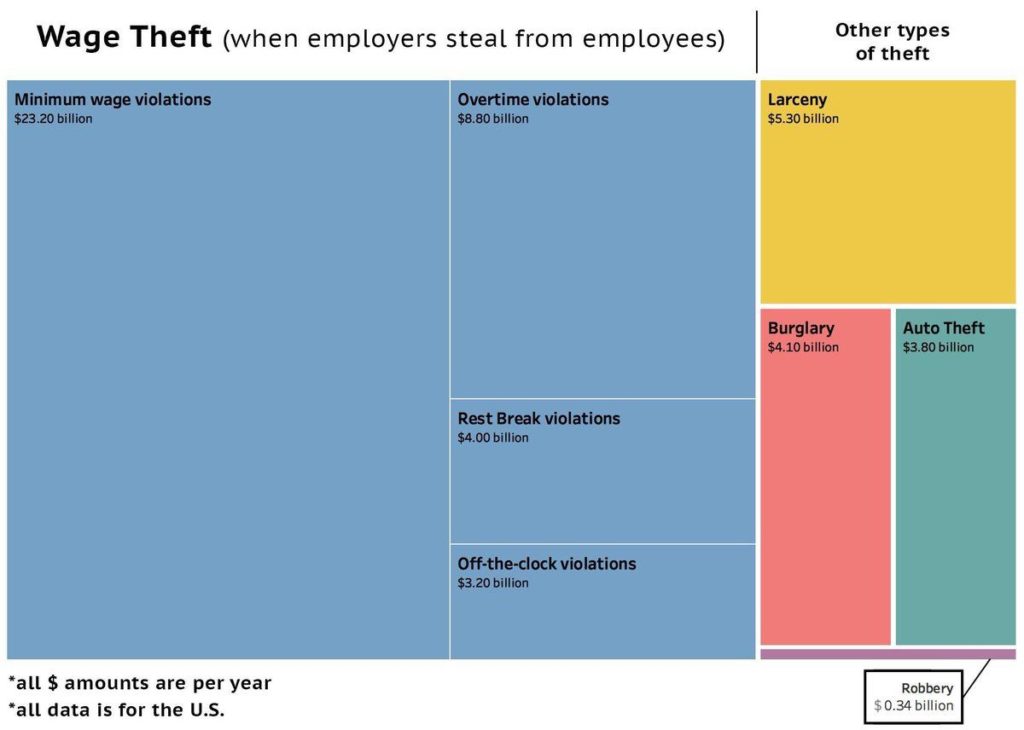
The problem with one off conclusions from data like these is that they never address the issue that a lot of crimes committed by white people are removed from the statistic of "violent crime." Either because they are not considered "violent crimes" or because said white people are socially protected and never are actually charged. For example, the biggest form of theft in the United States is not robberies, or even larcenies, but wage theft. Yet robberies and larcenies are policed far more often than wage-theft, which at most is enforced through fines or just totally disregarded in states with especially labor-unfriendly labor departments. 

When was the last time you've seen police go arrest a boss for stealing from his employees, even if he might have stolen more than they could ever steal? 

Yet whenever you see the mobs looting Walmart (one of the biggest thieves in this country), you'll have the reactionary right coming out cheering for the larcenists to be shot. 

One might argue "wage theft isn't a violent crime", but if I personally were to attempt to get my wages that were stolen because the institutions of law enforcement don't enforce my right to have what I earned, then I almost would certainly be met with violence, even though just like the property owner or multinational corporation I am defending my ostensible "right to property." Furthermore, not only would I be met with violence from the thief, but also from the state on the thief's behalf.  

Once you account for the selection bias that exists in the laws as well as the data-collection, it becomes much less clear that black persons are responsible for the same level of violence as white persons, in absolute terms. Sure this might be true of "violent crimes" but the category is quite arbitrary, indeed. This becomes even murkier when the U.S Department of Justice and other organizations pack drug crimes with violent crimes.

See, for example: https://www.justice.gov/usao-ma/drug-and-violent-crime

The problem with this is that drug laws are almost always and have almost always been enforced on the poor, who obviously are disproportionately BIPOC. And if drug crimes should be included with violent crimes, then I'd love to see wage-theft being coupled with them too. Oh wait, the violent actor in that scenario is mostly the state and its law-enforcement agents? Yeah, fat chance. 

"It’s worth taking a moment to put these numbers in perspective:

  • 18 unarmed blacks shot by police annually

  • 26 unarmed whites shot by police annually

  • 2500 (at least, but possibly well over 10,000) additional murders—mostly black—as a result of the de-policing prompted by BLM falsehoods

  • 8000 blacks murdered by criminals annually

It would take roughly 140 years for police to shoot as many unarmed black people as have been murdered as a result of BLM falsehoods in just the past few years."

Right because de-policing was caused by "BLM falsehoods", and not the fact that during the large-scale labor shortage and precarities of the pandemic, police found better jobs that paid more and gave less stress. And note, not stress caused by BLM, but stress induced by the gang mentality that prevents the so-called "good cops" from policing the so-called "bad apples" in these forces, stress caused by low compensation, stress caused by being overworked, etc. Anyway, if BLM is the cause of de-policing what has largely become a federation of police-states responsible for the criminalization of the population of what is considered "the freest country in the world", then I am quite happy for BLM's existence. I don't see mass policing and mass criminalization as freedom. It is bizarre to me that some people do. 

Last edited by sc94597 - on 21 February 2022

I view BLM as an overall positive movement due to bringing more awareness of police brutality, along with resulting in some real-world changes due to it.


CGI-Quality said:
pokoko said:

The entire premise of BLM--that black lives "matter" less than other lives--is flawed.  

When has this ever been the premise behind BLM? I'm talking as a movement (we're separating the message from the media).

I think that statement is accurate albeit poorly worded.

The phrase "Black Lives Matter" is a protest or rebuttal against the idea that black lives are not treated as equally valuable in our society. It is to say "Society places less value on black lives, and we wish to fight against this". 

As for whether or not this is accurate assessment depends in part on the metrics you use to make that call, but through my experiences, it seems to be at least somewhat accurate.