By using this site, you agree to our Privacy Policy and our Terms of Use. Close

Forums - Nintendo - Do you think Nintendo killed off the Wii too early


Was the Wii killed off too early?

Yes 41 53.95%
 
No, Nintendo needed to move on 35 46.05%
 
Total:76

the wii u failed for many reason but the biggest was its name Wii U it confused the crap out of people for the longest time i thought it was a tablet for your wii and not its own new thing. The marketing also sucked badly with it so A it confused me and b didn't convince me to buy the thing i was confused about it was until the NX had been announced that i started asking for it but then I heard about the Switch and it was over its why I still don't own a Wii U.


Around the Network
curl-6 said:

As a PAL user 2011-2012 weren't too bad for me; I grabbed Skyward Sword, Xenoblade, de Blob 2, Modern Warfare 3, and Rayman Origins in 2011, then The Last Story, Fatal Frame 2, and Pandora's Tower in 2012. 

Could've been better, but a stellar lineup compared to what North America was forced to endure.

Still though, it was clear that Nintendo had moved on and were no longer seriously invested in the Wii after 2010, which was quite dumb to only give one of the most successful consoles ever just 4 years of commitment. They definitely should have planned that better.

It's not bad planning when you actually have games you could have released but chose not to. The Wii had a perfectly fine 2011 lineup, NOA just chose of their own free will not to release a bunch of games. 

That's not bad planning, that's being arrogant because you think you can cruise by on Wii Sports/Just Dance/Wii Fit/NSMB Wii and don't need games like Xenoblade or Fatal Frame or Last Story (all perfectly solid games). Why work and market these types of games when you don't have to. 

The other problem for Nintendo is casual mini-game collections are pretty easy to copy. It's not so easy to make a platformer as good as Mario or an adventure game like Zelda (many companies have tried and failed) or even a Pokemon game ... but a fun mini-game collection is a lot easier to copy. Kinect Sports was fun, much in the same way Wii Sports was. Wii Fit gave a work out, but that was easy to 10 other games to hop on board and also provide a fun workout. 

When XBox and Playstation 3 started basically get those same types of games (Kinect Sports, whatever the Sony Sports Wii Sports knock off was) the Wii became a lot less special. 

That really had more to do I think with the Wii's decline, even though NOA are jerk offs for not releasing Xenoblade, Last Story, Fatal Frame, etc., I doubt even if they had Wii sales would've been magically that different. 


Soundwave said:
curl-6 said:

As a PAL user 2011-2012 weren't too bad for me; I grabbed Skyward Sword, Xenoblade, de Blob 2, Modern Warfare 3, and Rayman Origins in 2011, then The Last Story, Fatal Frame 2, and Pandora's Tower in 2012. 

Could've been better, but a stellar lineup compared to what North America was forced to endure.

Still though, it was clear that Nintendo had moved on and were no longer seriously invested in the Wii after 2010, which was quite dumb to only give one of the most successful consoles ever just 4 years of commitment. They definitely should have planned that better.

It's not bad planning when you actually have games you could have released but chose not to. The Wii had a perfectly fine 2011 lineup, NOA just chose of their own free will not to release a bunch of games. 

That's not bad planning, that's being arrogant because you think you can cruise by on Wii Sports/Just Dance/Wii Fit/NSMB Wii and don't need games like Xenoblade or Fatal Frame or Last Story (all perfectly solid games). Why work and market these types of games when you don't have to. 

The other problem for Nintendo is casual mini-game collections are pretty easy to copy. It's not so easy to make a platformer as good as Mario or an adventure game like Zelda (many companies have tried and failed) or even a Pokemon game ... but a fun mini-game collection is a lot easier to copy. Kinect Sports was fun, much in the same way Wii Sports was. Wii Fit gave a work out, but that was easy to 10 other games to hop on board and also provide a fun workout. 

When XBox and Playstation 3 started basically get those same types of games (Kinect Sports, whatever the Sony Sports Wii Sports knock off was) the Wii became a lot less special. 

That really had more to do I think with the Wii's decline, even though NOA are jerk offs for not releasing Xenoblade, Last Story, Fatal Frame, etc., I doubt even if they had Wii sales would've been magically that different. 

Stuff like PS Move Sports did not significantly hurt Wii sales. It was a matter of software; 2006-2010 had strong software, 2011-2012 didn't.

Nintendo of America is definitely to blame for how horrendously they handled those last two years in the system's biggest market, yes. But even in PAL, while there were some choice picks for a gamer like myself, there still wasn't the kind of software strong enough to drive hardware momentum.

Last edited by curl-6 - on 09 August 2020

LatiosGames said:
the wii u failed for many reason but the biggest was its name Wii U it confused the crap out of people for the longest time i thought it was a tablet for your wii and not its own new thing. The marketing also sucked badly with it so A it confused me and b didn't convince me to buy the thing i was confused about it was until the NX had been announced that i started asking for it but then I heard about the Switch and it was over its why I still don't own a Wii U.

The name was a mistake, but not so bad they couldn't have recovered from it - when the 3DS first came out a lot of people thought it was just another DSi-type incremental upgrade on the original DS rather than a whole new platform. But it eventually recovered thanks to Nintendo managing to get a couple of killer apps (Mario 3D Land and Mario Kart 7) out in a reasonably timely fashion, and Sony making a complete hash of the PS Vita.

The Wii U basically ended up being the opposite - almost nothing worth playing for a whole year, then when it finally got a killer app (Mario 3D World) it ended up being overshadowed by the launch of the PS4 and Xbox One. And while Microsoft seemingly tried their hardest to torpedo their own console, this time Sony made no such mistakes.


LatiosGames said:
the wii u failed for many reason but the biggest was its name Wii U it confused the crap out of people for the longest time i thought it was a tablet for your wii and not its own new thing. The marketing also sucked badly with it so A it confused me and b didn't convince me to buy the thing i was confused about it was until the NX had been announced that i started asking for it but then I heard about the Switch and it was over its why I still don't own a Wii U.

I still don't believe that the name was its biggest problem.

If you have a good product, videos of great games will speak for themselves and potential customers will search and find the informations about the system they need/want.

When the Wii was announced Nintendo got ridiculed for the name at any corner... didn't hurt the sales.

The third and fourth iPad generations were called "iPad", not "iPad 3" or "iPad 4"... didn't hurt the sales.


Around the Network

Honestly I think the OP is a false premise to begin with. Basically I think there is this (false) belief that somehow by supporting your previous system well it means your next system will do well because of brand loyalty or something.

But it's really not true if you actually look at it. In fact, the most successful modern Nintendo systems and the most successful Microsoft console all stem from those companies prematurely killing off the preceding system.

The DS was a massive success after Nintendo prematurely killed off the GBA.

The Wii was a massive success after Nintendo basically stopped supporting the GameCube after 2004/2005 and held off Zelda: Twilight Princess (the one big game GCN owners had been dreaming of) to be a Wii launch title.

The Switch was a massive success after Nintendo canned the Wii U around 2016 and repurposed a majority of its notable library for Switch.

The XBox 360 is by far Microsoft's biggest console success, but it came after flat out discontinuing the original XBox after 2004.

Conversely the DS and PS2 which no one can really argue had many years of support had big problems with their successors (3DS and PS3) especially early on, which shows no one cares what you did last generation cycle the moment the new one starts. This is a "what have you done for me lately" business, you don't get extra brownie points if you make mistakes with any product just because you did good things in the past.

People always bring up Sega, but Sega's examples were extreme, they release the Sega CD in 1992 and stopped supporting it basically by 1994. Then released the 32X and stopped supporting it after 6 months. Then released Saturn in 1994/95 and were already moving on to Dreamcast by 1998.

If anything I think there are examples of Nintendo supporting prior systems too long. The N64 for example should have had several huge late gen projects moved to the GameCube, particularly Zelda: Majora's Mask, Perfect Dark, and Conker's Bad Fur Day. For one none of these games could run on the base N64 without the RAM pack, secondly the GameCube badly needed these types of games early in its product cycle. They should have by 1999 decided to move those games to the GCN launch window and hired extra staff to work on bringing up the graphics.


Soundwave said:
Jumpin said:

That's not even remotely true.

In fact, the only home console the Switch doesn't effectively replicate is the Wii U. While all core features of the Wii and previous consoles make a return (Gamecube weird button shapes and springy L&R don't really count, as they're more bells and whistles with not much functional implication), not one of the three core features introduced with the Wii U makes a return. The first, a screenbased Gamepad to control a game on another screen - that's gone. Also gone is asymmetrical gameplay. And while offscreen play may superficially resemble what the Switch does with handheld mode, it's something different - the Switch DOESN'T actually use a tethered experience; instead, it transforms into a handheld which can be taken on the go... handheld play is something Nintendo has done for 30 years.

On the home console side, the primary inspiration from the Switch comes from what was introduced with the Wii. Its core controller, the joycon, is multifaceted remote complete with advanced motion interface and HD rumble, a clear successor to the Wiimotion controllers. Even from a stylistic standpoint, the Switch brings back the simple and intuitive OS as well as the sleek appearance of the Wii rather than the Wii U rounded bulk. The joycons can also be integrated with other hardaware like the Ring Fit ring and the Labo cardboard. It does drop the speaker/mic on the controller, but again, like the Gamecube button stuff, this is more of a bell/whistle rather than a core feature.

On the handheld side, it takes everything from the GB line, and while it drops the second screen from the DS line, that has more to do with it becoming functionally obsolete than dropping its capabilities; the DS screen was functionally a divided single screen with designated functionality on each side, not required today due to the Switch's larger screen size (having a separate screen would be more of a cosmetic difference. The Wii U's second screen differs by having it disassociated from the TV.

On a side note, Streetpass, spotpass, and 3D do not make a return from the 3DS, and these are the new features 3DS introduced, so there's nothing significant that the 3DS adds that wasn't already there with the DS. The funny thing is that the Eshop on Switch more resembles an upgraded WiiShop channel than the Wii U or 3DS EShops.

The Switch combines both handheld and home console experiences into one. While Nintendo had experimented with hybridization since the Super Game Boy in 1994, the Switch is the first console to execute it smoothly.

What doesn't make their way into the Switch design is the aforementioned Wii U and 3DS core features. This is why I call the Switch more of a successor to the Wii and DS than the 3DS and Wii U.

The Switch is best described as a completely new platform that functions as an updated Wii in one mode, an updated handheld in the other mode, and NOT a successor to the Wii U in either mode.

Not only did the Switch not need the the Wii U to exist, Nintendo themselves says the Switch isn't a successor to the Wii U.

For marketing reasons of course they don't want the Switch to be referred to as the Wii U successor because the Wii/Wii U brand became toxic. 

But in other interviews, I believe Nintendo designers have just said straight up without the Wii U from a design perspective there would not be a Switch. 

Even during the design of the Wii U, I believe Iwata said they wanted to put the hardware directly into the Game Pad (which would've made it essentially a Switch), but at that time (circa 2012) it was impossible to accomplish. The Wii U and Switch having the exact same screen size down to the millimeter also suggests probably NX/Switch prototypes started off originally in Wii U Game Pad casing. 

Beyond there's no fucking way the Switch has anywhere near as strong of a year 1 without having Breath of the Wild, Mario Kart 8, and Splatoon 2 (a "new" game but many assets and even many stages full on taken from the Wii U game) in the first several months of release. Cannibalizing the Wii U software really helped the Switch get off to a strong start and it continues to help the Switch even to this day as they continue to plug droughts by porting more and more Wii U software (Pikmin 3 and probably Mario 3D World coming). If you remove BOTW + MK8 + Splatoon 2 + many other Wii U titles from the Switch, the sales are likely no where near as impressive. 

If you remove the Wii U ports (BOTW, Mario Kart 8, NSMBU) or games moderately retooled from the Wii U (ie: Splatoon 2, Super Smash Bros. Ultimate, etc.), honestly the Switch probably would be in a bit of trouble.

People need to stop equating market success with a system being "good" or "bad".

Just going to put this in points because I find it easier to break down.

1. "without the Wii U from a design perspective there would not be a Switch." is not the opinion I got from reading articles about the Switch design history. Some did specify that the Wii U was an example of what not to do, which is something, but I don't dispute that, and do suggest that the Wii U is like a failed experiment.

2. "I believe Iwata said they wanted to put the hardware directly into the Game Pad" - Like a handheld? That's a different type of console than the Wii U. It also indicates that before they developed the Wii U, they were trying to make something more like the Switch. That also means that the negative example of the Wii U (as indicated in point 1) probably wasn't required, since Nintendo was already aiming for the Switch. That doesn't surprise me too much since the Switch does incorporate elements from the Gameboy all the way to the Wii and DS, but not the Wii U or 3DS.

3. I don't think copying the screen dimensions indicates anything other than that they really really like that screen dimension.

4. The games ported to the Switch from Wii U didn't require the Wii U to be developed. They could have easily debuted on the Switch or a Wii HD.

5. My post is about the marketing success of the Wii U, so calling it bad for its failure on the market is the point.


I describe myself as a little dose of toxic masculinity.

Soundwave said:
Honestly I think the OP is a false premise to begin with. Basically I think there is this (false) belief that somehow by supporting your previous system well it means your next system will do well because of brand loyalty or something.

But it's really not true if you actually look at it. In fact, the most successful modern Nintendo systems and the most successful Microsoft console all stem from those companies prematurely killing off the preceding system.

The DS was a massive success after Nintendo prematurely killed off the GBA.

You're strawmanning the original post. He's not saying that supporting it would mean the next console would do well too, so it's pointless to argue against that point and pretend you're defeating his post. He's asking what people think about the suggestion that the Wii might have been a better console to get behind than the Wii U in terms of profitability potential.

Your conclusion doesn't examine the facts correctly, either. The Wii and Switch were NOT popular because of prematurely killing off the Gamecube and Wii U, they were popular because they were compelling hardware with killer apps. It would be more accurate to say Gamecube and Wii U were dead/near dead on arrival, neither console was ever very popular.

And the DS was a massive success quite a while BEFORE Nintendo killed the GBA off - that's not premature. Nintendo heavily supported the GBA for about two years after the DS launch releasing some of its best games in this period. Many major franchises released on the system in holidays 2004 through 2006 including: Mario, Zelda, Pokemon, Donkey Kong, Fire Emblem, Final Fantasy, Harvest Moon, Mega Man, Yoshi, and Wario. Additionally, Nintendo released two new hardware revisions of the GBA (GBA Micro and Backlit GBA SP) after the DS came out.


I describe myself as a little dose of toxic masculinity.

curl-6 said:
Soundwave said:

It's not bad planning when you actually have games you could have released but chose not to. The Wii had a perfectly fine 2011 lineup, NOA just chose of their own free will not to release a bunch of games. 

That's not bad planning, that's being arrogant because you think you can cruise by on Wii Sports/Just Dance/Wii Fit/NSMB Wii and don't need games like Xenoblade or Fatal Frame or Last Story (all perfectly solid games). Why work and market these types of games when you don't have to. 

The other problem for Nintendo is casual mini-game collections are pretty easy to copy. It's not so easy to make a platformer as good as Mario or an adventure game like Zelda (many companies have tried and failed) or even a Pokemon game ... but a fun mini-game collection is a lot easier to copy. Kinect Sports was fun, much in the same way Wii Sports was. Wii Fit gave a work out, but that was easy to 10 other games to hop on board and also provide a fun workout. 

When XBox and Playstation 3 started basically get those same types of games (Kinect Sports, whatever the Sony Sports Wii Sports knock off was) the Wii became a lot less special. 

That really had more to do I think with the Wii's decline, even though NOA are jerk offs for not releasing Xenoblade, Last Story, Fatal Frame, etc., I doubt even if they had Wii sales would've been magically that different. 

Stuff like PS Move Sports did not significantly hurt Wii sales. It was a matter of software; 2006-2010 had strong software, 2011-2012 didn't.

Nintendo of America is definitely to blame for how horrendously they handled those last two years in the system's biggest market, yes. But even in PAL, while there were some choice picks for a gamer like myself, there still wasn't the kind of software strong enough to drive hardware momentum.

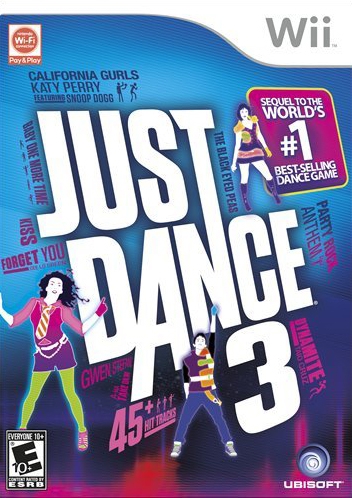
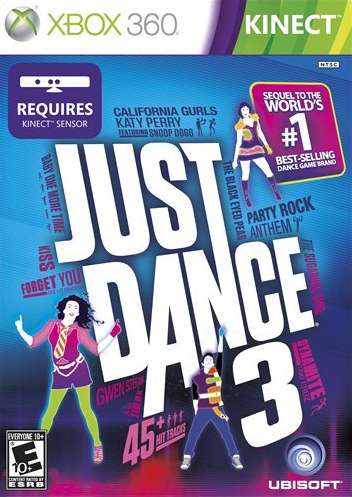
To support Curl's point: https://www.vgchartz.com/weekly/40909/Global/ - this is for the week ending December 31st, 2011

Pos Game Weekly Total Week #
1
Just Dance 3 (Wii)
Ubisoft, Misc
562,447 7,164,411 13
24
Just Dance 3 (X360)
Ubisoft, Misc
121,888 1,344,384 13

While conceivably it did have some impact, the Wii version of Just Dance 3 had very strong sales that year, selling around 150% better than the sales of Just Dance 2 in 2010, which released 12 weeks before the end of the year. Just Dance 3 on Wii would go on to become the highest selling release in franchise history at over 10 million units on Wii alone; it sold 2 million on Xbox 360 and 630K on PS3, which, while decent, don't seem to be impacting the Wii even though 2011 marked a massive decline over 2010. As a note, Just Dance 4 also did really well on the Wii, selling close to 7 million units - this also indicates that Nintendo, had they kept supporting the console, could have seen more games sell in the tens of millions because if Ubisoft can get up there, surely Nintendo could do better.


I describe myself as a little dose of toxic masculinity.

Jumpin said:

Soundwave said:
Honestly I think the OP is a false premise to begin with. Basically I think there is this (false) belief that somehow by supporting your previous system well it means your next system will do well because of brand loyalty or something.

But it's really not true if you actually look at it. In fact, the most successful modern Nintendo systems and the most successful Microsoft console all stem from those companies prematurely killing off the preceding system.

The DS was a massive success after Nintendo prematurely killed off the GBA.

You're strawmanning the original post. He's not saying that supporting it would mean the next console would do well too, so it's pointless to argue against that point and pretend you're defeating his post. He's asking what people think about the suggestion that the Wii might have been a better console to get behind than the Wii U in terms of profitability potential.

Your conclusion doesn't examine the facts correctly, either. The Wii and Switch were NOT popular because of prematurely killing off the Gamecube and Wii U, they were popular because they were compelling hardware with killer apps. It would be more accurate to say Gamecube and Wii U were dead/near dead on arrival, neither console was ever very popular.

And the DS was a massive success quite a while BEFORE Nintendo killed the GBA off - that's not premature. Nintendo heavily supported the GBA for about two years after the DS launch releasing some of its best games in this period. Many major franchises released on the system in holidays 2004 through 2006 including: Mario, Zelda, Pokemon, Donkey Kong, Fire Emblem, Final Fantasy, Harvest Moon, Mega Man, Yoshi, and Wario. Additionally, Nintendo released two new hardware revisions of the GBA (GBA Micro and Backlit GBA SP) after the DS came out.

The point is more that a previous system being well supported for an extra year or two doesn't really seem to make much difference in how the successor does at all unless you go to Sega-level extremes of ditching systems sometimes after 6 months. 

The Wii and Switch did benefit from killing off support from previous systems as it helped bolster the library for those systems (Twilight Princess + Super Paper Mario for Wii, BOTW + MK8 + and many, many other titles for Switch).

The Switch's library isn't anywhere near as strong if Nintendo didn't kill the Wii U and take most of its library. So that is interconnected. Also GBA was definitely ditched by Nintendo's development teams after Nov/Dec 2004 (DS launch). Games like Yoshi Topsy Turvy may have come out in the US in 2005, but they actually were finished and released in Japan by 2004. After 2004 there's not much original GBA development at all.

There's also the example of the XBox 360, which is by far the most successful non Nintendo or Sony platform and that system came out after MS killed the original XBox not only prematurely but even as sales were spiking (2004 was the best year for the XBox). 

I would say after 3-4 years of support, it really doesn't seem to matter how much longer past that you support a system. It doesn't translate to any further/better success for the next system. 

And indeed I would say there are examples of systems that were supported for too long that hurt the next system ... Nintendo was releasing way too many big gun titles for the N64 late in its product cycle (Zelda: MM, Perfect Dark) and while these games really didn't change the N64's lot in life (distant no.2 to Playstation), they definitely hurt not being on the GameCube, because the GameCube really badly could've used those games early on to have better momentum. 

Instead the GCN pretty much from day 1 struggled not only to outsell Sony but never really could shake even the XBox. 

Companies should prioritize much moreso the 1st year of a new console even if it comes at the expense of the previous system, that is SO important for the long term success, if you can get that right you have a much, much easier time the rest of the gen, it's like the difference between climbing uphill or going downhill. Nintendo has such an easier time now with Switch because they had such a good foundation from the strong first year (even really first 8 months specifically) that they've never really lost that momentum. But systems that start shaky and then try to find themselves later are such a fucking headache, it can be done, but it's so much damn work why ever put yourself in that shitty position. 

Last edited by Soundwave - on 09 August 2020