By using this site, you agree to our Privacy Policy and our Terms of Use. Close

Forums - Gaming - Shinen used 3D scanning and 1GB files per mesh in Fast Racing Neo

megafenix said:
curl-6 said:
megafenix said:

Although sometimes asking helps, they often avoid direct answers to the questions, it would be easier to ask someone from certain game site to do the inquiry and just advise him which doubts we have and want to be answered

Looking at the images we can just make guesses, although their comment about the 1GB files per mesh would be impossible to fit it in the wii u RAM unless you make a very good compression, and a BC1 that has a maxium of 6x per texture would be not enough, thats why the best guess of what they did to the original meshes is tesselation

Could just be really good normal mapping. That would leave a lot more performance overhead for sustaining 60fps and running all the other effects they're doing.


possibly, although the terrain and the mountains look very well detailed for normal mapping,and also normal mapping has no occlusion and geometry is faked by light which is very noticeable in objects taht are parallel to our view, from what i see in the mountains the geometry looks real and not a fake

It's hard to tell from the single screen of it that we have, and it'll be even harder to tell zooming passed it at high speed, so I'd still put my money on normal mapping.

Remember, they're doing deferred rendering at 60fps with 4k-8k textures, atmospheric scattering, SSAO, etc. I don't think they'd have the horsepower to spare for tesselation.


Around the Network
curl-6 said:
megafenix said:
curl-6 said:
megafenix said:

Although sometimes asking helps, they often avoid direct answers to the questions, it would be easier to ask someone from certain game site to do the inquiry and just advise him which doubts we have and want to be answered

Looking at the images we can just make guesses, although their comment about the 1GB files per mesh would be impossible to fit it in the wii u RAM unless you make a very good compression, and a BC1 that has a maxium of 6x per texture would be not enough, thats why the best guess of what they did to the original meshes is tesselation

Could just be really good normal mapping. That would leave a lot more performance overhead for sustaining 60fps and running all the other effects they're doing.


possibly, although the terrain and the mountains look very well detailed for normal mapping,and also normal mapping has no occlusion and geometry is faked by light which is very noticeable in objects taht are parallel to our view, from what i see in the mountains the geometry looks real and not a fake

It's hard to tell from the single screen of it that we have, and it'll be even harder to tell zooming passed it at high speed, so I'd still put my money on normal mapping.

Remember, they're doing deferred rendering at 60fps with 4k-8k textures, atmospheric scattering, SSAO, etc. I don't think they'd have the horsepower to spare for tesselation.


Its true that there are already some graphic effetcs like defered shading that consume some of the horsepower and that the game will run at variable 60fps, but if they use tesselation they dont have to apply maxium quality, you can select tesselation level from 1 to 64 depending on the level of detail you want, and normally you keep tesselation level very low to distant objects(they are likely using adaptive tesselation); not to mention that they also seem to be using tiles to reduce the horsepower required for the rendering


the tiled textures may help to reduce the strees on the gpu even if they use tesselation, and also they can choose a tesselation level depending on the distance and select a good tesselation factor when the objects are near and keep tesselation to the lowest when things are at distance

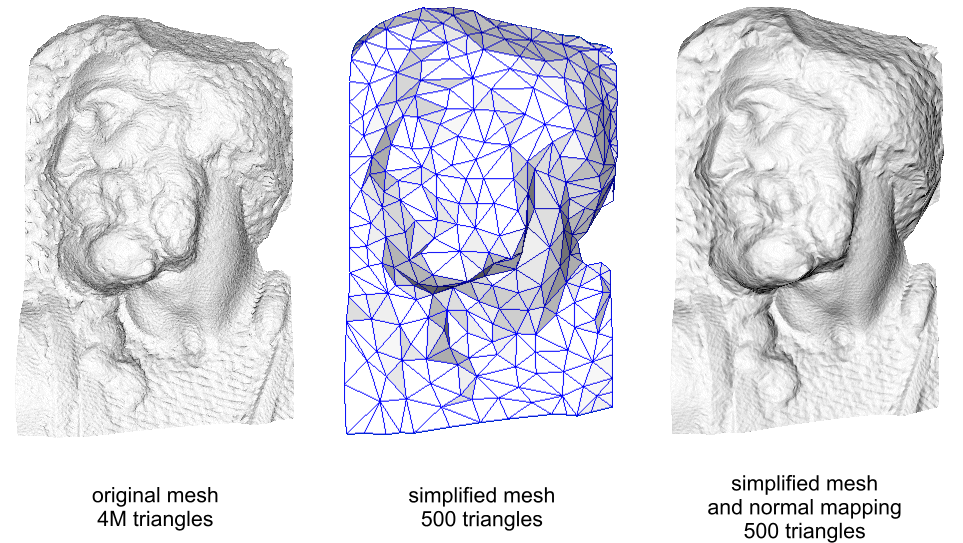
I am not sure if normal maps would be enough to simulate the appearence of the oriinal 3d meshes of 1GB, not to mention that normal maps cannot be used with tesselation like the dispalcements maps and therefor shinen would not have been able to process the the original 3d scanned meshes and transform them into compatible assets requiring less memory storage

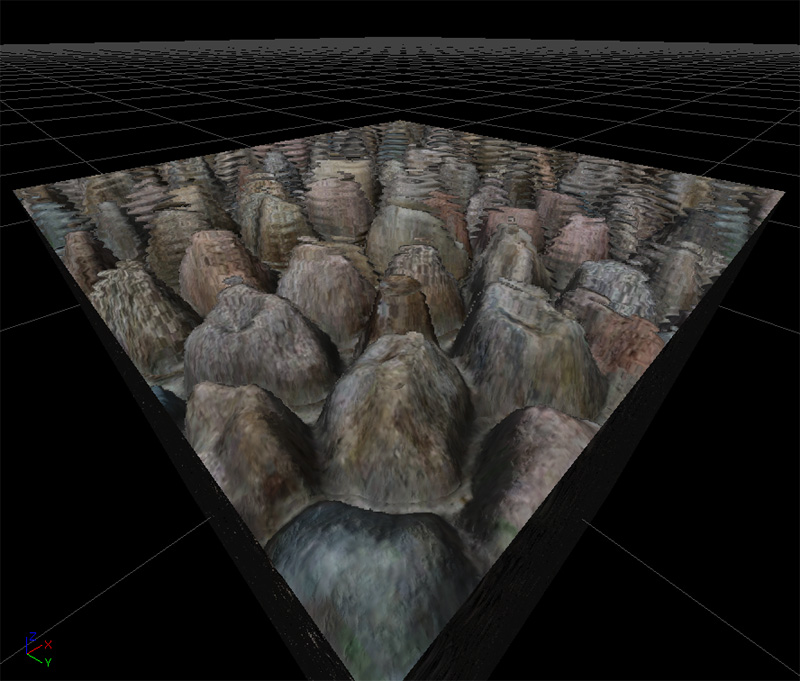
As for parallax,The main problem with parallax occlusion mapping is that at oblique angles the ray tracing is often not precise enough to retrieve the correct height map. As you can in the image below, at oblique angles it is easy to have ray tracing miss the correct depth, or find the incorrect depth. This can be resolved by increasing the number of depth passes or by decreasing the height scale. Large height scale also cause the same problem.

Here is a screenshot of a parallax occluded material seen at an oblique angle. Notice the stepping 'pancake' problems.


megafenix said:
curl-6 said:

It's hard to tell from the single screen of it that we have, and it'll be even harder to tell zooming passed it at high speed, so I'd still put my money on normal mapping.

Remember, they're doing deferred rendering at 60fps with 4k-8k textures, atmospheric scattering, SSAO, etc. I don't think they'd have the horsepower to spare for tesselation.


Its true that there are already some graphic effetcs like defered shading that consume some of the horsepower and that the game will run at variable 60fps, but if they use tesselation they dont have to apply maxium quality, you can select tesselation level from 1 to 64 depending on the level of detail you want, and normally you keep tesselation level very low to distant objects(they are likely using adaptive tesselation); not to mention that they also seem to be using tiles to reduce the horsepower required for the rendering

the tiled textures may help to reduce the strees on the gpu even if they use tesselation, and also they can choose a tesselation level depending on the distance and select a good tesselation factor when the objects are near and keep tesselation to the lowest when things are at distance

I am not sure if normal maps would be enough to simulate the appearence of the oriinal 3d meshes of 1GB, not to mention that normal maps cannot be used with tesselation like the dispalcements maps and therefor shinen would not have been able to process the the original 3d scanned meshes and transform them into compatible assets requiring less memory storage

The thing is though, for background objects passing by at high speeds you don't really need tesselation or displacement because the player won't get a chance to study in detail for more than a second or so, so normal mapping should be sufficient to fool the eye for that brief glimpse. If it was something you see up close, like the player's vehicle, it'd be another story, but I'm pretty sure the meshes they're talking about are for stuff like terrain.


curl-6 said:
megafenix said:
curl-6 said:

It's hard to tell from the single screen of it that we have, and it'll be even harder to tell zooming passed it at high speed, so I'd still put my money on normal mapping.

Remember, they're doing deferred rendering at 60fps with 4k-8k textures, atmospheric scattering, SSAO, etc. I don't think they'd have the horsepower to spare for tesselation.


Its true that there are already some graphic effetcs like defered shading that consume some of the horsepower and that the game will run at variable 60fps, but if they use tesselation they dont have to apply maxium quality, you can select tesselation level from 1 to 64 depending on the level of detail you want, and normally you keep tesselation level very low to distant objects(they are likely using adaptive tesselation); not to mention that they also seem to be using tiles to reduce the horsepower required for the rendering

the tiled textures may help to reduce the strees on the gpu even if they use tesselation, and also they can choose a tesselation level depending on the distance and select a good tesselation factor when the objects are near and keep tesselation to the lowest when things are at distance

I am not sure if normal maps would be enough to simulate the appearence of the oriinal 3d meshes of 1GB, not to mention that normal maps cannot be used with tesselation like the dispalcements maps and therefor shinen would not have been able to process the the original 3d scanned meshes and transform them into compatible assets requiring less memory storage

The thing is though, for background objects passing by at high speeds you don't really need tesselation or displacement because the player won't get a chance to study in detail for more than a second or so, so normal mapping should be sufficient to fool the eye for that brief glimpse. If it was something you see up close, like the player's vehicle, it'd be another story, but I'm pretty sure the meshes they're talking about are for stuff like terrain.

Good point, although the only way to be sure would be by having the game finished and checking the details on the environment by just stopping the car, normal mapping may fool the eye in some occasions, but becomes very obvious when objects are parallel to the view cause they dont create a silhoutte and there are no internal occlusions; also the shadows do not reflect the appearence of the bumps of the objects


http://help.chaosgro...isplacement.htm

"

What is displacement mapping?


Displacement mapping is a technique for adding geometric detail to surfaces at render time. In contrast with bump mapping, which works by just changing the surface normal to create the illusion of surface detail, displacement mapping modifies the surface itself.Here is an example of the same object rendered with bump mapping and with displacement mapping:


                                Original object         


                                    Bump mapping


                                                                                   Displacement mapping


In the case of displacement mapping, the surface is actually modified, which leads to correct outline, shadow and GI. In the case of bump mapping, although the surface appears modified, the outline and the shadow stay the same.


Note that displacement is different from other kinds of shading, since it needs to modify the actual object surface. Therefore an object must be displaced before it can be rendered. This is why in V-Ray displacement is represented with a modifier (although the modifier can take the displacement map from the object material).


"


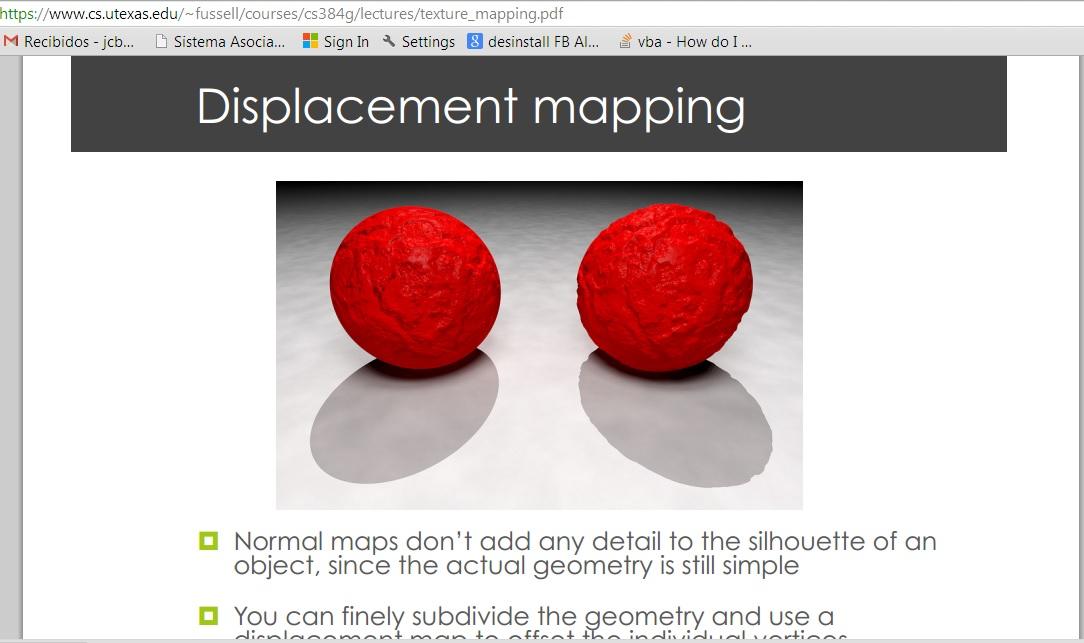
Normal mapping is just like bump mapping with little improvements here and there but with same limitations(the object at the left uses normal mapping and the right one is the dispalcement map)

https://www.cs.utexas.edu/~fussell/courses/cs384g/lectures/texture_mapping.pdf

"

Normal maps don’t add any detail to the silhouette of an 

object, since the actual geometry is still simple
 

"


limitation of bump mapping vs dispalcement

https://diglib.eg.or...df.abstract.pdf

"

Bump mapping does not really alter the underlying geometry,
but only perturbs the normals on the surface
.
 For small irregularities
on a surface, bump mapping is ideal,
 since it does not increase
the amount of geometry, but gives the impression of real textured
surfaces.


The limitation of bump mapping becomes obvious when
the surface is parallel to the viewer and the Bump does not create a
silhouette. Also as a surface moves in perspective space the shape
created in the viewers mind by the bump map will not occlude other
objects.

To add real geometric detail to a flat surface, displacement mapping,
first introduced by Cook [2], can be used


"


here we have examples with the limitation of normal maps and that they only fake geometry and silhoute does not change


on the other hand here we have the results with displacement mapping

http://stoneschool.c...2004/index.html

"
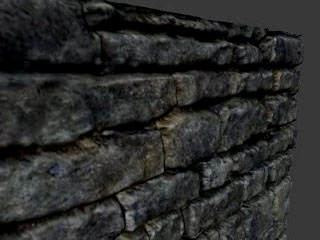
At left is the basic result: a plane with real displacement mapping. Note that this is not bump or normal mapping; it's true displacement mapping. The silhouette edge is correct, and there are internal occlusions from the displaced surfaces, neither of which you get from bump/normal mapping.

The trick to this is pretty much what the title says: it's doing a discretized ray cast within the volume of the maximum displacement in the GPU. The movie that comes along with the sketch has a pretty clear diagram about what they're doing.


"


By taking this informationa and examples into account, we coould determine if they used dispalcement or normal maps in the parallel objects liek the rocks, mountains, etc; as for the terrain would be trickier to tell. We should take into consideration the limitations of the bump and normall maps and take a closer look to the objects and their shadows on the game and also not forget to look at the internal occlusions


megafenix said:
curl-6 said:

The thing is though, for background objects passing by at high speeds you don't really need tesselation or displacement because the player won't get a chance to study in detail for more than a second or so, so normal mapping should be sufficient to fool the eye for that brief glimpse. If it was something you see up close, like the player's vehicle, it'd be another story, but I'm pretty sure the meshes they're talking about are for stuff like terrain.

Good point, although the only way to be sure would be by having the game finished and checking the details on the environment by just stopping the car, normal mapping may fool the eye in some occasions, but becomes very obvious when objects are parallel to the view cause they dont create a silhoutte and the shadows do not reflect the appearence of the bumps of the objects

Since stopping the car won't happen during normal gameplay it wouldn't really make sense to send your GPU cycles on details 99% of players will never notice.


Around the Network

Well, we can put pause then


curl-6 said:
megafenix said:
curl-6 said:

The thing is though, for background objects passing by at high speeds you don't really need tesselation or displacement because the player won't get a chance to study in detail for more than a second or so, so normal mapping should be sufficient to fool the eye for that brief glimpse. If it was something you see up close, like the player's vehicle, it'd be another story, but I'm pretty sure the meshes they're talking about are for stuff like terrain.

Good point, although the only way to be sure would be by having the game finished and checking the details on the environment by just stopping the car, normal mapping may fool the eye in some occasions, but becomes very obvious when objects are parallel to the view cause they dont create a silhoutte and the shadows do not reflect the appearence of the bumps of the objects

Since stopping the car won't happen during normal gameplay it wouldn't really make sense to send your GPU cycles on details 99% of players will never notice.


We could also use the pause

On purpose, shinen has made other comment that points even more the possibility of the use of tesselation


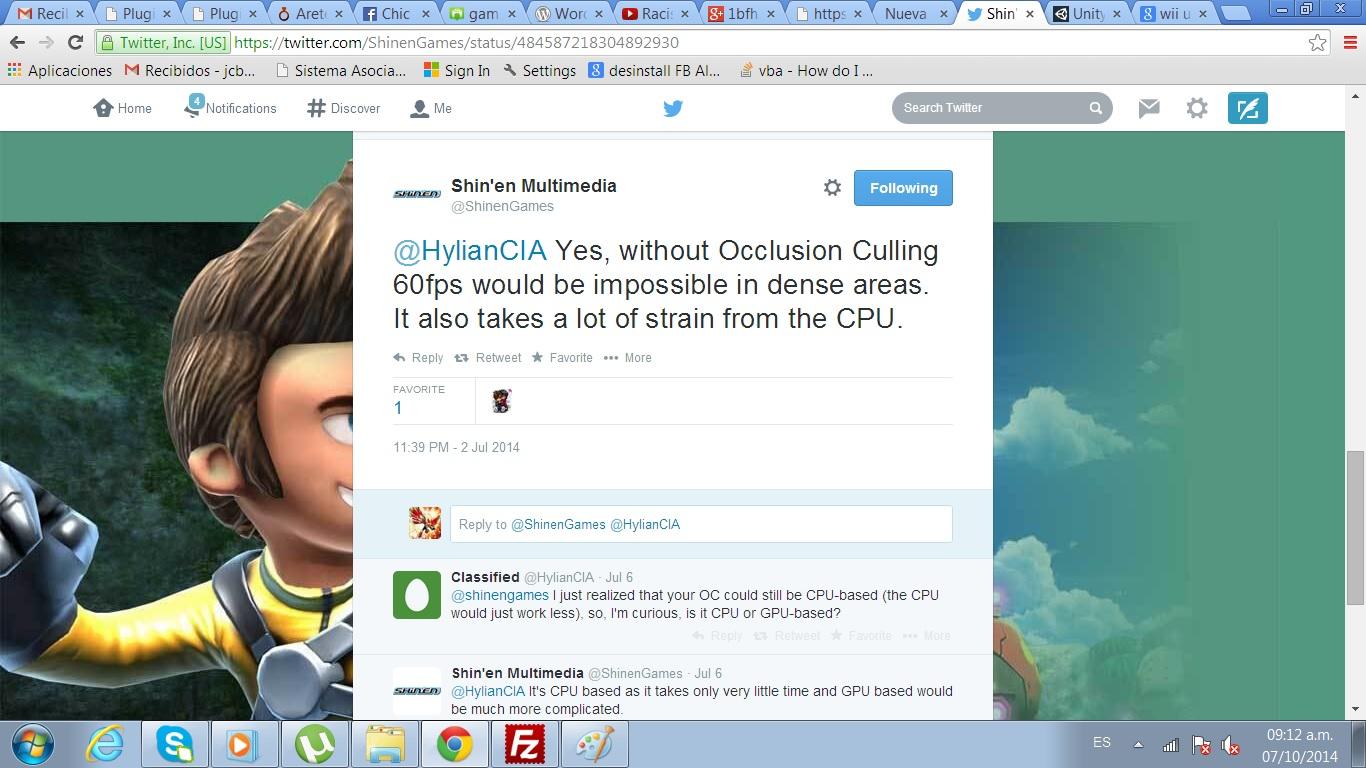
So whats occlusion culling?
http://http.developer.nvidia.com/GPUGems/gpugems_ch29.html
"
29.1 What Is Occlusion Culling?
Most graphics algorithms show us how to render something quickly, or how to make it look nice. Some techniques favor performance, while others aim for quality, but the challenge is how to strike a balance between the two.

Occlusion culling increases rendering performance simply by not rendering geometry that is outside the view frustum or hidden by objects closer to the camera. Two common types of occlusion culling are occlusion query and early-z rejection.

This chapter examines the occlusion query and how to use it properly, including two examples proving how efficient occlusion culling can be. Because one of the examples relies heavily on the usage of bounding boxes, these will also be covered, just to make things more understandable.
"

http://geck.bethsoft.com/index.php?title=Occlusion_Culling
"
Occlusion Culling
This article is an adaptation of a technical document from the development of Fallout 3. As such, it may contain some features or functionality not available in the retail release of Fallout 3, but is included here for education and posterity.

Purpose
The purpose of occlusion culling is to find geometry that has zero effect on the final render buffer because it is behind other geometry, and eliminate that geometry as early in the render process as possible to reduce wasted cpu and gpu time.

Occlusion Planes
Overview
An Occlusion plane is a surface created and placed in the editor. A computation is done every frame testing each multibound shape against each occlusion plane. If a multibound is occluded, it is not rendered.

Example
This example tries to show how this system would be applied to the cell ChevyChaseMetroEntrance (Found in DCworld01). Here we are working on two specific areas that have a lot of detail, they are blocked out in multibounds, drawn here in blue. Also, an occlusion surface (in green) has been added in the building to the right, as it can be used to block many objects behind it.


1st person view
In the overhead view below we can see how the view frustum (light blue) and occlusion frustum (yellow) overlap. The occlusion frustum is formed by projecting the occlusion surface out from the camera position.

"


I dont see the purpose of occlussion culling if what they were rendering wouldnt consume a lot gpu power to render true geometry and not just fake it


perhaps we should create a thread regarding the different techniques shinen is using in fast racing neo like the defered shading, hdr lighting, the possible use of ttiles since the terrain in one of the images seems to use them, occlussion culling and possibly some tesselation


megafenix said:
perhaps we should create a thread regarding the different techniques shinen is using in fast racing neo like the defered shading, hdr lighting, the possible use of ttiles since the terrain in one of the images seems to use them, occlussion culling and possibly some tesselation

What's wrong with this thread?

As for the effects they're using, we they recently tweeted:

Cinematic Tonemapping, Motionblur, SSAO, HDR Bloom, Atmospheric Scattering, Godrays etc


just buy this guys nintendo. they are the only 3rd party that is using ur hardware well and they could need some more money to expand. just buy 50% of it and make it the new rare... DO it pls...