

curl-6 said:
It's hard to tell from the single screen of it that we have, and it'll be even harder to tell zooming passed it at high speed, so I'd still put my money on normal mapping. Remember, they're doing deferred rendering at 60fps with 4k-8k textures, atmospheric scattering, SSAO, etc. I don't think they'd have the horsepower to spare for tesselation. |
Its true that there are already some graphic effetcs like defered shading that consume some of the horsepower and that the game will run at variable 60fps, but if they use tesselation they dont have to apply maxium quality, you can select tesselation level from 1 to 64 depending on the level of detail you want, and normally you keep tesselation level very low to distant objects(they are likely using adaptive tesselation); not to mention that they also seem to be using tiles to reduce the horsepower required for the rendering
the tiled textures may help to reduce the strees on the gpu even if they use tesselation, and also they can choose a tesselation level depending on the distance and select a good tesselation factor when the objects are near and keep tesselation to the lowest when things are at distance
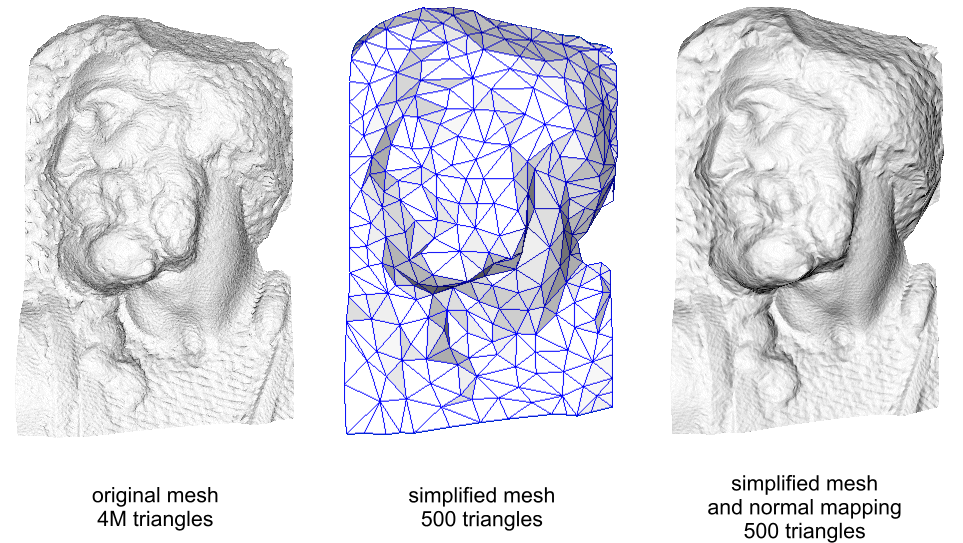
I am not sure if normal maps would be enough to simulate the appearence of the oriinal 3d meshes of 1GB, not to mention that normal maps cannot be used with tesselation like the dispalcements maps and therefor shinen would not have been able to process the the original 3d scanned meshes and transform them into compatible assets requiring less memory storage
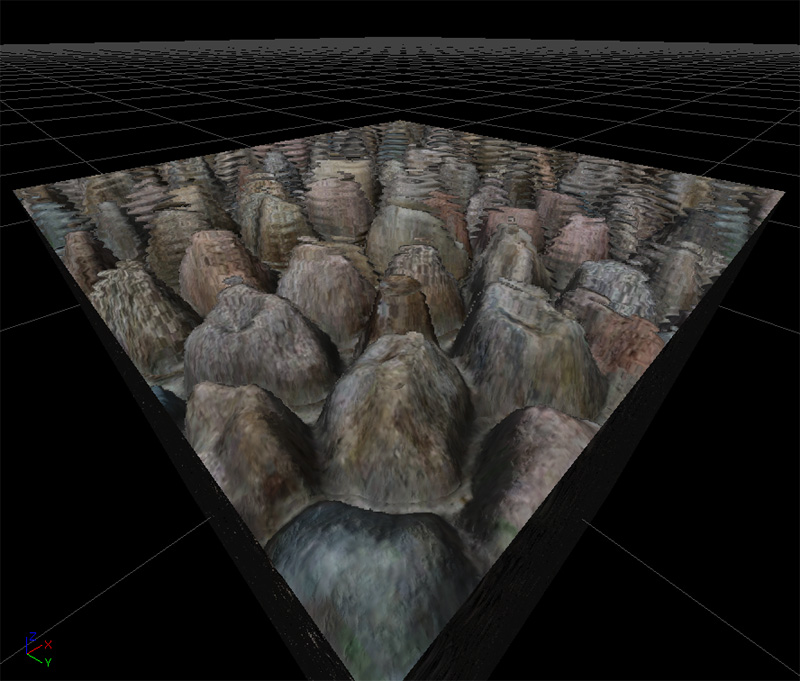
As for parallax,The main problem with parallax occlusion mapping is that at oblique angles the ray tracing is often not precise enough to retrieve the correct height map. As you can in the image below, at oblique angles it is easy to have ray tracing miss the correct depth, or find the incorrect depth. This can be resolved by increasing the number of depth passes or by decreasing the height scale. Large height scale also cause the same problem.
Here is a screenshot of a parallax occluded material seen at an oblique angle. Notice the stepping 'pancake' problems.