By using this site, you agree to our Privacy Policy and our Terms of Use. Close

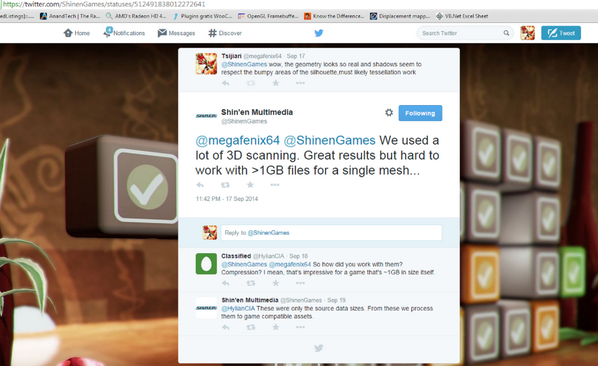
Forums - Gaming - Shinen used 3D scanning and 1GB files per mesh in Fast Racing Neo

generic-user-1 said:
just buy this guys nintendo. they are the only 3rd party that is using ur hardware well and they could need some more money to expand. just buy 50% of it and make it the new rare... DO it pls...

Its possible, although shinen and also the guys behind project cars seem to be trying to get must of the system

On purpose, shinen also has revealed that they are using triple buffering for the defered rendering, they say that they need 3.6MB * 3buffers for the defered rendering(likely are g-buffers as they are very well suited for this technique). I heard that g-buffers for the defered rendering take a lot bandwidth, but didnt expect it to be higher than the 720p with double buffering which shinen mentioend was about 7.1MB of wii u edram


G buffers take a lot bandwidth, even crytek admitted that in ryse there wasnt enough bandiwdth on the esram of the xbone for complete msaa(although this one doesnt take that much memory bandwidth compared to the framebuffer) due to the use of g-buffers


Around the Network
megafenix said:
generic-user-1 said:
just buy this guys nintendo. they are the only 3rd party that is using ur hardware well and they could need some more money to expand. just buy 50% of it and make it the new rare... DO it pls...

Its possible, although shinen and also the guys behind project cars seem to be trying to get must of the system

On purpose, shinen also has revealed that they are using triple buffering for the defered rendering, they say that they need 3.6MB * 3buffers for the defered rendering(likely are g-buffers as they are very well suited for this technique). I heard that g-buffers for the defered rendering take a lot bandwidth, but didnt expect it to be higher than the 720p with double buffering which shinen mentioend was about 7.1MB of wii u edram


G buffers take a lot bandwidth, even crytek admitted that in ryse there wasnt enough bandiwdth on the esram of the xbone for complete msaa(although this one doesnt take that much memory bandwidth compared to the framebuffer) due to the use of g-buffers

Yeah, they said some time ago that the Wii U's large eDRAM made their new engine possible, and deferred rendering and triple buffering seem the logical culprits. They've also said in the past they use eDRAM as a fast scratchpad for some GPU and CPU work.


curl-6 said:
megafenix said:
generic-user-1 said:
just buy this guys nintendo. they are the only 3rd party that is using ur hardware well and they could need some more money to expand. just buy 50% of it and make it the new rare... DO it pls...

Its possible, although shinen and also the guys behind project cars seem to be trying to get must of the system

On purpose, shinen also has revealed that they are using triple buffering for the defered rendering, they say that they need 3.6MB * 3buffers for the defered rendering(likely are g-buffers as they are very well suited for this technique). I heard that g-buffers for the defered rendering take a lot bandwidth, but didnt expect it to be higher than the 720p with double buffering which shinen mentioend was about 7.1MB of wii u edram


G buffers take a lot bandwidth, even crytek admitted that in ryse there wasnt enough bandiwdth on the esram of the xbone for complete msaa(although this one doesnt take that much memory bandwidth compared to the framebuffer) due to the use of g-buffers

Yeah, they said some time ago that the Wii U's large eDRAM made their new engine possible, and deferred rendering and triple buffering seem the logical culprits. They've also said in the past they use eDRAM as a fast scratchpad for some GPU and CPU work.


I must add that I am quite surprised of what the developers of shinen are capable eventhought they are a small indie company, they are not just trying to get must of the wii u system taing profit of the big bandwidth and low latency the edram gives, but also they wisely employing a good amount of tricks to keep performance as high as possible like the use of defered rendering, tiled textures and occlussion culling, sll of them reduce the stress in the gpu and give good results if well used; its not just about power draw but also about power-wise use


here is a bit about defered shading

https://hacks.mozilla.org/2014/01/webgl-deferred-shading/

"

Forward Shading

Today, most WebGL engines use forward shading, where lighting is computed in the same pass that geometry is transformed. This makes it difficult to support a large number of dynamic lights and different light types.

This requires a different shader for each material/light-type combination, which adds up. From a performance perspective, each mesh needs to be rendered (vertex transform, rasterization, material part of the fragment shader, etc.) once per light instead of just once. In addition, fragments that ultimately fail the depth test are still shaded, but with early-z and z-cull hardware optimizations and a front-to-back sorting or a z-prepass, this not as bad as the cost for adding lights.

To optimize performance, light sources that have a limited effect are often used. Unlike real-world lights, we allow the light from a point source to travel only a limited distance. However, even if a light’s volume of effect intersects a mesh, it may only affect a small part of the mesh, but the entire mesh is still rendered.

In practice, forward shaders usually try to do as much work as they can in a single pass leading to the need for a complex system of chaining lights together in a single shader. For example:

The biggest drawback is the number of shaders required since a different shader is required for each material/light (not light type) combination. This makes shaders harder to author, increases compile times, usually requires runtime compiling, and increases the number of shaders to sort by. Although meshes are only rendered once, this also has the same performance drawbacks for fragments that fail the depth test as the multi-pass approach.

Deferred Shading

Deferred shading takes a different approach than forward shading by dividing rendering into two passes: the g-buffer pass, which transforms geometry and writes positions, normals, and material properties to textures called the g-buffer, and the light accumulation pass, which performs lighting as a series of screen-space post-processing effects.

This decouples lighting from scene complexity (number of triangles) and only requires one shader per material and per light type. Since lighting takes place in screen-space, fragments failing the z-test are not shaded, essentially bringing the depth complexity down to one. There are also downsides such as its high memory bandwidth usage and making translucency and anti-aliasing difficult.

"


megafenix said:

I must add that I am quite surprised of what the developers of shinen are capable eventhought they are a small indie company, they are not just trying to get must of the wii u system taing profit of the big bandwidth and low latency the edram gives, but also they wisely employing a good amount of tricks to keep performance as high as possible like the use of defered rendering, tiled textures and occlussion culling, sll of them reduce the stress in the gpu and give good results if well used

Their commitment to 60fps is very admirable given that they simultaneously try to push the graphics as far as they can.

It says something that nearly no other third party dev can rival Shin'en's work on Wii U, despite many of them having vastly more money and manpower at their disposal. Talent and effort go a long way.

It's a good thing too, because with pretty much nobody else even trying to explore the system's capabilities, Shin'en are pretty much the only hope of us ever seeing Wii U's full potential.


Here's a tidbit; Shin'en are teasing support for different controllers for FRN:

http://nintendobserver.com/2014/10/06/nintendobs-asks-shinen-multimedia-and-the-pursuit-of-perfection/

It's likely we'll see pro controller and Wiimote support then.


Around the Network

Is there any confirmation for a release date?


curl-6 said:
Here's a tidbit; Shin'en are teasing support for different controllers for FRN:

http://nintendobserver.com/2014/10/06/nintendobs-asks-shinen-multimedia-and-the-pursuit-of-perfection/

It's likely we'll see pro controller and Wiimote support then.

GC maybe?


megafenix said:
Is there any confirmation for a release date?

None.

It took their latest Wii U game, Art of Balance, 8 months from first images to release.

If we follow this pattern, FAST Racing Neo should release around May next year.


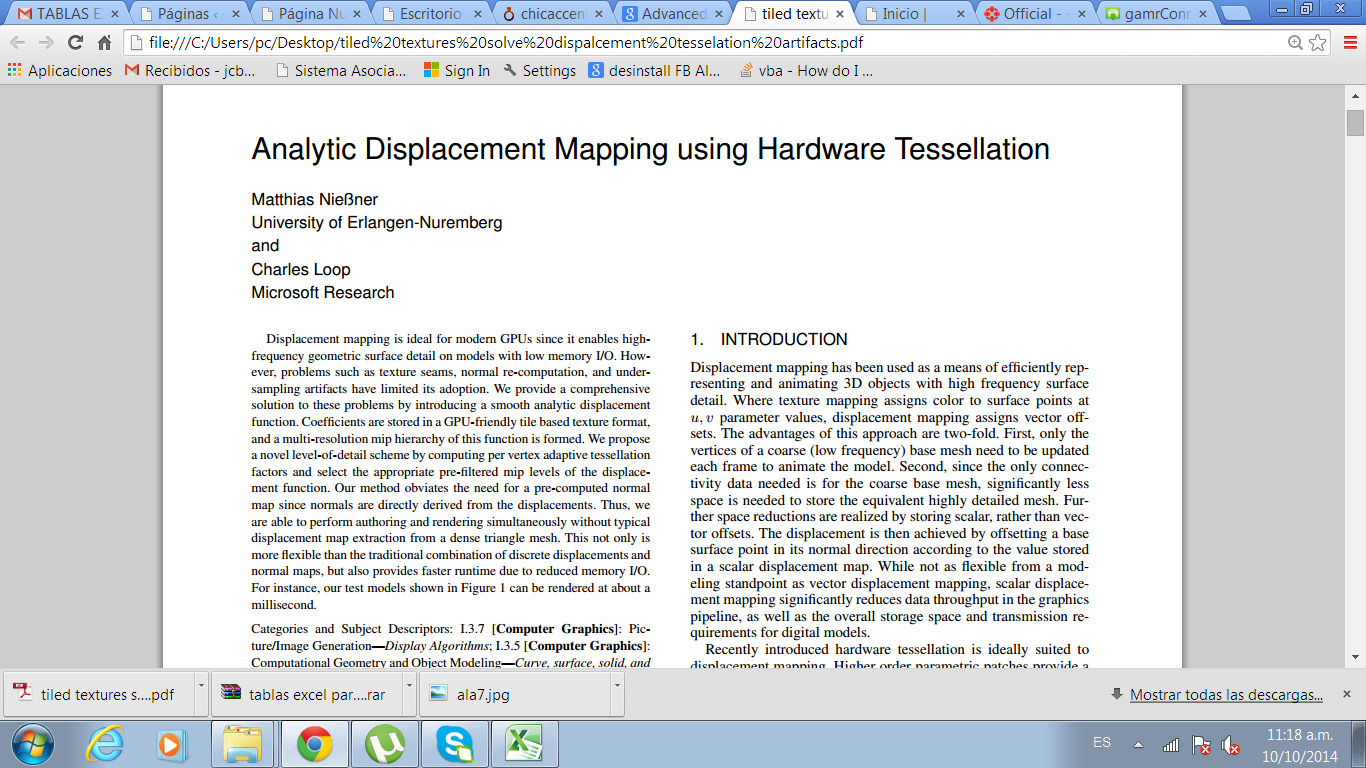
The ,ore i check about the adventages of tiled textures with tesselation, the more i believe shinen used this technique, they are also the answer to the problem about high resolution textures introduce and the artifacts they would dispaly if you just simply loaded them, they also come in handy for terrain rendering with tesselation

here
http://books.google.com.mx/books?id=bmv2HRpG1bUC&pg=PA281&lpg=PA281&dq=tiles+textures+tessellation&source=bl&ots=6hOJ8zd7wA&sig=mtlU58XVFicKUMz5klAr4cDRX9w&hl=es&sa=X&ei=TPQ3VNKyCtKRNs7vgqAD&ved=0CFwQ6AEwCw#v=onepage&q=tiles%20textures%20tessellation&f=false
"


"


tiled textures also are a good option in order to prevent the artifacts that dispalcement maps with tesselation produce and also are faster to load

file:///C:/Users/pc/Desktop/tiled%20textures%20solve%20dispalcement%20tesselation%20artifacts.pdf

"

"