curl-6 said:
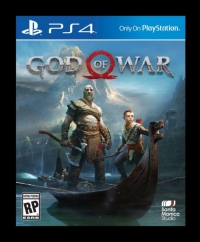
No, that's the Wii version. This game:

Subsurface scattering, physically based shading, 4k-8k textures, deferred rendering at 60fps. And that's a screen from an unfinished build.
Wii U is quite a bit different from the 360; CPUs may both be PowerPC based, but there's a world of difference between Xenon's Cell-based processor and Wii U's PPC750 based one. Code designed for the former won't transition well to the latter. Memory speed and layout also means Wii U engines need to be built more specifically around eDRAM management. For a machine of Wii U's strength, 32MB is more than adequate.
Ports performing worse on Wii U are because devs were building on 7-8 years of PS3/360 experience and almost none with Wii U. Also, because the games were built around PS3/360 they were not properly optimized to take advantage of Wii U's different hardware.
When devs actually leverage Wii U's advantages we get games like Trine 2 Director's Cut, which was confirmed by its devs to be beyond the abilities of PS3 and 360. Need for Speed is also an example of a Wii U port looking and running better on Nintendo's system.
When all the big third party engines are built around different hardware, and exclusives are mostly technologically conservative, it will take more than two years for a system's best graphics to emerge.
|
I have no idea what you're reading about that game, but there is no sub surface scattering in that game, nor can I see any signs for a deferred renderer. To be fair, they may actually be using a deferred renderer, but there's a lack of local lighting. 4K texture would be no biggy if they could fit it in 1gig. There's also not a that screen to be textured so I don't see how that can be called impressive. It's like the nvidia head demo, none of their GPUs will be able to render a head like that in a game scenario. But if its just one head its possible. P.S. this is what sub-surface scattering is and you'll notice there's none of that there:

Look at all that back light.
Let me give you an analogy for memory architecture since what I said went over your head apparently. Let's say you have 3 cars, your frame buffer, your anti-aliasing, and you have this HUGE tractor trailer as your third car. We'll call him your textures. Now magically, the truck can move just as fast as the cars. BUT there are speed limits on the road. Because of this speed limit, all 3 cars are reaching their destination really slowly. So, after some thought, the city counselors, who we'll call Nintendo, decided that they need to build a highway for the cars, which we'll call eDram. There's one catch though, there's only enough room to build a highway that only fits, two cars. The frame buffer and anti-aliasing will be able to take this highway, but not Texture. Texture's unfortunately way too big since they built the highway specifically to the width of the cars and not the truck. Which means Texture has to always take the side route and always get to its destination (CPU/GPU) late. I can't simplify this explanation any further as to why the eDram isn't going to help with performance in the Wii U's case and things would be far worse if they actually stuck with the less than 512(OS ate up space) gigs of ram from last gen. The 1 gig is to bring performance up to the 512gb of last gen by caching more data. This also doesn't work out too well in real world situations but the extra space is welcomed.
There's a difference between Cell and the other two prcessors, but that's because of the SPUs, which Toshiba designed. The Xenon cores are actually based off the PPE from Cell. Though, the PowerPC architecture is what it is, the assembly hasn't changed much and it took a really long time for them to get Power8 out the door. The Power architecture in the Wii U is most likely based off of the old GC Power processor upgraded as much as possible to the 45nm processor node. The low clock speed supports this (A tear down of the processor and OS dumps also help suppor this). 3 processors of old designs on the same die will be generating high heat, thus lower clock to keep thermals down. Nintendo's engineers decided this to keep BC and costs down. Looking at the older architecture, they can't get the clocks higher than they are. So in a way, it is different from Xenon/Cell, in that it's older and worse. I'll also remind you, since you're ignoring what I'm saying, Nintendo had AMD take one of their GPUs, something cheap but powerful enough to make up for the CPU. Nintendo designed their entire console to give you last gen at a cheaper cost. They also would have succeeded had they not made that tablet, but that discussion will be way off topic.
Ports are performing worse because of the Wii U hardware not being up to task, nothing more. You're assumption is that all the pros in the Wii U aren't negated by Nintendo cheaping out. Which I already explained, and regurgitated here to you this.
I also said that the Wii U does indeed have a better GPU than Xenos and RSX, it's also really hampered. Whatever advantages it has are essentially negated. Can you do a bit more with Trine 2? Sure. Trine is also a low poly, 2D spec'd game that doesn't look very good. Hell there are games on the PS3 and 360 that look a hell of a lot better and do far more than the Wii U version of Trine is doing. As far as the better textures in Need For Speed goes? It damn well better, it has a full 512 extra megs of ram for games. It also doesn't get as good looking as the PC version despite that. As far as a more consistent framerate (Which still dips less than 30 FIY), is due to having a bit of muscle left over to spare after the GPU has to get violated by CPU work. The better question is, why couldn't the Wii U render Need For Speed at a 100% locked framerate? Better yet, why couldn't it reach 60fps or higher? Answer is simple, there's just not that much power left over in the Wii U to take advantage of. You say that Need For Speed was coded properly to use the Wii U, yet how much of a performance increase does it really have over the PS3/360 version? The answer? Not much. Because there isn't much hidden power in the Wii U to tap. Why is that? Nintendo designed a machine to give you last gen at a cheaper cost.