noname2200 said:
Of course. |
I don't think people will realise this until the first major failure though. I think most backers believe they still get something or a refund. The risk is yet to be priced in, really.
noname2200 said:
Of course. |
I don't think people will realise this until the first major failure though. I think most backers believe they still get something or a refund. The risk is yet to be priced in, really.
Soleron said:
I don't think people will realise this until the first major failure though. I think most backers believe they still get something or a refund. The risk is yet to be priced in, really. |
You're almost certainly right about that. I just have little sympathy for those people though, as the risks are open and obvious, while the returns are both limited and uncertain. I made a thread partly about this about a month back or so, but essentially Kickstarter is mostly a bum deal for the folks who chip in; it's got all the downsides of investing with almost none of the upshots, and all of this is apparent at even a casual glance.
noname2200 said:
You're almost certainly right about that. I just have little sympathy for those people though, as the risks are open and obvious, while the returns are both limited and uncertain. I made a thread partly about this about a month back or so, but essentially Kickstarter is mostly a bum deal for the folks who chip in; it's got all the downsides of investing with almost none of the upshots, and all of this is apparent at even a casual glance. |
Yeah deserve was the wrong word. I kind of meant deserve to be informed better.
| F0X said: It seems to work best when used to supplement a project, not fund it in its entirety (FTL anyone?). Regardless, it's still a relatively new approach to funding for developers. I'm sure we'll see some successes and failures in the near future. |
The trick is that you have to win people's confidence. That means you either need a reputation, or you need something really compelling to show potential backers. That means you need to have already made substantial investment.
In terms of kickstarters I've backed that have delivered, I have a new show with Ze Frank, and digital versions of Twilight Zone and Star Trek pinball. I have a few games that other people kickstarted, such as FTL, Organ Trail, and Star Command. That last one is the only disappointment. Glad I didn't fund it, sorry I bought it.
Kickstarter skeptics don't get it. One of the problems of uniform pricing is that some people value a product at way more than the uniform price. Selling at the uniform price to all customers can leave a product uneconomical to produce. By allowing enthusiasts to pay above the standard price, you allow products to come to market which otherwise would never exist. That's why people take extra risk and overpay for what they get, because it actually means that much to them and there's no other way to get it. I paid $50, just to get virtual Twilight Zone pinball, because the only way Farsight was going to digitize the table is if they could offload the risk of the licensing fee to pinball fans like me.


"The worst part about these reviews is they are [subjective]--and their scores often depend on how drunk you got the media at a Street Fighter event." — Mona Hamilton, Capcom Senior VP of Marketing
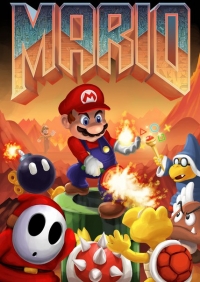
*Image indefinitely borrowed from BrainBoxLtd without his consent.
Soleron said:
No by fail I mean no product appears. But you see it's NOT investment, because there's no return if things go well. You're being asked to pay full-indie-game average price for a full indie-quality-game, with the added huge risk of nothing at all showing up. People will realise that a $15-$20 pledge for a full game is TOO HIGH for an investment. Risk needs to bring that price way down. |
I know what You meant. I think people already do understand in many to most cases that the potential for the product to fail to come to fruition is possible. Although, Kickstarter does have a process that requires that not just any random project gets greenlit to be on the site.
It's not an investment per se, but even if you want to use the word Backing its the same thing. There is NO guarantee you get what you expect when you back a kickstart. You are _not_ buying a product, you are backing the potential of a project to come to fruition. Nothing more.
So far every kickstart game i've seen goes above and beyond any true indie-game. So no $20 is far from too high. Not to mention that again many of these things are Niche which inherently means its going to cost premium.
zarx said:
|
He said between 10-20x.
"The game has already gathered over 150,000 backers; how high does Roberts think sales will be when there's actually a game available? "I think people this early maybe represent five to ten percent of the total audience," Roberts explained. "Just based on the ratio of the people who liked Wing Commander... the number of backers in Germany is like 14 or 15 thousand. We sold 400,000 units of Wing Commander III in Germany alone, and that's assuming no market expansion from 1994 or 1995. I think there is. If you look at FTL, and FTL is difficult because it's a very small game, it did much more than 10x in the number of actual sales compared to the number of backers they had. They had like 10,000 backers and did two or three hundred thousand in sales."
Roberts continued, "My gut sense is that 5 to 10 percent of your audience is going to back you early, and I think that number is variable based on the quality. When you do something really good, it's a lower percentage; if you do something that isn't so good maybe it's 20 percent or 30 percent. I'm assuming if I deliver the game I think I'm going to deliver, if it holds up to the level of Wing Commander or Freelancer or Privateer, I think 10x would be a pretty conservative number."
| pezus said: Except, games get made that you are interested in and wouldn't have been made otherwise. I consider that a HUGE upside |
That's all fine and dandy. You took on all the risks of a game's publisher, never assumed the right to direct/modify/examine/propose changes to the product you're blindly funding, surrendered all rights to the product beyond a one-use license any Joe Schmoe can get later on, will never see a single dime from the game's sales, put up good money years before any product was created, assumed the risk that the product would never actually be created, further assumed the risk that the product will be complete and utter garbage, and just for good measure likely received a digital (non-transferable) copy of the game.
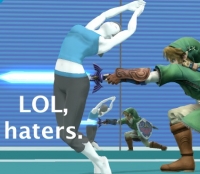
But hey! You stepped up and did the publishers' job for them! UPSIDE!
pezus said:
1. Even when they advertise it as such? There is no doubt there. You will find on release that it's the same price. 2. What kind of an answer is that? Yes, they will...(see: Wasteland 2 for example) Wasteland 2 = $3,000,000 = 16 people for 1.5 years @ $100k/y including expenses, office, legal, marketing, localisation minus 5% KS cut and 10% rewards cut I'm sorry but 16 people for 1.5 years is not enough to make a full modern game with recent midrange PC standard graphics and 15 hours of single player, all up to the quality of a professional studio. Maybe only six of those people will be artists. It's not possible. |


Soleron said:
|
Lets be honest, if you have a small development team, people should be able to be flexible in their roles to get more bang-for-your buck, I.E. Programmer can do a bit of art etc'.
They might also hire some out-side assistance, like Web developers to do some GUI stuff, EA did that with Battlefield 3, it's a very cost effective way to go about some development tasks.
Also you have allot of free middleware available on the PC that if used right, can speed up development time massively.

www.youtube.com/@Pemalite