By using this site, you agree to our Privacy Policy and our Terms of Use. Close

Forums - Gaming - Should NS and wiiU be both labeled as 8th generation?


...

Yes. 27 37.50%
 
No. 36 50.00%
 
Indifferent/comments/Who is America? 9 12.50%
 
Total:72
p0isonparadise said:


7th gen: DS, PSP, X360, Wii, PS3 (2004-2013)
6th gen: Dreamcast, PS2, GBA, GameCube, Xbox (1999-2006)
5th gen: 3DO, Jaguar, Saturn, PS1, N64 (1993-2001)
4th gen: NEC, Genesis, Game Boy, Game Gear, SNES, Neo Geo (1987-2001)
3rd gen: NES, Master System, Atari 7800 (1983-1990)
2nd gen: Atari 2600, Intellivision, Odyssey2, Game & Watch (1977-1984)
1st gen: Odyssey, Home Pong, Telstar, Color TV (1972-1980)

I agree with you on the first 7 gens, but WiiU was a second 7th gen console by nintendo. The WiiU multiplats were mostly ports of PS3 and Xbox 360 games. The Switch is 8th gen, receiving the same multiplats as the PS4 and XBone.


Around the Network
potato_hamster said:
Barkley said:

The Switch may belong to the 8th generation consoles, it depends when the PS5/XB2 launch and when the Switch successor launches.

Switch (A) is a 9th generation console.

Switch (B) is an 8th generation console.

Yes it all depends on how much of it's life is alongside PS4/XBO and how much is alongside PS5/XB2.

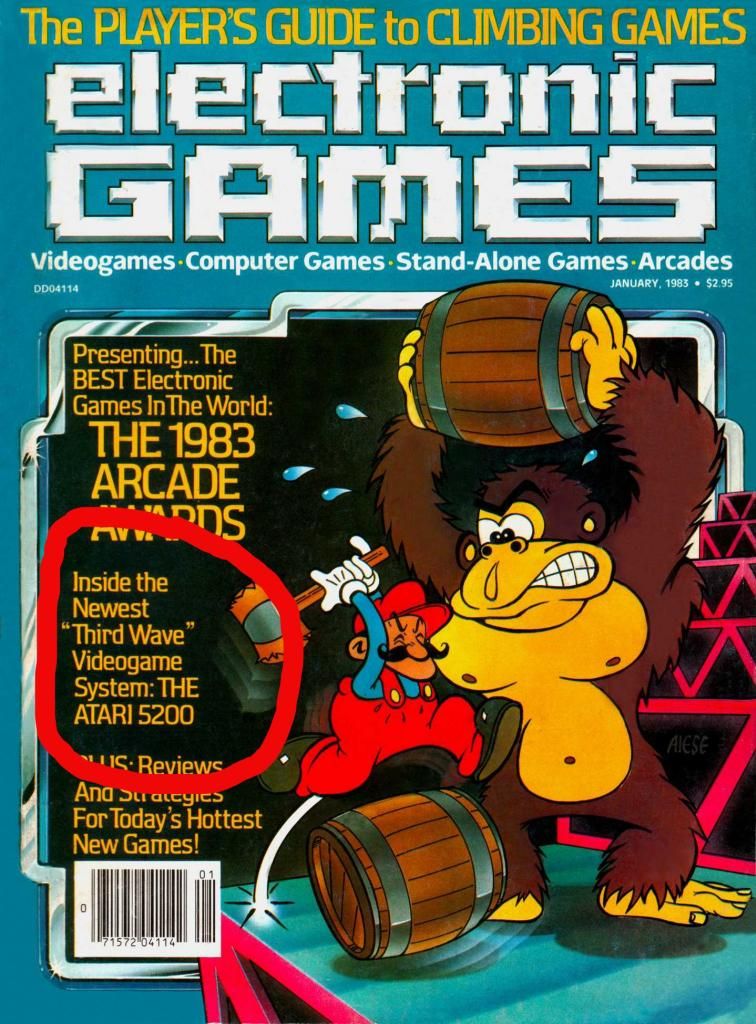
Atari 5200 would like a word. Both it and the 2600 are part of the "2nd generation".
So would the Sega master system. Both it and the SG-100 are part of the "3rd generation".

Did you know there's only 8 months difference in release dates between the Atari 5200 (Nov '82), and the SG-1000, and NES (July '83) yet, the Atari 7800 is considered 3rd generation, even though it released in May '86, just a little over a year before the PC Engine came out, marking the start of the 4th generation. So the 5200 spends the vast majority of its life competing for shelf space with "third generation" games, yet it's considered "2nd generation", and the Atari 7800 spent most of its life competing for shelf space with "4th generation consoles", yet it's still considered third. Now you might be asking "well what was Atari's fourth generation home console" and the answer to that is that they didn't have one. The Jaguar is considered "5th generation".


Trying to come up with logic and reason to which consoles belong to what generations is a fool's errand. It's completely arbitrary.

Yes they did. Atari's 4th gen console was the Atari XE.


Mnementh said:

I'm kinda torn about this. Not about the question as it is, but about the generation thing at all. On the one hand, I see the usefulness to group things in the same category. On the other hand it is only working because most of the time the manufacturers decided to release their platforms not to far removed from each other.

But there are already examples that stretch the definitions of gens. Look, the Dreamcast and Xbox weren't sold at the same time (Dreamcast was killed 2001, end of 2001 released the Xbox). Still they both are counted towards the PS2-gen. In reality though Dreamcast and Xbox never competed against each other.

Depending on the overlap it makes sense to me, to compare the Switch to both, the PS4 and Xbox One, but also to PS5 and Scarlett. At least if Nintendo does not release Switch 2 a year after PS5 drops.

Wrong. Dreamcast still had new retail games coming out in 2002. And many of the Xbox games after that were ports or cancelled releases of Dreamcast games.


8.5 and 7.5 respectively, the average is 8, so yes, let's call them both 8th gen.

More seriously: yes, one was an early launched 8th gen console, the other a later launched 8th gen, the older came far too late to be 7th gen, the newer far too early to be 9th gen, both are on the market as main console together with competing 8th gen cnsoles, this should solve the issue.


Stwike him, Centuwion. Stwike him vewy wuffly! (Pontius Pilate, "Life of Brian")
A fart without stink is like a sky without stars.
TGS, Third Grade Shooter: brand new genre invented by Kevin Butler exclusively for Natal WiiToo Kinect. PEW! PEW-PEW-PEW! 


potato_hamster said:

Atari 5200 would like a word. Both it and the 2600 are part of the "2nd generation".
So would the Sega master system. Both it and the SG-100 are part of the "3rd generation".

Did you know there's only 8 months difference in release dates between the Atari 5200 (Nov '82), and the SG-1000, and NES (July '83) yet, the Atari 7800 is considered 3rd generation, even though it released in May '86, just a little over a year before the PC Engine came out, marking the start of the 4th generation. So the 5200 spends the vast majority of its life competing for shelf space with "third generation" games, yet it's considered "2nd generation", and the Atari 7800 spent most of its life competing for shelf space with "4th generation consoles", yet it's still considered third. Now you might be asking "well what was Atari's fourth generation home console" and the answer to that is that they didn't have one. The Jaguar is considered "5th generation".


Trying to come up with logic and reason to which consoles belong to what generations is a fool's errand. It's completely arbitrary.

The 5200 was discontinued already in 1984 after only 2 years without really competing with any major 3rd Gen system (NES was only out in Japan until 1985). It’s a victim of the video-game crash and it was outlived by the 2600, it’s predecessor. I’d say that’s a fair enough reason to say it’s a second 2nd Gen entry for Atari. The generation classification we have isn’t perfect, but it’s not totally without reason or logic.


Around the Network
ThatDreamcastTho said:
potato_hamster said:

Atari 5200 would like a word. Both it and the 2600 are part of the "2nd generation".
So would the Sega master system. Both it and the SG-100 are part of the "3rd generation".

Did you know there's only 8 months difference in release dates between the Atari 5200 (Nov '82), and the SG-1000, and NES (July '83) yet, the Atari 7800 is considered 3rd generation, even though it released in May '86, just a little over a year before the PC Engine came out, marking the start of the 4th generation. So the 5200 spends the vast majority of its life competing for shelf space with "third generation" games, yet it's considered "2nd generation", and the Atari 7800 spent most of its life competing for shelf space with "4th generation consoles", yet it's still considered third. Now you might be asking "well what was Atari's fourth generation home console" and the answer to that is that they didn't have one. The Jaguar is considered "5th generation".


Trying to come up with logic and reason to which consoles belong to what generations is a fool's errand. It's completely arbitrary.

Yes they did. Atari's 4th gen console was the Atari XE.

It appears the internet has deemed the XE "third generation"

https://en.wikipedia.org/wiki/Atari_XEGS

Look how murky those generation waters are getting.


Yes.


Watch me stream games and hunt trophies on my Twitch channel!

Check out my Twitch Channel!:

www.twitch.tv/AzurenGames

potato_hamster said:
Barkley said:

The Switch may belong to the 8th generation consoles, it depends when the PS5/XB2 launch and when the Switch successor launches.

Switch (A) is a 9th generation console.

Switch (B) is an 8th generation console.

Yes it all depends on how much of it's life is alongside PS4/XBO and how much is alongside PS5/XB2.

Atari 5200 would like a word. Both it and the 2600 are part of the "2nd generation".
So would the Sega master system. Both it and the SG-100 are part of the "3rd generation".

Did you know there's only 8 months difference in release dates between the Atari 5200 (Nov '82), and the SG-1000, and NES (July '83) yet, the Atari 7800 is considered 3rd generation, even though it released in May '86, just a little over a year before the PC Engine came out, marking the start of the 4th generation. So the 5200 spends the vast majority of its life competing for shelf space with "third generation" games, yet it's considered "2nd generation", and the Atari 7800 spent most of its life competing for shelf space with "4th generation consoles", yet it's still considered third. Now you might be asking "well what was Atari's fourth generation home console" and the answer to that is that they didn't have one. The Jaguar is considered "5th generation".


Trying to come up with logic and reason to which consoles belong to what generations is a fool's errand. It's completely arbitrary.

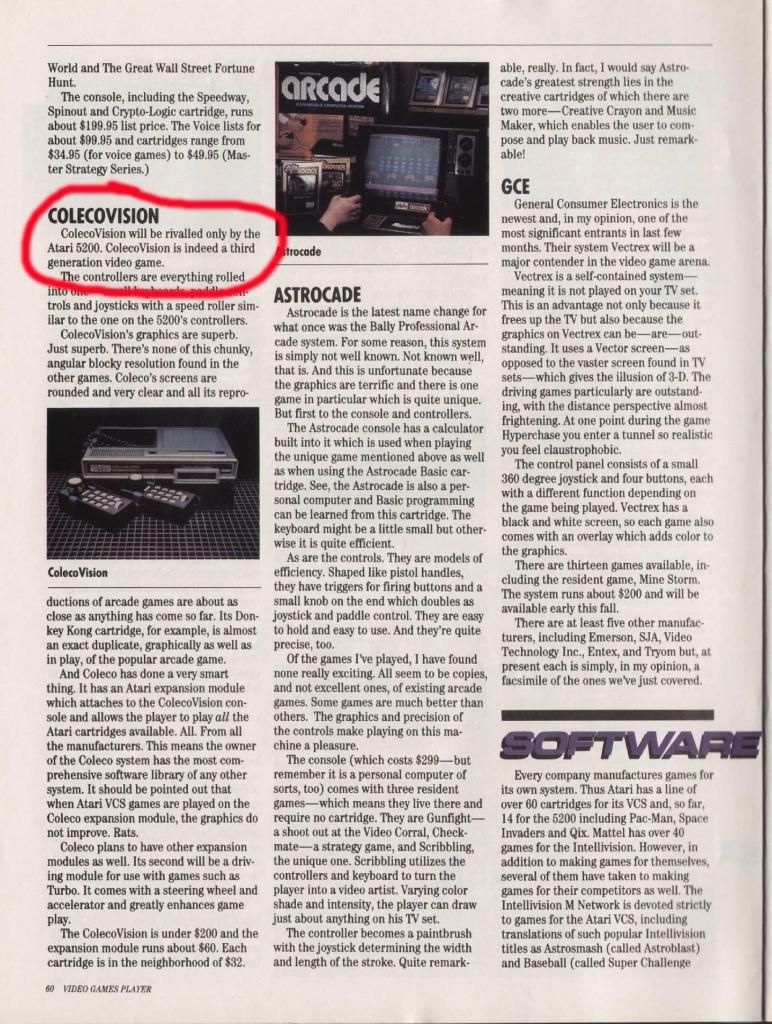
I think the waters of where to historically place the ColecoVision and the Atari 5200 became muddied from both consoles lifecycles effectively being cut short by the North American Video Game Crash of 1983.  The Atari 5200 was discontinued in May 1984.  The ColecoVision was discontinued in 1985.  So, the Atari 5200 was off the market for 2 full years before the NES entered the North American market, and the ColecoVision by about a year as well.  Neither the ColecoVision nor the Atari 5200 ever competed with the NES at any point while they were actively being produced.   

The Atari 7800 launched in May 1986, which was not far off (only 6 months) from the NES release in North America.

Also, for what it's worth, at the time of their release, ColecoVision and the Atari 5200 were actually considered to be "Third Generation" systems.  For reasons referenced above, I think perception of these systems place in history became altered.


Mandalore76 said:
potato_hamster said:

Atari 5200 would like a word. Both it and the 2600 are part of the "2nd generation".
So would the Sega master system. Both it and the SG-100 are part of the "3rd generation".

Did you know there's only 8 months difference in release dates between the Atari 5200 (Nov '82), and the SG-1000, and NES (July '83) yet, the Atari 7800 is considered 3rd generation, even though it released in May '86, just a little over a year before the PC Engine came out, marking the start of the 4th generation. So the 5200 spends the vast majority of its life competing for shelf space with "third generation" games, yet it's considered "2nd generation", and the Atari 7800 spent most of its life competing for shelf space with "4th generation consoles", yet it's still considered third. Now you might be asking "well what was Atari's fourth generation home console" and the answer to that is that they didn't have one. The Jaguar is considered "5th generation".


Trying to come up with logic and reason to which consoles belong to what generations is a fool's errand. It's completely arbitrary.

I think the waters of where to historically place the ColecoVision and the Atari 5200 became muddied from both consoles lifecycles effectively being cut short by the North American Video Game Crash of 1983.  The Atari 5200 was discontinued in May 1984.  The ColecoVision was discontinued in 1985.  So, the Atari 5200 was off the market for 2 full years before the NES entered the North American market, and the ColecoVision by about a year as well.  Neither the ColecoVision nor the Atari 5200 ever competed with the NES at any point while they were actively being produced.   

The Atari 7800 launched in May 1986, which was not far off (only 6 months) from the NES release in North America.

Also, for what it's worth, at the time of their release, ColecoVision and the Atari 5200 were actually considered to be "Third Generation" systems.  For reasons referenced above, I think perception of these systems place in history became altered.

First off, thanks for the deep dive. Nice sources in that one.

Does it really matter if Atari has two second generation consoles or two third generation consoles? Doesn't your argument point out how silly it is to even have this conversation about this Switch at this time?  The fact remains that there is plenty of precedent for console manufacturers to have two console in on generation.  Hell, lump the Wii U in with Wii's generation if you want and call the Switch 7th's generation.


Either way, in a few years, people will come to an arbitrary consensus about what generation Switch ends up in, but I think trying to sort that out before we see how the Switch gets treated after the PS5/X2 are released is jumping the gun.


I think the notion of generations has become less and less useful in the recent years. If you insist on using generations, Switch could probably be considered a 8.5th-gen console. It came too late to be purely 8th-gen, but it's too soon to be clearly 9th-gen either. It's also quite lacking in the processing power department, which speaks a bit against it being a 9th-gen console. However, Nintendo already had an 8th-gen console and since there's nothing forcing it to be considered an 8th-gen console, I would consider if a 9th-gen console for now if we had to pick one generation. If it turns out that Nintendo's next console could easily be considered a 9th-gen console, we should maybe revise this conclusion, but until then, 9th gen seems like a fairly safe bet.

But like I said: the concept of generations has become less and less useful. For Nintendo, this is definitely the 9th generation, but in the big picture, it's not so clear.