Switch’s hybrid form factor likely has a lot to do with the sales. Handhelds are typically personal consoles while home consoles are often shared. It’s why despite the DS selling substantially higher than the Wii, that the Wii probably had a lot more users in total than the DS including those who owned the consoles, shared them in the household, and those who’d come over to play games like Wii Sports, Mario Kart, and Just Dance. But the amount of time Switch has been around is not insignificant. Families and households sharing a Switch will inevitably have users who want their own Switch for the handheld capabilities. Also, because children age and go off to boarding school or university, they’ll want their own switch, and will enter new households; beginning the process anew. This is kind of what happens with home consoles, but much more effectively because of the handheld hybrid factor.
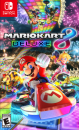
Switch also has several massively popular local multiplayer games, but Mario Kart 8 Deluxe is perhaps the greatest of all time.
This ties to another handheld advantage toward sales. People working in an office tend to like to play games during the lunch break. There are people who buy Switch’s literally just to take part in Mario Kart at lunch; many people grew up playing Mario Kart, 64, or Mario Kart Wii. It’s a game everyone knows, and those who don’t aren’t left out either because of how easy it is to get into it.
Switch has a great potential to become the highest selling console of all time. I don’t think Switch 2 is going to slow the momentum much. People buying Switch these days are hardly the early adopter type, especially if Switch 2 ends up with a price point about double Switch 1, and has low availability. The only way Switch 1 slows is if Nintendo cuts back production and support. I don’t think they will, as I think that’s what the 3DS experiment was about. And Switch 1 has advantages over the late-Gen 3DS experiment, because if true compatibility is a factor, people who buy a Switch in 2024-2026 won’t be investing in a dead end if they want to keep the upgrade avenue open for a later time. For Nintendo, this will also bulk up the potential later gen customer base rather than them considering other options too strongly since they already invested into the Switch 2 ecosystem by buying Switch 1 games.




























 Currently Online


