By using this site, you agree to our Privacy Policy and our Terms of Use. Close

Forums - Nintendo - Why did the Gamecube fail?

curl-6 said:
FormerlyTeamSilent13 said:

I feel strongly that gamecube is overrated, but I know this site has mostly a nintendo fanbase

Heck, I'm a diehard Nintendo fan and I agree Gamecube is overrated.

VGChartz isn't really "mostly Nintendo" though, from polls Sony and Nintendo fanbases are similar in size, maybe 45% Nintendo, 45% Sony, 10% Xbox.

N64 and GameCubes exclusive library make them all time consoles. Nintendo has always been about exclusives and innovation. More gamers wanted variety at the time, as well as CD/DVD playback. Doesn't mean they were failure consoles imo. 


Around the Network
KingJames said:
curl-6 said:

Heck, I'm a diehard Nintendo fan and I agree Gamecube is overrated.

VGChartz isn't really "mostly Nintendo" though, from polls Sony and Nintendo fanbases are similar in size, maybe 45% Nintendo, 45% Sony, 10% Xbox.

N64 and GameCubes exclusive library make them all time consoles. Nintendo has always been about exclusives and innovation. More gamers wanted variety at the time, as well as CD/DVD playback. Doesn't mean they were failure consoles imo. 

Speaking as a Nintendo fan, I wasn't impressed by Gamecube's exclusive lineup. Yeah, games like Metroid Prime and F-Zero GX were amazing, but there's only a handful of Gamecube games I'd consider must-play classics, whereas most Nintendo systems have way more than that.

Last edited by curl-6 - on 11 October 2020

Credit to Sony too ... they were fucking taking no prisoners that generation.

They got up to a 20+ million headstart and would not let off the gas, locking up FFX, MGS2, and GTA3 exclusive. Even if Nintendo did a lot of things right, they would have been in tough, and MS was not the Panasonic 3DO type push over either, Halo being such a big hit gave them instant credibility within the game market.

The competition was simply very strong. Even if they had whatever game you think they were missing ... great 2D Mario, great 3D Mario, great Zelda ... they probably would've still gotten beaten badly by the PS2.

It was a different time too, the NES generation was getting into their late teens/early 20s and wanted a console that showed gaming wasn't a kids past time. PS2 fit that image much better than GameCube. Now that the industry has aged more, that mentality isn't as destructive to Nintendo. Gaming is more established as a mainstream thing, you don't need to explain yourself if you're an adult who plays games but that was still a thing in the late 90s/early 2000s.

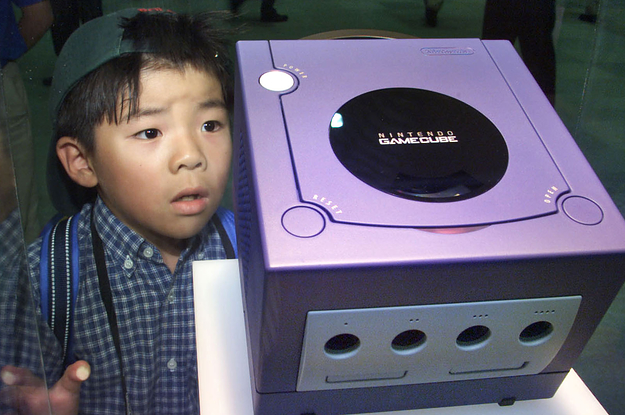
Adults didn't want a console that looked like this in 2001:

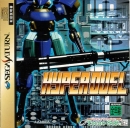
With this as a killer app:


The_Liquid_Laser said:

Soundwave said:

Nobody knew what the fuck a "third party game" was in the NES era, lol. That wasn't a thing. All games were just "Nintendo games" and even all video games were just called "Nintendo" even if you were playing a Tiger handheld or something.

This may be an age thing.  I definitely knew what a third party game was during the NES era.  After a year or so, I knew to always look for Konami and Capcom, because they had the good games, and I should avoid LJN.  The term "Konami Code" came from the NES era.  Plenty of people knew who Konami was.

The biggest reason that every game was a "Nintendo game" was that we called the system itself a "Nintendo".  The first time I'd ever heard NES or SNES, outside of an advertisement, was on the internet.  Normal people, in the US, just called the systems "Nintendo" and "Super Nintendo".

IcaroRibeiro said:

It's also due to the market being more limited with fewer studios and development being more restricted (remember in America NES was released after console gaming crash), fewer quality titles came out from 3rd party during NES/Master System era

Nintendo put heavy restrictions on third party companies, but there were still a ton of third party games on the NES.  That included plenty of quality games.  Nintendo just plain published a lot more games on the NES.  However, the other factor is that Nintendo was pioneering new genres and styles of games on the NES (e.g. the first Metroidvania).  On the SNES, they mostly just upgraded their already successful series, and it was third party developers that were innovating in bigger ways.

I just looked at the top 20 for both systems as listed by Wikipedia.  Here are the third party games in the NES top 20.  All other games are published by Nintendo.

11. Teenage Mutant Ninja Turtles
12. Dragon Quest 3
15. Dragon Quest 4

Here are the third party games in the SNES top 20.

5. Street Fighter 2: The World Warrior
9. Street Fighter 2 Turbo: Hyper Fighting
11. Final Fantasy 6
12. Dragon Quest 6
16. Dragon Quest 5
17. Final Fantasy 5
20. Chrono Trigger

So NES had 3 third party games in the top 20.  SNES had 7.  Nintendo games are still the most important on both systems, but Nintendo has almost all of the top selling games on the NES.  On the SNES third party games had a more important supporting role.  Nintendo published games were still the most important games though even on the SNES.

The other thing is that, with the exception of Ninja Turtles, every game on these lists is either a RPG or Fighting Game.  Nintendo didn't make any really popular RPGs or Fighting Games.  Third parties were innovating more on the SNES.  For people who really liked fighting games or RPGs, the third party games were actually the main draw.  On the NES, platformers and action-adventure games were a big draw, but Mario and Zelda were the best.  You'd play the third party games after you got tired of Mario and Zelda and wanted to move onto something else.

To bring this back to the thread topic, the Gamecube only had 4 third party games in it's top 20.  That makes it more like the NES in that Nintendo had to do almost all of the work selling their system.  I know there are games there that people really like, but nothing of the popularity of NES Mario.  Mario on the NES was like Minecraft is today.  Mario games were the most popular games by far during the late 80s/early 90s.  On the Gamecube, Nintendo was not making the most popular games at the time.  Rockstar was making the most popular games at that time.  That's the simple reason why the Gamecube wasn't successful.  

Nintendo has the ability to make ultra popular games that become huge cultural phenomena.  Just look at what Animal Crossing is doing right now, or what Wii Sports did on the Wii.  It didn't make any game like this on the Gamecube, and that is why it wasn't so successful.  On the NES, Mario was a huge cultural phemonenon like Wii Sports or Minecraft or some other mega huge game.

Actually I do remember avoiding LJN games, haha. But there wasn't really a distinction of what a 3rd party was, like you'd never heard someone say "I'm buying a 3rd party game" or something. Even the way Nintendo themselves positioned the NES in the West at least, all characters on Nintendo systems were basically just "Nintendo characters". 

Like you watch The Wizard (1989 Hollywood movie featuring Nintendo games pushed by Nintendo) and the kids play mostly third party content in the movie ... Double Dragon, Rad Racer (well this is a Squaresoft game, but published by Nintendo in the West), Ninja Gaiden, Ninja Turtles, etc. The Captain N TV show (animated show for kids licensed by Nintendo) also was much in the same way ... it had some Nintendo characters like Mother Brain and King Hippo but also third party characters like Simon Belmont and Megaman. 

It was all just "Nintendo". 

Also I can't find it but I believe there are splits that show how much 1st vs 3rd party software was sold on the NES, SNES, N64, GCN, Wii, etc. The NES has a huge chunk of its software sales coming from 3rd party titles. The SNES actually I believe had majority of its software sales from third parties. 

Growing up with the NES and SNES it was entirely common too ... everyone have Mario that came bundled with the system but after that it was a total crapshoot. It wasn't like now where most Switch owners are dominated by Nintendo IP, back then if someone had 5/7 of their NES games being third party (Megaman 2, Duck Tales, Castlevania, Tecmo Bowl, Ninja Turtles II and just say Mario/Duck Hunt plus Punch-Out! for the Nintendo side) ... something like that wasn't really rare or unsual at all. 


Soundwave said:
The_Liquid_Laser said:

This may be an age thing.  I definitely knew what a third party game was during the NES era.  After a year or so, I knew to always look for Konami and Capcom, because they had the good games, and I should avoid LJN.  The term "Konami Code" came from the NES era.  Plenty of people knew who Konami was.

The biggest reason that every game was a "Nintendo game" was that we called the system itself a "Nintendo".  The first time I'd ever heard NES or SNES, outside of an advertisement, was on the internet.  Normal people, in the US, just called the systems "Nintendo" and "Super Nintendo".

Nintendo put heavy restrictions on third party companies, but there were still a ton of third party games on the NES.  That included plenty of quality games.  Nintendo just plain published a lot more games on the NES.  However, the other factor is that Nintendo was pioneering new genres and styles of games on the NES (e.g. the first Metroidvania).  On the SNES, they mostly just upgraded their already successful series, and it was third party developers that were innovating in bigger ways.

I just looked at the top 20 for both systems as listed by Wikipedia.  Here are the third party games in the NES top 20.  All other games are published by Nintendo.

11. Teenage Mutant Ninja Turtles
12. Dragon Quest 3
15. Dragon Quest 4

Here are the third party games in the SNES top 20.

5. Street Fighter 2: The World Warrior
9. Street Fighter 2 Turbo: Hyper Fighting
11. Final Fantasy 6
12. Dragon Quest 6
16. Dragon Quest 5
17. Final Fantasy 5
20. Chrono Trigger

So NES had 3 third party games in the top 20.  SNES had 7.  Nintendo games are still the most important on both systems, but Nintendo has almost all of the top selling games on the NES.  On the SNES third party games had a more important supporting role.  Nintendo published games were still the most important games though even on the SNES.

The other thing is that, with the exception of Ninja Turtles, every game on these lists is either a RPG or Fighting Game.  Nintendo didn't make any really popular RPGs or Fighting Games.  Third parties were innovating more on the SNES.  For people who really liked fighting games or RPGs, the third party games were actually the main draw.  On the NES, platformers and action-adventure games were a big draw, but Mario and Zelda were the best.  You'd play the third party games after you got tired of Mario and Zelda and wanted to move onto something else.

To bring this back to the thread topic, the Gamecube only had 4 third party games in it's top 20.  That makes it more like the NES in that Nintendo had to do almost all of the work selling their system.  I know there are games there that people really like, but nothing of the popularity of NES Mario.  Mario on the NES was like Minecraft is today.  Mario games were the most popular games by far during the late 80s/early 90s.  On the Gamecube, Nintendo was not making the most popular games at the time.  Rockstar was making the most popular games at that time.  That's the simple reason why the Gamecube wasn't successful.  

Nintendo has the ability to make ultra popular games that become huge cultural phenomena.  Just look at what Animal Crossing is doing right now, or what Wii Sports did on the Wii.  It didn't make any game like this on the Gamecube, and that is why it wasn't so successful.  On the NES, Mario was a huge cultural phemonenon like Wii Sports or Minecraft or some other mega huge game.

Actually I do remember avoiding LJN games, haha. But there wasn't really a distinction of what a 3rd party was, like you'd never heard someone say "I'm buying a 3rd party game" or something. Even the way Nintendo themselves positioned the NES in the West at least, all characters on Nintendo systems were basically just "Nintendo characters". 

Like you watch The Wizard (1989 Hollywood movie featuring Nintendo games pushed by Nintendo) and the kids play mostly third party content in the movie ... Double Dragon, Rad Racer (well this is a Squaresoft game, but published by Nintendo in the West), Ninja Gaiden, Ninja Turtles, etc. The Captain N TV show (animated show for kids licensed by Nintendo) also was much in the same way ... it had some Nintendo characters like Mother Brain and King Hippo but also third party characters like Simon Belmont and Megaman. 

It was all just "Nintendo". 

Also I can't find it but I believe there are splits that show how much 1st vs 3rd party software was sold on the NES, SNES, N64, GCN, Wii, etc. The NES has a huge chunk of its software sales coming from 3rd party titles. The SNES actually I believe had majority of its software sales from third parties. 

Growing up with the NES and SNES it was entirely common too ... everyone have Mario that came bundled with the system but after that it was a total crapshoot. It wasn't like now where most Switch owners are dominated by Nintendo IP, back then if someone had 5/7 of their NES games being third party (Megaman 2, Duck Tales, Castlevania, Tecmo Bowl, Ninja Turtles II and just say Mario/Duck Hunt plus Punch-Out! for the Nintendo side) ... something like that wasn't really rare or unsual at all. 

I think we are basically saying the same thing.  I never used the term "third party game", but I knew there were other companies publishing games that were not Nintendo.

"The NES has a huge chunk of its software sales coming from 3rd party titles. The SNES actually I believe had majority of its software sales from third parties."

The NES had lots of third party games, but the biggest sellers were from Nintendo.  Like I said in a previous post, only 3 of the top 20 were third party games on the NES.  However, if I were to list all of the million sellers, then you'd see a whole lot of third party games on the list.  You are right that there were lots of third party games and it's just that each person had different ones, but everyone had Mario.

Nintendo handhelds are like this too.  The top titles are always Nintendo games, but those third party games are still important.  They aren't there to be the top sellers, but to round out a person's library.  The third party titles are still important for the success of the system even if they aren't the top sellers.

The one Nintendo system that is truly different from the rest is the SNES.  The SNES had a bigger chunk of third party titles that were actually system sellers.  Street Fighter games and Squaresoft games were system sellers for the SNES.  They are doing more than just rounding out the library.  Nintendo still publishes the majority of the system sellers, but third parties play a major role.  The SNES is the only Nintendo system like this, where 7 out of the top 20 (1/3) are not Nintendo games.  Usually that ratio is more like 1/6 of the top 20.  After the SNES, the major third party titles went to Playstation.  But they were a big deal on the Playstation, because they were already a big deal on the SNES.


Around the Network
Leynos said:
Pemalite said:

The OG Xbox was a step up over Gamecube in regards to balance.

The Xbox's CPU was potent, but the awesome Soundstorm audio chip offloaded audio tasks, the GPU offloaded things like TnL from the CPU meaning the CPU could punch above it's weight... It came with a chunky amount of Ram for the time too which enabled games like Morrowind, Doom 3, Half Life 2 to be on the console which were traditionally PC experiences.

But relying on commodity PC hardware which had gone through decades worth of research and development already by that point, was a known quantity in regards to development nuances and balance, really hard to argue with that approach.

The Dreamcast was also fairly refined, but it was definitely memory limited, 26MB of total memory (16MB system, 8MB video, 2MB audio) was not well suited for the entire generation... But it did release in 1999 I guess.

Dreamcast released in 1998 in Japan. 1999 in the US.  I always kinda wondered if they were somehow pushing the DC launch to a WW release in 9/9/99 and able to pack in a Voodoo 3 with 24 MB of main ram (34 in total) a DVD drive and a second analog stick (I know the V3 is a stretch esp as they were originally going for a Voodoo2 before settling on PowerVR2) and if DC was successful enough to launch a 7th gen system. The hardware existed in Lindbergh arcade board. With a few tweaks.

If it launched with a Voodoo 2 and 34MB of memory in total it would have closed the hardware gap with the PS2.
It would definitely had an advantage in fillrate which was one of Voodoos biggest strengths... It's just the hardware feature set was always behind. I.E. 16-bit colour, no TnL so on and so forth. But if you wanted the best performance, Voodoo was where it was at.
Still would have been 3x slower than the OG Xbox in 3D tasks though... Especially with high geometric complex scenes with lots of particle effects.

Although the PS2 did TnL operations on the Emotion Engine anyway and the Dreamcast did it on a separate Hitachi core.

I wonder if Dreamcast did pick 3dfx and was a success if 3dfx would still be around today?


www.youtube.com/@Pemalite

Pemalite said:
Leynos said:

Dreamcast released in 1998 in Japan. 1999 in the US.  I always kinda wondered if they were somehow pushing the DC launch to a WW release in 9/9/99 and able to pack in a Voodoo 3 with 24 MB of main ram (34 in total) a DVD drive and a second analog stick (I know the V3 is a stretch esp as they were originally going for a Voodoo2 before settling on PowerVR2) and if DC was successful enough to launch a 7th gen system. The hardware existed in Lindbergh arcade board. With a few tweaks.

If it launched with a Voodoo 2 and 34MB of memory in total it would have closed the hardware gap with the PS2.
It would definitely had an advantage in fillrate which was one of Voodoos biggest strengths... It's just the hardware feature set was always behind. I.E. 16-bit colour, no TnL so on and so forth. But if you wanted the best performance, Voodoo was where it was at.

Still would have been 3x slower than the OG Xbox in 3D tasks though... Especially with high geometric complex scenes with lots of particle effects.

Although the PS2 did TnL operations on the Emotion Engine anyway and the Dreamcast did it on a separate Hitachi core.

I wonder if Dreamcast did pick 3dfx and was a success if 3dfx would still be around today?

Regarding PS2 and Gamecube, as I understand it the Cube's main graphical advantages were its high speed 1T-SRAM, and it's TEV unit which allows 8 textures to be combined in a single pass, thus giving it an advantage in things like bumpmapping and the like, correct?


curl-6 said:
Pemalite said:

If it launched with a Voodoo 2 and 34MB of memory in total it would have closed the hardware gap with the PS2.
It would definitely had an advantage in fillrate which was one of Voodoos biggest strengths... It's just the hardware feature set was always behind. I.E. 16-bit colour, no TnL so on and so forth. But if you wanted the best performance, Voodoo was where it was at.
Still would have been 3x slower than the OG Xbox in 3D tasks though... Especially with high geometric complex scenes with lots of particle effects.

Although the PS2 did TnL operations on the Emotion Engine anyway and the Dreamcast did it on a separate Hitachi core.

I wonder if Dreamcast did pick 3dfx and was a success if 3dfx would still be around today?

Regarding PS2 and Gamecube, as I understand it the Cube's main graphical advantages were its high speed 1T-SRAM, and it's TEV unit which allows 8 textures to be combined in a single pass, thus giving it an advantage in things like bumpmapping and the like, correct?

Indeed that is correct.
The TEV technically allows the Gamecube to do any effect the OG Xbox could. It just required more passes to pull it off.
But a texturing powerhouse it certainly was... Definitely dominated the PS2 in the specs department by a large mile.


www.youtube.com/@Pemalite

curl-6 said:
Pemalite said:

If it launched with a Voodoo 2 and 34MB of memory in total it would have closed the hardware gap with the PS2.
It would definitely had an advantage in fillrate which was one of Voodoos biggest strengths... It's just the hardware feature set was always behind. I.E. 16-bit colour, no TnL so on and so forth. But if you wanted the best performance, Voodoo was where it was at.
Still would have been 3x slower than the OG Xbox in 3D tasks though... Especially with high geometric complex scenes with lots of particle effects.

Although the PS2 did TnL operations on the Emotion Engine anyway and the Dreamcast did it on a separate Hitachi core.

I wonder if Dreamcast did pick 3dfx and was a success if 3dfx would still be around today?

Regarding PS2 and Gamecube, as I understand it the Cube's main graphical advantages were its high speed 1T-SRAM, and it's TEV unit which allows 8 textures to be combined in a single pass, thus giving it an advantage in things like bumpmapping and the like, correct?

I think Xbox only had 4. At least according to EGM in 2001.


Bite my shiny metal cockpit!

Leynos said:
curl-6 said:

Regarding PS2 and Gamecube, as I understand it the Cube's main graphical advantages were its high speed 1T-SRAM, and it's TEV unit which allows 8 textures to be combined in a single pass, thus giving it an advantage in things like bumpmapping and the like, correct?

I think Xbox only had 4. At least according to EGM in 2001.

I remember reading that too. As I understand it (I could be wrong) Gamecube was faster at multitexturing due to being geared for it, while Xbox's programmable pixel and vertex shaders were less fast but more flexible.