By using this site, you agree to our Privacy Policy and our Terms of Use. Close

Forums - Politics - Do you consider yourself more left or right wing?


I am...

More left leaning 52 61.90%
 
More right leaning 32 38.10%
 
Total:84
Chrkeller said:

Doesn't seem feasible to screen every single person.  Extreme example, but Bronny James doesn't need help... so it can't be black/white.  How do you implement who needs help and who simply made bad decisions?  I have family/friends in the same income bracket as me, but their kids are taking out loans.  Do their kids get help?  If so, why did I bother to do the right thing?  On paper I get your point, I just don't think it works in reality.  

Yet admissions staff are able to do this more or less by including many different metrics of SES. Until last year, this did include race, but it also included things like educational attainment of one's parents, familial income, zip-code/regional inequalities, etc. All of these can be used together to reliably predict which opportunities an individual had with some degree of precision. 

Why did you bother to do the right thing in our actual reality? You did it didn't you, even though another family's kids got loans/grants? Doesn't that derail your argument that this demotivates you when you actually did the action you said you'd be dissuaded to do when a condition (that actually exists in our real world) was met? 

And regardless, again the role of society should be to maximize capacities of all individuals. If the effect of providing opportunities to the children of the mass of the population that "didn't do the right thing" (let's assume that is an accurate assessment) does this, and exceeds the negative effects you're suggesting exist from it, then it should still be done because the society and the individuals within it are better off for it. 



Around the Network
sc94597 said:
Chrkeller said:

Doesn't seem feasible to screen every single person.  Extreme example, but Bronny James doesn't need help... so it can't be black/white.  How do you implement who needs help and who simply made bad decisions?  I have family/friends in the same income bracket as me, but their kids are taking out loans.  Do their kids get help?  If so, why did I bother to do the right thing?  On paper I get your point, I just don't think it works in reality.  

Yet admissions staff are able to do this more or less by including many different metrics of SES. Until last year, this did include race, but it also included things like educational attainment of one's parents, familial income, zip-code/regional inequalities, etc. All of these can be used together to reliably predict which opportunities an individual had with some degree of precision. 

Why did you bother to do the right thing in our actual reality? You did it didn't you, even though another family's kids got loans/grants? Doesn't that derail your argument that this demotivates you when you actually did the action you said you'd be dissuaded to do when a condition (that actually exists in our real world) was met? 

And regardless, again the role of society should be to maximize capacities of all individuals. If the effect of providing opportunities to the children of the mass of the population that "didn't do the right thing" (let's assume that is an accurate assessment) does this, and exceeds the negative effects you're suggesting exist from it, then it should still be done because the society and the individuals within it are better off for it. 

If loan forgiveness happens, I'm buying a boat and having society pay for their college.  


i7-13700k

Vengeance 32 gb

RTX 4090 Ventus 3x E OC

Switch OLED

Chrkeller said:

If loan forgiveness happens, I'm buying a boat and having society pay for their college.  

Income-based and service-based loan forgiveness programs were passed by Congress in 2007, signed into law by Bush Jr., and are starting to take effect about now (ten years ago for PSLF.) The U.S system is increasingly approximating the systems of the rest of the anglosphere where student loans are essentially amount-capped graduated income taxes by those who benefited from tertiary education. 

You probably should've started looking into boats from the start if that is a concern.


sc94597 said:
Chrkeller said:

Late to the party but I do not like the equity push. Equal outcome? Talent and hardwork play a huge role in outcome. People are not entitled to equal outcome. I'm not entitled to a Nobel Prize because there are more talented and harding working people than I am.

Equal opportunity should absolutely exist, but outcomes should vary. Work and skills should be rewarded.

And an un-level playing field drives motivation.  I dont work 50 hours a week for me, I do it to give my children an edge over the competition.  Equal outcome is de-motivating.  

Something that is true for individuals (outcomes should depend on decisions) don't generally apply to arbitrary groups/categories -- where different individuals within the group are making different decisions that should balance out on net in similar ways.

It makes sense (even if we assumed actual equal opportunity at birth, which would require no inheritance) for individuals to end up in different places. It doesn't make sense for arbitrary socially constructed groups -- like race for this to be the case, without considering some lurking variable(s) that applies generally to individuals in that arbitrary group.

I don't understand how you see race as a socially constructed group. It is just biology, no? Or am I missunderstanding you?

We don't know, by the way, that biological race would not play a role for intelligence, because the research on it is so taboo. I heard an Interview about "The Bellcurve" (or whatever the name of it is) that was pretty convincing about this being a very little researched topic. We really don't know.

But culture is definitely socially constructed. And culture can run along racial lines as borders. Nothing surprising about that. And cultures are different of course. This would have to mean that some are better at some things and worse at other things. I think this can easyily have a messurable effect on things like education.


JuliusHackebeil said:

I don't understand how you see race as a socially constructed group. It is just biology, no? Or am I missunderstanding you?

We don't know, by the way, that biological race would not play a role for intelligence, because the research on it is so taboo. I heard an Interview about "The Bellcurve" (or whatever the name of it is) that was pretty convincing about this being a very little researched topic. We really don't know.

But culture is definitely socially constructed. And culture can run along racial lines as borders. Nothing surprising about that. And cultures are different of course. This would have to mean that some are better at some things and worse at other things. I think this can easyily have a messurable effect on things like education.

Race is a social construct. Currently existing racial groups do not align with the genetic data on human population structure. 

If I show you this phylogenetic tree -- which groups in the tree are "Black"? For example, why do we group a Khwe person with a South Bantu person as "Black" when a Eurasian person and a South Bantu person have more recent common ancestry than either do with a Khwe person? The common "races" of "white", "black", "asian", etc are paraphyletic from the start, which means it is difficult to talk about them as representing actual historical genetic populations. And of course things get even more complicated when we consider mixing both in the pre-Colombian and post-Colombian periods. Humans are essentially one population group (in the genetic sense) in 2025, but this was also largely true before colonialism as well.

There has been pretty much constant gene-flow for the last hundred thousands years in all human populations. At best, what we call "races" are really just convergent eco-types.


Here is when those populations split. Also notice that there is mixing in all of these groups, and these splits represent non-existent "pure" populations. 

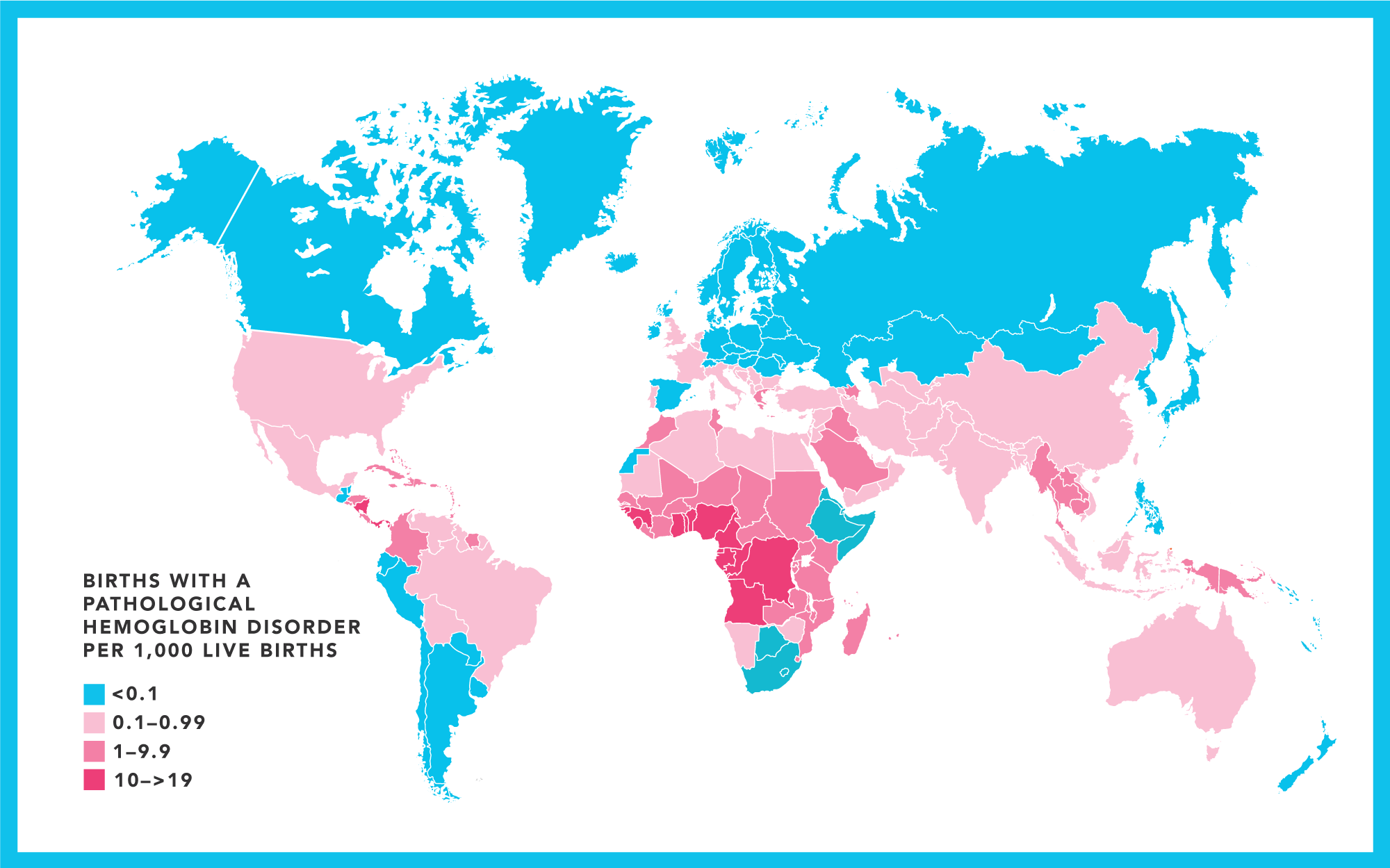
Consider another scenario. If in the United States most white people came from Italy and the Southern Balkans, and most Black people came from the Horn of Africa the common association of sickled-cell anemia being a "Black disease" would actually be reversed. 

This is why we can be pretty confident that "race", as we use it, is gibberish in a biological population sense. It doesn't align with what we know about human population genetics and phylogeny. 

But culture is definitely socially constructed. And culture can run along racial lines as borders. Nothing surprising about that. And cultures are different of course. This would have to mean that some are better at some things and worse at other things. I think this can easyily have a messurable effect on things like education.

Sure, but when we suggest culture is the source of the problem we have to explain the historical and current social forces that shape that culture. 

Last edited by sc94597 - on 04 September 2025

Around the Network
Chrkeller said:

Late to the party but I do not like the equity push. Equal outcome? Talent and hardwork play a huge role in outcome. People are not entitled to equal outcome. I'm not entitled to a Nobel Prize because there are more talented and harding working people than I am.

Equal opportunity should absolutely exist, but outcomes should vary. Work and skills should be rewarded.

And an un-level playing field drives motivation.  I dont work 50 hours a week for me, I do it to give my children an edge over the competition.  Equal outcome is de-motivating.  

Yeah I somewhat agree with this.

On the one hand, people should be treated equally in so far as a school or a business shouldn't be allowed to exclude say women or black people, or pay them less for the same work, and everyone should have the same basic legal rights.

On the flipside, people have every right to leave wealth to their children to give them a head start, and those who excel should not be held back by those that don't make the effort. 

As Aleksandr Solzhenitsyn once said, "Human beings are born with different capacities. If they are free, they are not equal. And if they are equal, they are not free." 


curl-6 said:
Chrkeller said:

Late to the party but I do not like the equity push. Equal outcome? Talent and hardwork play a huge role in outcome. People are not entitled to equal outcome. I'm not entitled to a Nobel Prize because there are more talented and harding working people than I am.

Equal opportunity should absolutely exist, but outcomes should vary. Work and skills should be rewarded.

And an un-level playing field drives motivation.  I dont work 50 hours a week for me, I do it to give my children an edge over the competition.  Equal outcome is de-motivating.  

Yeah I somewhat agree with this.

On the one hand, people should be treated equally in so far as a school or a business shouldn't be allowed to exclude say women or black people, or pay them less for the same work, and everyone should have the same basic legal rights.

On the flipside, people have every right to leave wealth to their children to give them a head start, and those who excel should not be held back by those that don't make the effort. 

As Aleksandr Solzhenitsyn once said, "Human beings are born with different capacities. If they are free, they are not equal. And if they are equal, they are not free." 

Exactly.  


i7-13700k

Vengeance 32 gb

RTX 4090 Ventus 3x E OC

Switch OLED

Lot's of just-world hypothesis thinking in this thread. 

There are many reasons why somebody can end up without wealth that don't involve them being lazy, unmotivated, or not working. Here in the United States a big one is just becoming chronically ill. 

I am doing pretty well myself. Make a top 1% income for my age. Save about two-thirds of it (after taxes.) Likely can retire in five years when I am 37 years old, if I were to want to (I don't.) But I am well-aware I am a few unlucky circumstances away from being penniless.

And while yes I did work hard to get where I am, it wasn't without the assistance of society and a few lucky advantages. 

I can guarantee you that if I were born in the family I was born into (single-parent waitress as a mother) in say the 1890's instead of the 1990's, I wouldn't have been able to move between classes (working class -> professional-managerial class.) And that is really the end society of the "equality under the law is all we need" mindset -- the Gilded Age. 


sc94597 said:

Lot's of just-world hypothesis thinking in this thread. 

There are many reasons why somebody can end up without wealth that don't involve them being lazy, unmotivated, or not working. Here in the United States a big one is just becoming chronically ill. 

I am doing pretty well myself. Make a top 1% income for my age. Save about two-thirds of it (after taxes.) Likely can retire in five years when I am 37 years old, if I were to want to (I don't.) But I am well-aware I am a few unlucky circumstances away from being penniless.

And while yes I did work hard to get where I am, it wasn't without the assistance of society and a few lucky advantages. 

I can guarantee you that if I were born in the family I was born into (single-parent waitress as a mother) in say the 1890's instead of the 1990's, I wouldn't have been able to move between classes (working class -> professional-managerial class.) And that is really the end society of the "equality under the law is all we need" mindset -- the Gilded Age. 

We don't even have equal treatment under the law. The rich can easily buy their way out of trouble. They can afford high powered lawyers and use their money to intimidate the legal and judicial systems into not touching them to begin with. Even when they can't, the consequences, both short-term and long-term, lay on them far more lightly than the poor.  We've all heard "when the penalty for a crime is a fine, it is only a crime for the poor," and "A fine is the price you pay to make something legal." But even when the penalty for a crime is jail time, the wealthy are far more likely to avoid jail time, thanks to money and connections.

We have a lot of convicted felons in the U.S. government today, not just the Felon-in-Chief. Kennedy, for example was convicted on felony heroin possession charges in South Dakota. He had several priors for possession before his felony bust, and at least one person has said that Kennedy not only used heroin, he actually sold heroin. He never saw any jail time for it. His family has said that even before that, he ran with a gang in Hyannis Port that regularly committed theft to support their drug habits.  Instead of being condemned to a life of living in crappy trailer parks in South Dakota or even being homeless, he is now fucking up the public health system with woo pushed by "wellness" influences. 


What's up with the poll? I never added all those options just listed as "1".