By using this site, you agree to our Privacy Policy and our Terms of Use. Close

Forums - Nintendo - How Will be Switch 2 Performance Wise?


Switch 2 is out! How you classify?

Terribly outdated! 3 5.26%
 
Outdated 1 1.75%
 
Slightly outdated 14 24.56%
 
On point 31 54.39%
 
High tech! 7 12.28%
 
A mixed bag 1 1.75%
 
Total:57
EricHiggin said:

It kinda looks like future hardware from MS and SNY is either going to get put off ALAP, or isn't going to be an insane leap, in which case either outcome would be good news for SW2.

I'm thinking UDNA architectural changes are going to make quite a bit of a difference - I'm expecting fairly modest raster improvements, maybe 3x, but RT capabilities are going to 8x or even more over PS5. Take into account additional NPU blocks and there will be massive difference how games are made in nextgen vs now, and what kind of hardware they demand without doing separate ports - not to say that crossgen titles will no exist for some time, as per usual.


Around the Network

I'm thinking the 10th Generation (2026->2030) will be a short one. Basically pushing decent ray tracing, and fully achieving the promises of this generation. 

The 11th Generation (2030-2037ish) probably will be when neural rendering comes into its own and will be a huge (for today's standards) generational leap somewhere between the SD ->HD leap (6th -> 7th Generation) and 2D -> 3D (4th ->5th Generation) in noticeable difference. 

Neural Rendering will likely come with new gameplay genres/types and styles. That is probably what the current generation lacks most. A genre/sub-genre that can only be done now that couldn't be done very well in the past. 

Nvidia is laying out the blueprint, but AMD and/or Intel will likely catch up by then. If they don't Nvidia will become a real monopoly that might even try to expand into non-GPU consumer processors.  If thay happens, they probably should be broken up.

Last edited by sc94597 - on 02 August 2025

sc94597 said:

I'm thinking the 10th Generation (2026->2030) will be a short one. Basically pushing decent ray tracing, and fully achieving the promises of this generation. 

The 11th Generation (2030-2037ish) probably will be when neural rendering comes into its own and will be a huge (for today's standards) generational leap somewhere between the SD ->HD leap (6th -> 7th Generation) and 2D -> 3D (4th ->5th Generation) in noticeable difference. 

Neural Rendering will likely come with new gameplay genres/types and styles. That is probably what the current generation lacks most. A genre/sub-genre that can only be done now that couldn't be done very well in the past. 

Nvidia is laying out the blueprint, but AMD and/or Intel will likely catch up by then. If they don't Nvidia will become a real monopoly that might even try to expand into non-GPU consumer processors.  If thay happens, they probably should be broken up.

I'm bit more on the side where 10th gen is THE gen that sees first AAA games with AI NPCs with AI generated voice overs trained on actor's voice/expressions libraries, all in AI governed open worlds, in RT or even PT presentation.


curl-6 said:
Shaunodon said:

Both Wii U and Switch were outdated when they released. The fact that Switch 2 can be considered on point or better is why it's been such a nice surprise.

I mean, the Tegra X1 was a 2015 chipset, and a console using tech from a year or two prior is pretty normal.

The Gamecube's chipset was finalized in 1999 for a 2001 release, the N64 in 1995 for a 1996 release. 

About the last time any console was cutting edge was the Xbox 360 nearly 20 years ago. 

I'd say the Dreamcast GPU was ahead of its time in 1998. Short window, but games putting 3 million polygons in a time when PC games would be topping out at 1 million. The PowerVR2 was better than the Voodoo2 card, which almost made it in the system. Tho 90s tech was advancing so fast by  1999, DC fell behind when Rivia TNT 2 came out.


Bite my shiny metal cockpit!

HoloDust said:
sc94597 said:

I'm thinking the 10th Generation (2026->2030) will be a short one. Basically pushing decent ray tracing, and fully achieving the promises of this generation. 

The 11th Generation (2030-2037ish) probably will be when neural rendering comes into its own and will be a huge (for today's standards) generational leap somewhere between the SD ->HD leap (6th -> 7th Generation) and 2D -> 3D (4th ->5th Generation) in noticeable difference. 

Neural Rendering will likely come with new gameplay genres/types and styles. That is probably what the current generation lacks most. A genre/sub-genre that can only be done now that couldn't be done very well in the past. 

Nvidia is laying out the blueprint, but AMD and/or Intel will likely catch up by then. If they don't Nvidia will become a real monopoly that might even try to expand into non-GPU consumer processors.  If thay happens, they probably should be broken up.

I'm bit more on the side where 10th gen is THE gen that sees first AAA games with AI NPCs with AI generated voice overs trained on actor's voice/expressions libraries, all in AI governed open worlds, in RT or even PT presentation.

I think you're right, but I think the implementations will be rough in the same way technically the SNES had rudimentary 3D games, but it wasn't until the 5th Generation that they fundamentally changed the landscape. 

AMD's problem is less hardware and more software/hardware-software interfaces in my opinion. They really need to invest heavily into ROCM or even better -- an open-source competitor to CUDA. But of course, that is turning out to be a more difficult problem to solve than even GPU design. 


Around the Network
sc94597 said:

I'm thinking the 10th Generation (2026->2030) will be a short one. Basically pushing decent ray tracing, and fully achieving the promises of this generation. 

The 11th Generation (2030-2037ish) probably will be when neural rendering comes into its own and will be a huge (for today's standards) generational leap somewhere between the SD ->HD leap (6th -> 7th Generation) and 2D -> 3D (4th ->5th Generation) in noticeable difference. 

Neural Rendering will likely come with new gameplay genres/types and styles. That is probably what the current generation lacks most. A genre/sub-genre that can only be done now that couldn't be done very well in the past. 

Nvidia is laying out the blueprint, but AMD and/or Intel will likely catch up by then. If they don't Nvidia will become a real monopoly that might even try to expand into non-GPU consumer processors.  If thay happens, they probably should be broken up.

Nvidia and AMD don't really give a shit about PC GPUs anymore. Sure they will make them and they will continue to improve, but the AI server market is way, way, way larger. I think in Nvidia's recent earnings report, like only 8% of their total revenue was from "gaming" and that includes the Switch + PC GPUs. 

Gaming GPUs are a small potatoes business already. 


Soundwave said:
sc94597 said:

I'm thinking the 10th Generation (2026->2030) will be a short one. Basically pushing decent ray tracing, and fully achieving the promises of this generation. 

The 11th Generation (2030-2037ish) probably will be when neural rendering comes into its own and will be a huge (for today's standards) generational leap somewhere between the SD ->HD leap (6th -> 7th Generation) and 2D -> 3D (4th ->5th Generation) in noticeable difference. 

Neural Rendering will likely come with new gameplay genres/types and styles. That is probably what the current generation lacks most. A genre/sub-genre that can only be done now that couldn't be done very well in the past. 

Nvidia is laying out the blueprint, but AMD and/or Intel will likely catch up by then. If they don't Nvidia will become a real monopoly that might even try to expand into non-GPU consumer processors.  If thay happens, they probably should be broken up.

Nvidia and AMD don't really give a shit about PC GPUs anymore. Sure they will make them and they will continue to improve, but the AI server market is way, way, way larger. I think in Nvidia's recent earnings report, like only 8% of their total revenue was from "gaming" and that includes the Switch + PC GPUs. 

Gaming GPUs are a small potatoes business already. 

This is what essentially neural rendering (as a workload) solves. How can you maximally utilize hardware that is designed with specialized modules for GPGPU compute for gaming? 

Nvidia and AMD might not care about gaming enough to prioritize it (although that doesn't mean they can't also target that market), but Nintendo, Microsoft and Sony do, and Nvidia and AMD are happy enough to give them solutions that are useful for their needs.

It only looks like Nvidia is abandoning the market when one takes a narrow view of what gaming workloads can look like, by basically assuming the current methods of rendering 3D graphics are what should exist in the future and hardware needs to be designed for these workloads specifically.


Ys X: Proud Nordics, which is out now in Japan, has a 120fps mode on Switch 2, which I believe makes it the first game on the system outside of Welcome Tour to support this.


SvennoJ said:

Digital Foundry did a comprehensive comparison

https://www.eurogamer.net/digitalfoundry-2025-we-benchmarked-cyberpunk-2077-on-switch-2-ps4-ps4-pro-and-series-s-so-what-did-we-learn

They peg the Switch 2 somewhere between PS4 and PS4 Pro, well below Series S

You can see the blow-by-blow results in the video but in summary, there's a decent degree of variability here, but the Switch 2's docked GPU performance up against PlayStation 4 - the base PS4 - should be highlighted. On all of our tests, the Switch 2 delivers higher pixel counts and it's doing so with DLSS anti-aliasing and upscaling vs a less expensive TAA solution on the old Sony console. Across all of our test results, Switch 2 is delivering an average 32 percent improvement in resolution. Up against PS4 Pro though, Switch 2 is either on par resolution wise or considerably lower, a gulf in results that makes an average pointless. Ultimately though, I Switch 2 falls between PS4 and Pro though ideally I'd like more data here - and some idea of how much GPU load DLSS is accounting for.


Against Xbox Series S, resolution differences vary from nothing to upwards of 70 percent in favour of the Series S - the larger numbers may well be down to the fact that we often hit the max 1080p on Switch 2, so there may actually be overhead beyond that we just aren't seeing. Looking at the performance mode differentials, there is a big gulf: an average 73 percent resolution advantage for Series S which is targeting 60fps vs Switch 2's 40fps.


DF got  it right. It's a ps4 with DLSS in docked mode. The gap between series s and switch 2 is massive here and in most ports.


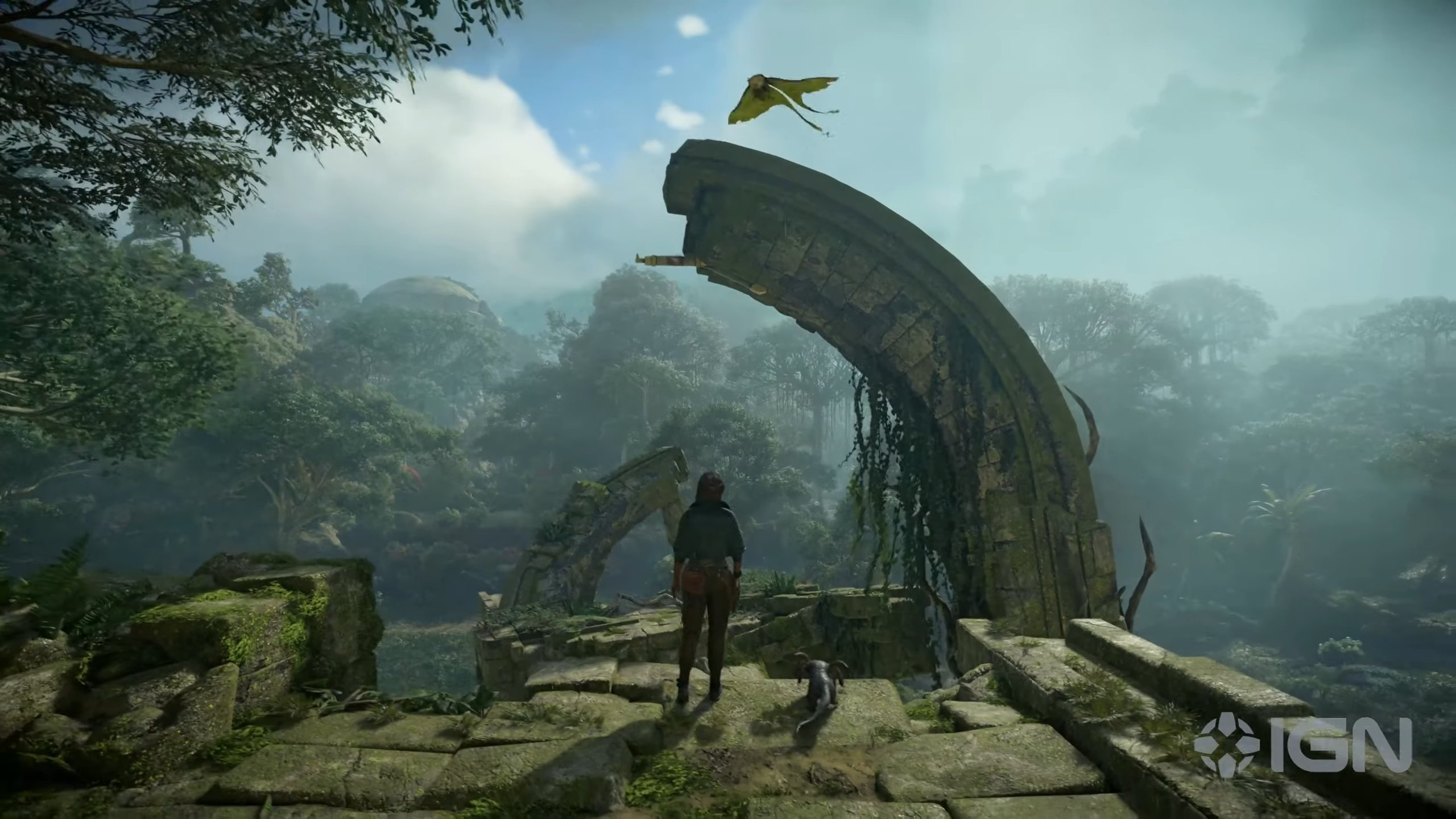
Star Wars Outlaws on Switch 2, vs the home console version: (Switch 2 at top)