

t3mporary_126 on 05 June 2015
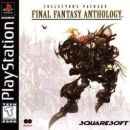
| Shadow1980 said: This article is almost literally laughable. The author obviously never paid attention in Gaming History 101. If you look at the history of gaming and how some systems succeeded but most failed, you'd realize that Nintendo, Sony, and MS have nothing to fear from Valve. Only five companies to have ever made a name for themselves in the console market: Atari, Nintendo, Sega, Sony, and Microsoft. Only two of those (Sony & MS) were companies that made a name for themselves making other products before entering the console market. Having a successful product requires more than just willpower and brand recognition. Many more have tried to enter the console space and failed miserably, their systems failing to sell more than 2 or 3 million units before they withdrew from the market. Among those are Fairchild, Coleco, Mattel, the second incarnation of Atari, Amstrad, the 3DO Company, Philips, and even a collaboration between Apple and Bandai. NEC probably fared best of all the also-rans as the TurboGrafx-16 sold some 10 million units, but it was their only success, and the TG-16's follow-up, the PC-FX, bombed horribly, after which NEC withdrew from the console market. Of all the consoles ever made, and of all the companies that tried to be one of the big fish in the console pond, most have failed. Making a name for yourself requires a combination of things. It requires a quality product sold at a good price, plus it requires a big killer app that really sells the system, things that pretty much every failed system lacked. The 2600 had ports of many popular arcade games. The NES was marketed very well in America and Japan and had games like Mario and Zelda. The Genesis had an aggressive marketing campaign and had Sonic as a successful "mascot" series to rival Mario. The PlayStation had many notable third-party games, the most important of those being Final Fantasy VII, plus Sony managed to market the system successfully in Europe to make it the first big breakthrough console in the region after Nintendo and Sega spent the previous decade experiencing middling sales there. Finally, the Xbox had Halo, which turned out to be a surprise success; Halo CE was attached to some half of all Xboxes sold in the first few months, and in 2004 Halo 2 had the biggest launch of any game ever at that point. Xbox is an interesting case as their first system did not do so great, selling 24 million systems (two-thirds of those being in the U.S.), and they got lucky as their only truly major exclusive was Halo. Had MS not bought out Bungie, it's highly likely that the Xbox would have completely fizzled out and that we'd have ended up with the seventh and eighth generations being two-console races between Sony and Nintendo. It's likely that Halo made the difference between doing decent and being just another failed attempt from some computer company to make a game console. Fortunately for MS, they did have Bungie at their disposal, Halo did put their system on the map, and they were able to get their second system to market first, acquire several notable titles for it that came out in its first year, and successfully market the system and sell it at a reasonable price, allowing them to greatly expand their market share. Sometimes a single title can make a huge difference, and Halo was MS's Mario. Many newcomers think they can do well in the console market, but most of them don't do what's needed to succeed. Where's the market for the Steam Machines? PC gamers already have a "Steam machine" in the form of their computer, and only a dedicated few will buy a standalone Steam-based console. Console gamers aren't going to go for it either, especially considering that A) probably around a third of console gamers aren't even online, and B) console gamers vastly prefer physical media, with physical outselling paid digital downloads by an 18-to-1 ratio in 2014 (not including indies and other small titles). Also, what major AAA exclusives will it have that PlayStation or Xbox won't get? Every successful console had a library of strong titles that couldn't be found anywhere else. Where's Steam's answer to Mario, Sonic, or Halo? Is Valve going to stop releasing their games for other consoles, and will they make a surprise announcement that Half-Life 3 is a Steam Machines exclusive? Finally, to complicate things these Steam Machines aren't exactly affordable, with the cheapest one I've seen going for like $500. Some of them run for well over $1000. The Steam Box is already preordained to end up in the dustbin of history along with the CD-i, 3DO, Jaguar, Pippin, Shield, Ouya, and other commercial failures. If Google tries their hand at making a console, or if Apple decides to make another system, then they better hope they meet the necessary requirements for their system to succeed. Otherwise they too will end up as mere historical footnotes. |
Great post! Entering the video game console market isn't easy. And the handheld market is even harder (although smart devices are making this market redudant in North America and Europe specifically). Nintendo initially advertised their NES console as a toy with ROB before they got popular in North America!
But if Half Life 3 is revealed at E3 to be an exclusive or even a time exclusive to Steam machines, expect meltdowns!