By using this site, you agree to our Privacy Policy and our Terms of Use. Close

Forums - Sony - Stand up and salute: Sony discontinues MiniDisc after 20 years

Get out your calendars - Sony will be making its final MiniDisc stereo system in March, marking an end to the 20-year-old media format.

MiniDisc was launched in 1992, but never saw widespread success outside of Japan. Its rise in the West was stymied by the existing popularity of the CD and the growth of the MP3 format and its smaller, more battery-efficient portable players.

It was based around small, rewritable optical disks housed in a plastic shell with a storage capacity of 80 minutes. An attempted reboot in 2004 as Hi-MD failed miserably, and sales of portable MiniDisc players ended in 2011.

But the format did prove popular among sound engineers and journalists, who used MiniDisc players to record sounds, jingles and interviews before adequate solid-state storage options arrived.

The announcement was made alongside the release of a teaser video for a Playstation press conference, where it's widely expected that a new console will be announced.

http://www.wired.co.uk/news/archive/2013-02/02/minidisc-rip


Around the Network
kowenicki said:

Salute? Lol. Good riddance. Fairly pointless format with virtually zero home use. 


MiniDisc, the forgotten format

Twenty years ago, Sony launched a format that promised CD clarity and cassette convenience – but the world just wasn't interested. Why not?

MiniDisc … neglected by the public, killed by the MP3 player. Photograph: Oliver Leedham/Alamy

Twenty years ago this month, Sony unveiled the technology they hoped would transform our relationship with music. Cassettes were too flimsy, fading and snapping as time passed. CDs were for listening, not recording – yet. But the MiniDisc? That could do everything.

The only problem? No one was interested. In its first year, Sony managed to sell only 50,000 MiniDisc player/recorders.

Though MiniDisc was better than the well-established alternatives, it was never quite worth the expense. For technophiles it was a dream, taking users into a world of new data compression techniques without them needing to know how to run a recording studio. But it took a decade to make any impression on the mainstream – people stuck with cassettes for recording, and Walkmen and Discmen for portability – and almost as soon as it did, it was killed by the MP3 player.

When it launched the MiniDisc in September 1992, Sony seemed not to have noticed that its target market – teenagers – couldn't afford what it was selling. The MZ-1 MiniDisc player/recorder cost $750 (£463), which didn't lure teenagers away from cassettes and CDs. What's more, Philips was preparing to launch the Digital Compact Cassette, and faced with product confusion, consumers opted for neither. So Sony sulked back to producing matte plastic CD players in slightly different shades of gray – until the late 90s when it decided to have another go at MiniDiscs.

Sony feverishly declared that 1998 was to be the "Year of the MiniDisc", after its research showed 75% of Americans had never even heard of the device. A $30m marketing campaign was launched, accompanied with the release of lower-priced systems, the cheapest costing $250 (£154).

Reading on mobile? Watch here

Sony's 1997 advert for the relaunched MiniDisc tried to convince music lovers they had the world at their fingertips. It suggested the MiniDisc endowed users with musical superpowers: the advert's hero exploded a fire hydrant underneath the businessman who was, inexplicably, sitting on it, before changing the orbit of Earth around the sun. The marketing should have sparked an explosion in sales, but none of the record labels were interested. When you wanted to listen to something not released by Sony, you were stuck trying to cut out the between-song radio chatter on the top 40 to make your own mixtapes. In HMV's flagship store in London, MiniDisc racks were sad little displays dwarfed by acres of CDs.

By the time other labels began to see the benefits of MiniDiscs, it was too late. In October 2001, Apple launched its first iPod; meanwhile recordable CDs were becoming commonplace for those who wanted to make their own mixtapes. In 2001, both MiniDisc and cassette sales dropped by 70%, and the end for both formats was nigh. Die-hard fans continued to praise the device, but to no avail: in September 2011, Sony shipped the last MiniDisc Walkman – 19 years after it had stumbled on to the marketplace.

The BetaMax might be the poster boy for better technology killed by marketing after its defeat by VHS, but spare a thought for the MiniDisc – smart, cool … but just not cool enough.


 

Pointless? Have you even read your article? The only reason MD failed was because it was too EXPENSIVE, it was actually  a very awesome all round format and something like it in the 90s was pretty cool and unique. It was never pointless, it just didn't become mainstream thanks to the high price. I still have my MiniDisc.


kowenicki said:
Turkish said:
kowenicki said:

Salute? Lol. Good riddance. Fairly pointless format with virtually zero home use. 


MiniDisc, the forgotten format

Twenty years ago, Sony launched a format that promised CD clarity and cassette convenience – but the world just wasn't interested. Why not?

MiniDisc … neglected by the public, killed by the MP3 player. Photograph: Oliver Leedham/Alamy

Twenty years ago this month, Sony unveiled the technology they hoped would transform our relationship with music. Cassettes were too flimsy, fading and snapping as time passed. CDs were for listening, not recording – yet. But the MiniDisc? That could do everything.

The only problem? No one was interested. In its first year, Sony managed to sell only 50,000 MiniDisc player/recorders.

Though MiniDisc was better than the well-established alternatives, it was never quite worth the expense. For technophiles it was a dream, taking users into a world of new data compression techniques without them needing to know how to run a recording studio. But it took a decade to make any impression on the mainstream – people stuck with cassettes for recording, and Walkmen and Discmen for portability – and almost as soon as it did, it was killed by the MP3 player.

When it launched the MiniDisc in September 1992, Sony seemed not to have noticed that its target market – teenagers – couldn't afford what it was selling. The MZ-1 MiniDisc player/recorder cost $750 (£463), which didn't lure teenagers away from cassettes and CDs. What's more, Philips was preparing to launch the Digital Compact Cassette, and faced with product confusion, consumers opted for neither. So Sony sulked back to producing matte plastic CD players in slightly different shades of gray – until the late 90s when it decided to have another go at MiniDiscs.

Sony feverishly declared that 1998 was to be the "Year of the MiniDisc", after its research showed 75% of Americans had never even heard of the device. A $30m marketing campaign was launched, accompanied with the release of lower-priced systems, the cheapest costing $250 (£154).

Reading on mobile? Watch here

Sony's 1997 advert for the relaunched MiniDisc tried to convince music lovers they had the world at their fingertips. It suggested the MiniDisc endowed users with musical superpowers: the advert's hero exploded a fire hydrant underneath the businessman who was, inexplicably, sitting on it, before changing the orbit of Earth around the sun. The marketing should have sparked an explosion in sales, but none of the record labels were interested. When you wanted to listen to something not released by Sony, you were stuck trying to cut out the between-song radio chatter on the top 40 to make your own mixtapes. In HMV's flagship store in London, MiniDisc racks were sad little displays dwarfed by acres of CDs.

By the time other labels began to see the benefits of MiniDiscs, it was too late. In October 2001, Apple launched its first iPod; meanwhile recordable CDs were becoming commonplace for those who wanted to make their own mixtapes. In 2001, both MiniDisc and cassette sales dropped by 70%, and the end for both formats was nigh. Die-hard fans continued to praise the device, but to no avail: in September 2011, Sony shipped the last MiniDisc Walkman – 19 years after it had stumbled on to the marketplace.

The BetaMax might be the poster boy for better technology killed by marketing after its defeat by VHS, but spare a thought for the MiniDisc – smart, cool … but just not cool enough.


Pointless? Have you even read your article? The only reason MD failed was because it was too EXPENSIVE, it was actually  a very awesome all round format and something like it in the 90s was pretty cool and unique. It was never pointless, it just didn't become mainstream thanks to the high price. I still have my MiniDisc.

How old wre you when you bought yours? How old are you now?

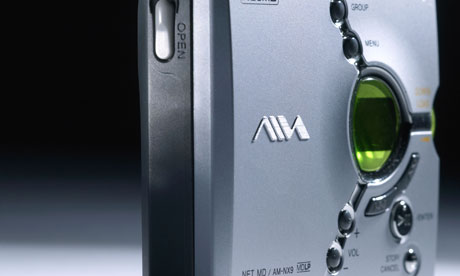
I was 10 I think I'm now well into my 20s, I got it as a birthday present. I continued to use it after Apple launched the iPod, it was too expensive. I stopped using MDs in 2006 when I bought my iPod video. MD has OUTLIVED its useful technological life by atleast a decade and I'm surprised it still existed. Minidisc was for years, from the introduction of the very first model by SONY (MZ-1) as an excellent digital medium for entertainment and for broadcast and news professionals. Many journalists used MD recorders on the job -- the MZB3 model was the first with an onboard speaker and is still highly valued today. AIWA's AM-F70 provided random track play and programmability. ATRAC evolved and improved as did disc capacities. For music lovers, decks like the MXD-D5C combined MD and CD drives. MD lasted more than two decades and many users will always remember it (and continue to use it).


kowenicki said:

Salute? Lol. Good riddance. Fairly pointless format with virtually zero home use. Mis-timed, mis-priced, mis-marketed. 


Maybe so, but it still had a bigger impact on the world than you will ever have buddy Does that make you pointless?


OT: well so long, I never even had one, and yeah, it would have been waaaaay to expensive for me :/ Never the less every day we come closer to the fully digital age, and the death of a format should remind us of this little fact


Vote the Mayor for Mayor!

MiniDisk was far from useless, specially to sound designers, it was very sturdy, you use it to store raw music samples it was better than CDs at doing so, since CDs easily scratch and didn't have that much output for raw files and formats, this is the reason why sound designers import raw MD sound formats then edit them into Vinyl records then compress them to CDs.

today this is made much easier thanks to better computers and HDDs (SSDs) as well as dedicated sound cards, where raw files can be stored safely without any compression , its also why most audio files get leaked nowadays (computers are easy to hack into)


Around the Network

Should have killed it years ago... but it's Sony.. they kept supporting betamax till 2002...


Face the future.. Gamecenter ID: nikkom_nl (oh no he didn't!!) 

PullusPardus said:
MiniDisk was far from useless, specially to sound designers, it was very sturdy, you use it to store raw music samples it was better than CDs at doing so, since CDs easily scratch and didn't have that much output for raw files and formats, this is the reason why sound designers import raw MD sound formats then edit them into Vinyl records then compress them to CDs.

Heck no... any professional sound designer would use Sony's DAT.. MiniDisc compresses the sound it's not raw.. most sound production companies even don't accept MD and want the source file on a DAT..


Face the future.. Gamecenter ID: nikkom_nl (oh no he didn't!!) 

NiKKoM said:
PullusPardus said:
MiniDisk was far from useless, specially to sound designers, it was very sturdy, you use it to store raw music samples it was better than CDs at doing so, since CDs easily scratch and didn't have that much output for raw files and formats, this is the reason why sound designers import raw MD sound formats then edit them into Vinyl records then compress them to CDs.

Heck no... any professional sound designer would use Sony's DAT.. MiniDisc compresses the sound it's not raw.. most sound production companies even don't accept MD and want the source file on a DAT..


I'm not sure if you are actually being serious...


Haha, really? I thought that had been dead for more than 10 years. Sometimes I wonder how Sony is still in business.


NiKKoM said:
Should have killed it years ago... but it's Sony.. they kept supporting betamax till 2002...


sony does have a good history of supporting their products.  probably not always good business but as a consumer i do appreciate it.