


| kowenicki said: Salute? Lol. Good riddance. Fairly pointless format with virtually zero home use.
Monday 24 September 2012 16.39 BST MiniDisc, the forgotten formatTwenty years ago, Sony launched a format that promised CD clarity and cassette convenience – but the world just wasn't interested. Why not? 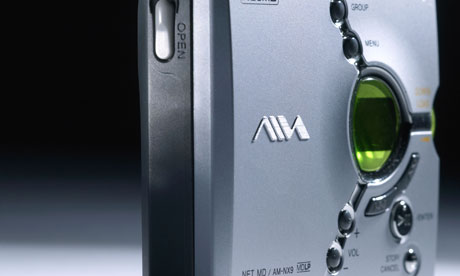 MiniDisc … neglected by the public, killed by the MP3 player. Photograph: Oliver Leedham/Alamy MiniDisc … neglected by the public, killed by the MP3 player. Photograph: Oliver Leedham/Alamy
Twenty years ago this month, Sony unveiled the technology they hoped would transform our relationship with music. Cassettes were too flimsy, fading and snapping as time passed. CDs were for listening, not recording – yet. But the MiniDisc? That could do everything. The only problem? No one was interested. In its first year, Sony managed to sell only 50,000 MiniDisc player/recorders. Though MiniDisc was better than the well-established alternatives, it was never quite worth the expense. For technophiles it was a dream, taking users into a world of new data compression techniques without them needing to know how to run a recording studio. But it took a decade to make any impression on the mainstream – people stuck with cassettes for recording, and Walkmen and Discmen for portability – and almost as soon as it did, it was killed by the MP3 player. When it launched the MiniDisc in September 1992, Sony seemed not to have noticed that its target market – teenagers – couldn't afford what it was selling. The MZ-1 MiniDisc player/recorder cost $750 (£463), which didn't lure teenagers away from cassettes and CDs. What's more, Philips was preparing to launch the Digital Compact Cassette, and faced with product confusion, consumers opted for neither. So Sony sulked back to producing matte plastic CD players in slightly different shades of gray – until the late 90s when it decided to have another go at MiniDiscs. Sony feverishly declared that 1998 was to be the "Year of the MiniDisc", after its research showed 75% of Americans had never even heard of the device. A $30m marketing campaign was launched, accompanied with the release of lower-priced systems, the cheapest costing $250 (£154). Reading on mobile? Watch here By the time other labels began to see the benefits of MiniDiscs, it was too late. In October 2001, Apple launched its first iPod; meanwhile recordable CDs were becoming commonplace for those who wanted to make their own mixtapes. In 2001, both MiniDisc and cassette sales dropped by 70%, and the end for both formats was nigh. Die-hard fans continued to praise the device, but to no avail: in September 2011, Sony shipped the last MiniDisc Walkman – 19 years after it had stumbled on to the marketplace. The BetaMax might be the poster boy for better technology killed by marketing after its defeat by VHS, but spare a thought for the MiniDisc – smart, cool … but just not cool enough.
|
Pointless? Have you even read your article? The only reason MD failed was because it was too EXPENSIVE, it was actually a very awesome all round format and something like it in the 90s was pretty cool and unique. It was never pointless, it just didn't become mainstream thanks to the high price. I still have my MiniDisc.