Well doesn't look like I am missing much anyway as I don't do much video encoding, and Ivy bridge is going to destroy AMD next year
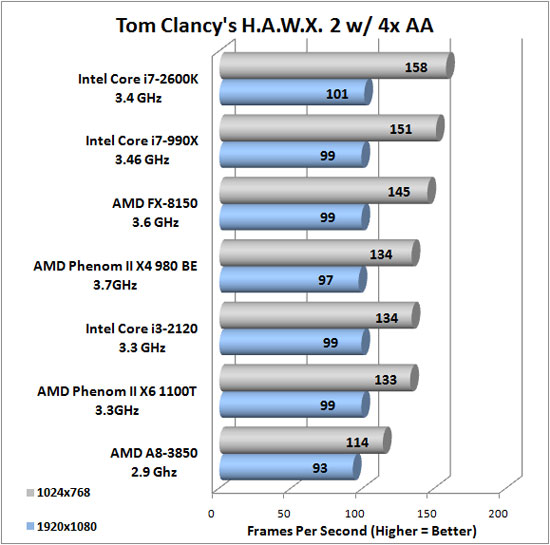
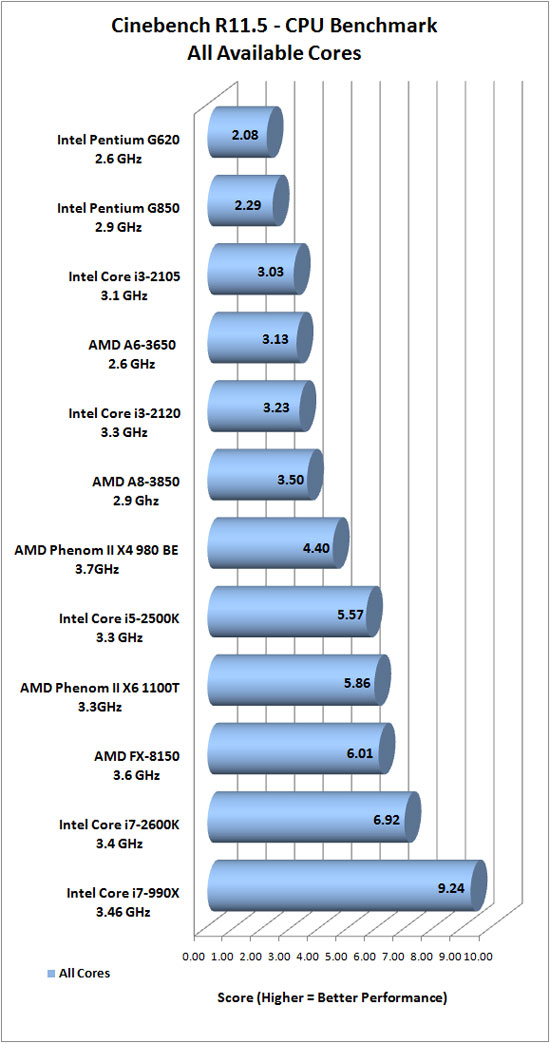
http://www.legitreviews.com/article/1741/1/
- Intel Core i7-2600K (5GHz)
- Intel Core i5-2500K (5GHz)
- Intel Core i7-990X Extreme Edition (4.6GHz)
- Intel Core i7-2600K (3.4GHz)
- Intel Core i7-920 (4.04GHz)
- Intel Core i5-2500K (3.3GHz)
- Intel Core i7-990X Extreme Edition (3.46GHz)
- AMD FX-8150 (4.818GHz)
- AMD Phenom II X6 1100T Black Edition (4.2GHz)
- Intel Core i7-920 (2.66GHz)
- AMD FX-8150 (3.6GHz)
- AMD Phenom II X6 1100T Black Edition (3.3GHz)
frames per second, higher is better
AMD FX-8150 – why so bad?
Apart from the idle power draw of the FX-8150 – which we’ll point once again is an excellent achievement by AMD considering that the FX-8150 is a high-performance desktop part and its rival Core i5-2500K and Core i7-2600K are both essentially power-efficient laptop processors that have been beefed up a little for desktop PCs – the results show AMD’s latest CPU to be awful at everyday, consumer applications.
It’s a lack of single-threaded performance that holds the FX-8150 back – its efforts in our single-threaded image editing test were dire compared to every other processor on test. Even worse, this supposedly 8-core CPU running at 3.6GHz was hardly much faster than a six-core Phenom II X6 1100T running at 3.3GHz in heavily multi-threaded applications that saturate all available execution cores. In Cinebench R11.5 and WPrime – applications where a 8-core CPU should dominate a 6-core (let alone a quad-core) – we saw a lack of performance.
http://www.bit-tech.net/hardware/cpus/2011/10/12/amd-fx-8150-review/13
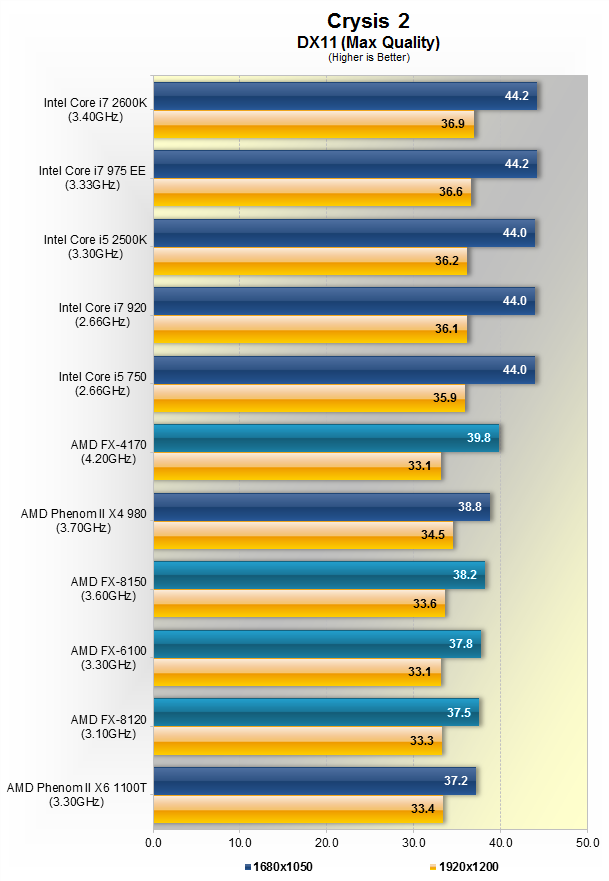
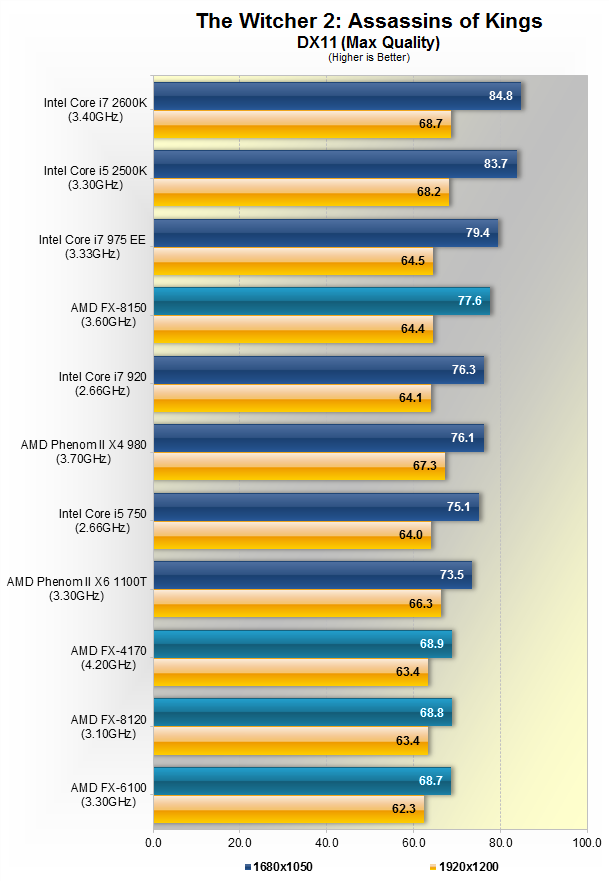
http://www.techspot.com/review/452-amd-bulldozer-fx-cpus/http://www.techspot.com/review/452-amd-bulldozer-fx-cpus/

So, let’s say someone puts Core i5-2500K and FX-8150 in front of you. The Core i5 costs $220 bucks, and the FX runs $245. Which one do you buy?
If it’s me, I’m going with the Core i5. I gave the -2500K a Tom’s Hardware Recommended Buy award back in January, and I stick by that recommendation almost a year later.
In the very best-case scenario, when you can throw a ton of work at the FX and fully utilize its eight integer cores, it generally falls in between Core i5-2500K and Core i7-2600K—which is where it should appear all of the time given a price tag between those two most relevant competitors. Sometimes FX manages to outperform the higher-end -2600K, but other times it’s embarrassingly bested by its predecessor in threaded workloads.
Toss a single-threaded app at the processor, though, and it underperforms Intel's three-year-old Core i7-920 running at its stock 2.66 GHz. AMD’s architects say they shot to maintain IPC and ramp up clock rate, but something clearly went wrong along the way.
Ironically, consistent, scalable performance is one of the attributes that AMD claims it gets from its Bulldozer module. The issue we see over and over, though, is that it relies on software able to exploit scalability in order to compete. When it doesn’t get what it wants, performance steps back relative to the previous generation. As a result, even though AMD implements a more advanced version of Turbo Core to help improve single-threaded performance, the difference between what you get in lightly- and heavily-threaded applications is anything but consistent.
AMD validly points out that Bulldozer is an architecture in its infancy accompanied by an aggressive roadmap. It incorporates future-looking ISA enhancements and a layout clearly conceptualized with threaded software in mind. Performance in the applications able to take advantage of those considerations is fair in light of AMD's asking price. But the compromises made elsewhere don't justify $245, in my opinion.
http://www.tomshardware.com/reviews/fx-8150-zambezi-bulldozer-990fx,3043-24.html