By using this site, you agree to our Privacy Policy and our Terms of Use. Close

Forums - Gaming - Games that were ahead of their time (and in what way)

What games do you consider to be ahead of their time, in terms of adopting things that would later become mainstream but weren't at the time, or just generally being forward-thinking in a way that makes them feel more modern than they actually are? And why specifically does your time feel so to you?


Around the Network

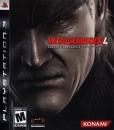
Pokemon Silver/Gold, Crysis, Metal Gear Solid 1 and 4, Earthbound, Shenmue, Zelda Ocarina of Time, F.e.a.r, Deus Ex, Half Life 1, 2 and Alyx, Batman Arkham Knight, Sleeping Dogs, and Super Mario 64


SteamMyAnimeList and Twitter - PSN: Gustavo_Valim - Switch FC: 6390-8693-0129 (=^・ω・^=)

Shikamo said:

Pokemon Silver/Gold, Crysis, Metal Gear Solid 1 and 4, Earthbound, Shenmue, Zelda Ocarina of Time, F.e.a.r, Deus Ex, Half Life 1, 2 and Alyx, Batman Arkham Knight, Sleeping Dogs, and Super Mario 64

In your view what made these games ahead of their time?


curl-6 said:
Shikamo said:

Pokemon Silver/Gold, Crysis, Metal Gear Solid 1 and 4, Earthbound, Shenmue, Zelda Ocarina of Time, F.e.a.r, Deus Ex, Half Life 1, 2 and Alyx, Batman Arkham Knight, Sleeping Dogs, and Super Mario 64

In your view what made these games ahead of their time?

Ouch, I gave to many examples, so will be hard to explain one by one. In most of the games I mentioned is the tech behind them, things like Visuals, physics, etc in games like F.e.a.r, Deus Ex, Half Life, Crysis, etc. Some others made impossible compressions like Zelda OOT that uses a 32mb n64 cartridge or Pokemon Silver that uses a 2mb cartridge and has 2 pokemon regions (Johto and Kanto).


SteamMyAnimeList and Twitter - PSN: Gustavo_Valim - Switch FC: 6390-8693-0129 (=^・ω・^=)

MAG

Warhawk

SOCOM Confrontation

Sony's push with online only games came a gen too early. The model was more established on consoles and Sony's online infrastructure was much better during the PS4 generation.


http://www.youtube.com/watch?v=F1gWECYYOSo

Please Watch/Share this video so it gets shown in Hollywood.

Around the Network

Metal Gear Solid 2: Its plots had elements that now seems like predictions of the future, which is now coming true and has been for a while. I think I recently read that Kojima never intended it that way, but regardless, that's some good scenario writing there for it to be actually coming true in some ways.

Demon's Souls: It created an entire genre at a time when most genres were already well established.. What more is there to say? I could also list some other games that created genres, but it's easier to create something new when the industry isn't very mature yet, so for the purposes of this thread, that might be a bit boring.

Half-Life is often hailed for its role in bringing actually interesting plots to shooters, and I guess environmental storytelling as well? I don't think I have enough experience with the shooters of those days to fully verify this, but its reputation for this is probably well warranted.

I really want to say Battlefied: Bad Company for the destructive environments, but I don't think destructive environments ever really caught on big time. Also, it's unclear if I should give the credit to the first Red Faction instead, but destruction in it felt pretty limited compared to Bad Company, if I've understood correctly (I haven't actually played the first Bad Company besides the demo). I guess both are kind of pioneers of a feature that never caught on properly.

There's probably some great examples from the 80s/90s that I'm not aware of or simply don't remember right now.


Digimon World- The systems in place in this game were way ahead of its time. Examples include: Day/Night system, City Builder, Life simulator, Achievement system, Morality system, and etc,


* Grand Theft Auto 3.
Sandbox city, story driven, great mechanics, just worked.

* Final Fantasy 7.
Amazing CGI cutscenes, characters with depth with a detailed game would that pioneered what story driven 3D JRPG games would become.

* Dune 2.
First time RTS gaming was actually good. And it was good, would later inspire Command and Conquer, Age of Empires, WarCraft and StarCraft.

* Super Mario 64.
Pioneered 3D platforming.

* Goldeneye 007.
Pioneered decent FPS games on console and influenced games like Perfect Dark and Halo.

* System Shock.
Pioneered FPS, RPG elements into a single package, would later on be the influence to the highly acclaimed Bioshock.

* Portal.
All Physics. All Story. All Puzzles. Took the best parts of Half Life 2 and threw it into a unique package.

* Half Life 2.
Physics. In an FPS. It was great.

* World of Warcraft.
Love it or hate it. It made MMO's a thing.

* Mirrors Edge.
Combat took a side-role, Parkour took the spotlight and it worked.
Movement system and cloth physics is still some of the best ever made in a video game.

* Morrowind.
Open world RPG, but fully 3D realized and coherent. Laid the groundwork for what Oblivion, Skyrim and Fallout 3/4 would become.

* Wolfenstein.
First DECENT First Person Shooter, 3D environments... Laid the groundwork for what would become Doom, which in turn laid the groundwork for Quake... Which ended up being the game engine that powered many successful franchises even today in 2026 like Call of Duty.

Thanks Wolfenstein.

* Crysis.
Ahead of times, visual spectacle and pioneered many graphics effects and game design ideas which are still in use today by games.

* Metal Gear Solid.
Pioneered cinematic Stealth.

* Minecraft.
Open blocky world, full of crafting and survival elements.


www.youtube.com/@Pemalite

Betrayal at Krondor, which is also my favorite game of all time.

It was a story-driven, 50-hour RPG, open-world and massive, with turn-based combat with a grid system. It had item degradation with repair mechanics and skills, adaptive skill system that leveled them with actual use, with the added feature of being able to highlight "specialty" skills for extra gain. It had a health/stamina mechanic where you needed extra herbal remedies to recover from more serious injury, and your combat efficiency degraded along with lost health. Your spells culd be heightened, in favor of losing more stamina, and once stamina is gone, it costs health (same for melee fighting and crossbow hits). It had a teleport/fast travel system via temples. You could even assume a defensive stance in combat, and there were flanking mechanics as well as percentage-based impact on accuracy with missile attacks (spells and bolts alike) when an ally was adjacent to the target. There were poisons, food-spoilage, blessing for gear, buffs by way of magical items for weapons and armor, fatigue mechanics and mandatory rest/survival elements, summoning tools, alternative ways of solving certain fights (you can chase away trolls with a tuning fork!). There was haggling, troubadour mechanics in taverns, varied sidequests (like learning a secret chess-move) And much, much more. My favorite mechanic of them all was the Moredhel Word Puzzle chests - you open them by solving a riddle which needs either a translation spell or a Moredhel party member (Gorath) in order to be read. It favored those who had already read Raymond E. Feist's books set in the same universe and world, but most could be solved simply by taking in the plot and lore (such a "are you paying attention?" mechanic probably wouldn't work today though).

Oh, and this was all in 1993. It's not a very well-known title by any means, but its impact on the RPG genre as a whole, and even the industry, is undeniable. I still replay it about once every year.



Mummelmann said:

Betrayal at Krondor, which is also my favorite game of all time.

It was a story-driven, 50-hour RPG, open-world and massive, with turn-based combat with a grid system. It had item degradation with repair mechanics and skills, adaptive skill system that leveled them with actual use, with the added feature of being able to highlight "specialty" skills for extra gain. It had a health/stamina mechanic where you needed extra herbal remedies to recover from more serious injury, and your combat efficiency degraded along with lost health. Your spells culd be heightened, in favor of losing more stamina, and once stamina is gone, it costs health (same for melee fighting and crossbow hits). It had a teleport/fast travel system via temples. You could even assume a defensive stance in combat, and there were flanking mechanics as well as percentage-based impact on accuracy with missile attacks (spells and bolts alike) when an ally was adjacent to the target. There were poisons, food-spoilage, blessing for gear, buffs by way of magical items for weapons and armor, fatigue mechanics and mandatory rest/survival elements, summoning tools, alternative ways of solving certain fights (you can chase away trolls with a tuning fork!). There was haggling, troubadour mechanics in taverns, varied sidequests (like learning a secret chess-move) And much, much more. My favorite mechanic of them all was the Moredhel Word Puzzle chests - you open them by solving a riddle which needs either a translation spell or a Moredhel party member (Gorath) in order to be read. It favored those who had already read Raymond E. Feist's books set in the same universe and world, but most could be solved simply by taking in the plot and lore (such a "are you paying attention?" mechanic probably wouldn't work today though).

Oh, and this was all in 1993. It's not a very well-known title by any means, but its impact on the RPG genre as a whole, and even the industry, is undeniable. I still replay it about once every year.

I have not played the game, but I read the novelization when I was in Year 7, I remember taking it on a school camp, where it gave me a lot of comfort as I struggled with being away from home as a kid. Feist is one of my favourite authors and I love the world he built with Midkemia.