

Awesome thread over at the Verge. This thread alone makes more sense than all the Xbox One banter on VGChartz today.
http://www.theverge.com/2013/5/21/4352992/the-death-of-used-games-why-you-should-not-be-surprised-or-scared-at
Read the whole thing, but since it's rather long here is the best part:
Console Brethren, Welcome To The Future Of Gaming
Sony and Microsoft have seen the light. They have a close relationship with major publishers and these publishers have seen the light as well. Digital distribution is here to stay. I'm glad the Xbox One has a blu-ray drive, but I GUARANTEE you that by the end of this console cycle the vast majority of all games played on both the PS4 and the Xbox One will have been purchased and obtained digitally. Physical media is dead, it has just taken a bit longer for the console world to catch up to the PC world. What does this all mean? Don't be scared console brethren, when the transition is all over, you'll wonder why you were so worried. Let's explore the new world you are about to enter.
The Disk Is No Longer The Game
I cannot emphasize this enough. THE DISK IS NO LONGER THE GAME. PC gamers have understood this for years now, but soon you'll come to understand that you are no longer buying a piece of plastic with data on it, you are buying the right to play a game. This has some inherent advantages I've been enjoying for years with Steam. One, I no longer have to worry about scratching a DVD/Blu Ray, or losing it. Every time I build a new PC or reformat my current one Steam remembers everything I've done, with cloud saves and a list of everything I've ever purchased waiting for me to re-download it if I so choose. Console gamers have had a taste of this with games purchased via Xbox Live and PSN. I do not see widespread complaints that they can't sell these digitally purchased titles back to GameStop or on eBay. What makes getting a game via a plastic disk any different? Well, previously you needed a disk present in the system to verify you had the right to play a game purchased as a disk. That model is now completely gone.
Microsoft has stated that a game disk is no longer a requirement to play a game, even when you purchase a game as a disk. In fact, it looks like a full install will be mandatory for all games This is a big deal and signifies that it is going all in on digital. If you don't need a disk to play a game then how do you control distribution of that media? Simple, you do exactly what Steam, Origin, and others in the PC world have done: you tie digital content to user accounts. At this point, obtaining a game on a disk is nothing more than an alternative to purchasing the title online and then downloading it. In either case you are just tying the right to play a game to a user account.
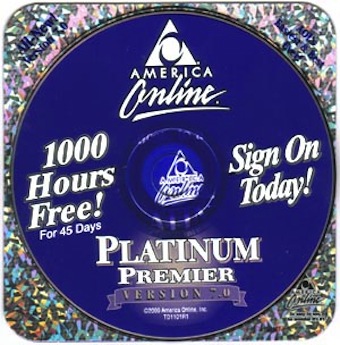
People are up in arms about the reported "fee" that will be required to play a game on someone else's system, but this outrage makes no sense under the new system. Because a "used" game has already been tied to another user and is playable without that disk, allowing infinite re-installs from the original media takes us back to the era of the early days of PC gaming, which grappled with exactly the same problem. Two installs from the same media is the same as one person stealing the game. Under this new (but yet not that new system) giving your disk to someone else now is just the same as giving them the option to purchase the game and install it locally instead of over the internet. The disk is no longer the game, it is just a distribution option. It means nothing more than the CDs you used to get from AOL for free by the bucket load.
As I see it Microsoft could enable a system where they allow the first person who bought the game to disassociate it from their account and then allow a new user to attach that copy to theirs (and they have hinted that something like this is coming). But why would they? By eliminating the used game market, as Steam has done for PCs, you allow for a system of aggressive pricing directly from the publishers.

I have every reason to believe the Steam pricing model (i.e., the systematic and ultimately aggressive discounting of all titles) will be adopted by Xbox Live and PSN in the upcoming console cycle. Steam is not a charity where Valve forces publishers to slash pricing on games, those discounts exist because publishers let them happen. And they let them happen because they MAKE MORE MONEY. Microsoft and Sony have already started to do this with modest sales here and there. But this new generation of systems (with a diminished or eliminated used market) will no doubt embrace this model in full force. Sony has already stated they intend to support and adopt the wide spectrum of pricing made popular by the major phone app store markets (which have shown that "free to play" is where all the money is). This includes a greater variety of pricing from .99 to $60.
Buy Now, Play Forever
Another major benefit has been brought about by these new consoles joining their PC brethren. It is astonishing that they both appear to run on a seemingly identical architecture. This is the x86 architecture. Remember what I said about x86 making Steam so awesome? Well, I think we are now entering the era in which problems with backwards compatibility will be a thing of the past. It required a total break in compatibility with the IBM RISC based consoles we have now, but it means that just like your PC brethren, you future Xbox One and PS4 owners are going to be able to play titles developed for those machines for decades to come. That should take a bit of the sting out of the buy once, own forever whether you like it or not model. It certainly seems to in the Steam community. Some people have said this may be the last traditional console cycle we ever see. If we do see another console cycle it will likely look very similar to what we are about to get, an x86 PC disguised as a console. Time will tell, but even if we move to a cloud based future where you don't actually own a console, but play games streamed from a cloud based server farm, that cloud will likely also be powered by x86 servers that can easily play content you buy for these current systems as long as you live.
We All Win
The hooplah about control over what games we buy and how we buy them comes down to one simple fear: being able to continue to enjoy gaming even if you can't afford to buy new games at $60. The PC market has shown that the tent for gaming is wide enough to include a substantial number of budgets. Some of the most popular and financially successful products out right now have an entry price of $0 (I'm looking at you DOTA2 and League of Legends). We'll definitely see this model in more and more console games. But there is hope for traditional AAA game releases as well. Game publishers don't want to "diminish the perceived value of their products" by lowering the expected price of new products and I think we will continue to see $60 as the opening price for most new AAA products that fit the traditional gaming mold. But I think even if the used game market is completely obliterated (in large part because the need for physical media has gone with it) that those who love to game but are on a budget will find this brave new world one that is a lot more accommodating. You might not be enjoying games on launch day, but to be fair the price for used goods sold under the current system often takes some time to drop as well as supply catches up with demand. In the end I think you'll see that game publishers adopt the same pricing curve for new products that you see in the used game market now, just without the hassle of dealing with GameStop or eBay. And that, my friends, is something I think we can all agree is a good thing.