By using this site, you agree to our Privacy Policy and our Terms of Use. Close

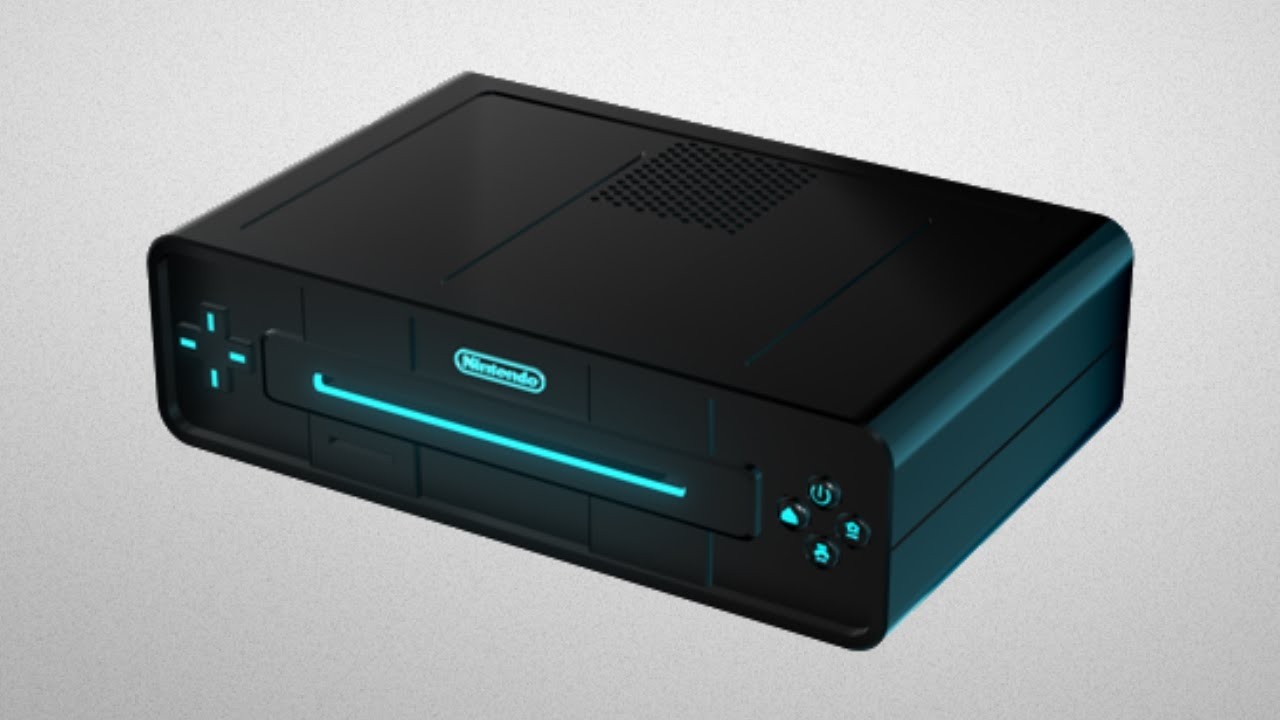
Forums - Nintendo - Is there/was there actually a substantial market for a powerful dedicated home console from Nintendo?

Tagged games:


Do you think there is/was a large market for it?

Yes, I think it could sell well 2 25.00%
 
No, it would sell poorly 6 75.00%
 
Total:8

A common refrain online from enthusiasts in the last 20 years has been people say they wish Nintendo would just make a powerful dedicated home console like Sony and Xbox.

Do you think there is/was actually a large market for such a thing in place of say Wii/Wii U/Switch 1/Switch 2, or do you think and that such a box would have sold poorly, and what's your reasoning for your answer?

Note that the question isn't "whether Wii or Switch were a better idea", but would the market actually be there for a powerful console to succeed at all?

Last edited by curl-6 - 11 hours ago

Around the Network

Maybe, but I don't think so.

The hybrid idea is one of the reasons the Switch 1 was a success. Wii U had 3D Mario, Splatoon, Zelda, Pokkén, Xenoblade, Yoshi, Mario Kart, and it still failed. Maybe a new dedicated home console from Nintendo wouldn't fail as much as the Wii U if it's good, but the lack of handheld approach would cut it's sales quite a bit, I think.


Would sell worse than Gamecube. Switch was the perfect idea and if you paid attention since Super Game Boy. They always wanted it. Nintendo often had long term goals and tried and tried again until tech caught up. 3D was one of them. Hybrid is another. No one would buy a $800+ Nintendo console. No one is even buying a MS one and Sony sales are slowing.


Bite my shiny metal cockpit!

Note that the question isn't "whether Wii or Switch were a better idea", but would the market actually be there for a powerful console to succeed at all?


The gamecube was a powerful dedicated home console


Around the Network

If MS vacates the business or essentially prices themselves out ... I think Nintendo could sell 30-40 million units.

Now this would be different because almost certainly even if the console was much more powerful than Switch 2, it could still use the same architecture and even a similar chip range, just untethered from mobile (10 watt) demands and allowed to use 40-50 watts it could easily run any modern game.

It would have a unified library for certain as bespoke home console/handheld is impossible to make work given modern game development times.


The main reason you'd want power is for multiplatform games. Exclusives will be specifically designed for the system so should be less of an issue (though not always).

There's no reason that Nintendo couldn't have become the go-to platform for third party if they created the right system, particularly for 7th gen, but they went a different way.

A powerful Nintendo system could have worked at one point, but they pivoted ever since the Wii and it's worked very well for them..

A low cost-of-entry to a system that is primarily suited to their first party catalogue and not chasing specs to run demanding AAA well is the right direction for them.


There's a market for it, but it's less than it was after years of covid inflation as well as tariff and AI inflation. Everything is getting out of hand, even fast food is beyond what some can afford.


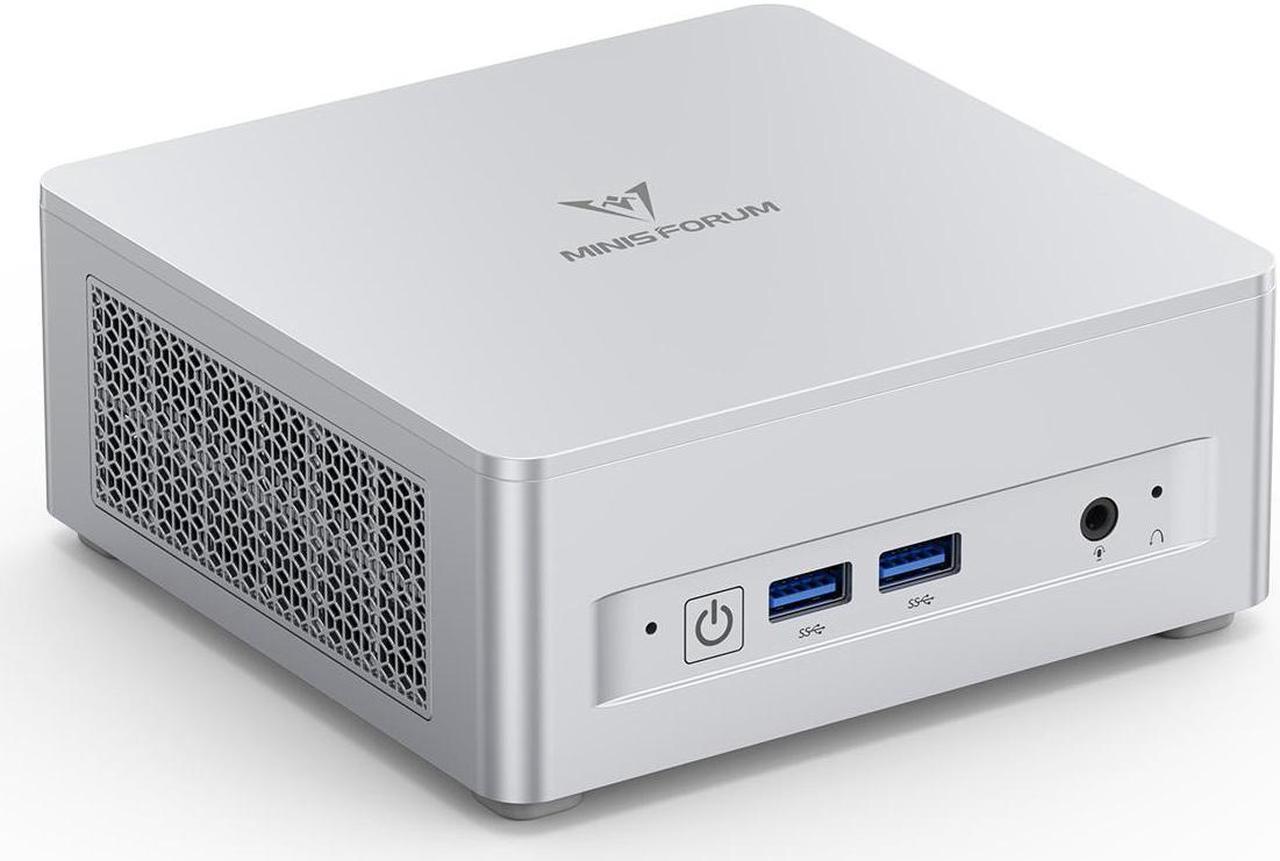
I think enough enthusiasts would buy a mini-PC form-factor SW2 that had the same chipset, but allowed the system to pull 40-60W (or even higher) for the chipset and therefore essentially allow frame-rates to nearly double  or dynamic resolutions to hit their caps (essentially making most games with DLSS + DRS have 1080p DLAA) compared to current SW2 docked modes. 

Something with this form-factor would probably sell a few dozen million, at least more than the Wii U, and it probably could make more of a profit per system if it sold for $550-$600 since the chipset would be mostly the same, there won't be a cost for the screen and dock, and most of the (marginal) extra cost would go into a better cooling system and maybe more storage. 

I'd actually like Nintendo to go the route of supporting multiple form-factors like they mentioned when announcing the original NX concept. Dedicated handhelds and home consoles can exist in this ecosystem, all using the same chipset, because performance scales according to power consumption and cooling. The big advantage of NX/Switch/Switch 2 is that the game library is unified, and that should be Nintendo's north star. Everything else is fungible. 

This of course shouldn't replace the hybrid system, but be another option in the hybrid, portable, etc. eco-system. I'd also like to see a pocketable Nintendo SW2 lite with an OLED screen. I'd trade in my hybrid SW2 and buy a SW2 OLED Lite and this. 

Edit: 

Thinking more of this, they could have the following form-factors: Switch 2 Super (Home Console only), Switch 2 (Original; Hybrid), Switch 2 (OLED; Hybrid), and Switch 2 OLED Lite (Portable Only.) All would play the same games, just with different settings. 

I'd trade in my Switch 2 (Original) for Switch 2 Super (Home Console only) + Switch 2 OLED Lite (Portable Only.) 

Edit 2: Another reason you want enthusiasts is that they have a higher attach ratio compared to less enthusiast gamers. So if the Switch 2 had a form-factor capable of achieving competitive framerates in games, then it becomes the home platform of choice for many enthusiasts, and they will buy more games than the person who might just buy Switch 2 because Animal Crossing, the only game they play, is on it. They also might buy multiple form-factors, if they want to play their games on the go, increasing hardware sales too. 

Edit 3: Another thing Nintendo struggles with is game emulation. There is more incentive to emulate Nintendo platforms because people want to play Nintendo games but not at the graphics/performance settings available. Nintendo addressing that demand reduces the demand for emulators and therefore software piracy of their games on PC. 

Last edited by sc94597 - 1 hour ago
Well very obviously of course there is a substantial market for it, but the problem is the competition. Sony got all the third party games on its first system as Nintendo made the mistake of sticking with cartridges. Ever since then Playstation has become what most console gamers get every single gen.

So obviously a huge console market exists, it's just that most of those people are used to always buying Playstation for decades now. So there needs to be a very good reason for them to switch from what they always buy to a Nintendo system instead.

It's possible to break these market strangleholds. For example Xbox's one big success was when Sony way overpriced their system and the PS and Xbox systems that gen were basically twins so it was easy for people to decide to just buy the one that was a better deal. Also Wii probably had pretty good sales that gen too even when you take out all the usual non-gamers who bought the system, since it gave people a completely novel way to play games, even despite not being a powerful system. Also PSP broke into the handheld market that Nintendo dominated because it provided a competent high-end handheld experience.

To make it even more obvious, realize that lots of people play the Switch purely on their TV as a dedicated home console.

So yeah, there of course is a big market for it, but it's hard to break Sony's stranglehold in the market because lots of people looking for a home console have been just playing playstation for several console gens. But it would require Nintendo to get full AAA third party support (which they seem to be getting close to with the Switch2 for the first time since Gamecube), and super strong top notch first party lineup to be the differentiator (which so far Switch2 is pretty weak on, but Switch did amazingly well and was honestly probably the first time since the N64 that Nintendo's first party lineup was truly extraordinary enough, well really in combo with all Rare's second party games, to sell the system by itself).

I think the one question was whether people would buy a really expensive system from Nintendo. Nintendo always had the affordability on its side. But with the Switch2 that is no longer the case with it's substantial price, and despite being a handheld and therefore not as powerful as the consoles, and despite having a lacking library so far that pales in comparison to what they were putting out to make the Switch popular in it's first year, it is still selling decent and actually good compared to the poor sales of the competition now. So imagine if Switch2 was purely a home console, but more powerful since it could abandon the handheld form factor, and imagine they didn't screwup the software schedule so far this gen and instead had a Switch-like lineup. That would sell very well.

Hybrid is definitely the way to go for Nintendo, cuz why compete on Sony's strength instead of competing on their own strengths. But Nintendo hasn't gone the powerful home console route since the GC, and that was following a system that lost all third party support and the GC looked like a toy and had a somewhat weak first party lineup from it's big system sellers. With Nintendo's renewed popularity, today they could definitely sell well as a dedicated home console, as long as they had the fully supported AAA third party lineup and a strong Switch-like first party lineup. It simply would be a worse decision than sticking to a hybrid system.

With such a system, in a world where let's say Playstation sells ~100m, Xbox sells ~40m, a good Nintendo home console I'd say would sell probably ~70m.

Last edited by Slownenberg - 54 minutes ago