




This is a completely bs sounding theory, but it doesn't sound that far off if you look at my examples.
Obviously not all reviews, but a lot of reviews seem to be based on the expectation of consumer opinion instead of actual reviewing. I think it's commonplace between most journalistic websites. I mean look at Final Fantasy 13. Most of the reviews Final Fantasy 13 scored the game very high and the game received a fairly high Metascore. Once your average consumer played Final Fantasy 13 though, the majority of people hated the game. It's less love it or hate it, more the game is really bad, but a few people here and there think it's genius. Final Fantasy 13-2 comes out and they reduce the score a bit, but it's pretty much the same game. They don't want to just lambast the game, it'll point out how much of a joke gaming journalists are. Knowing how much hate is surrounding the Final Fantasy 13 franchise and gameplay being different, doesn't hurt them if they slam the game now especially since they know most interest for the 13 series is pretty much gone.
Lords of Shadow 2 released and is getting low reviews, but most user scores are rating it pretty high. It's sitting at a 61, 63, and 70 Metascore, while the user score is 8, 8.2, and 8.4. The first Lords of Shadow while well received by some is hated by fans a lot of the fans of the series simply because "it's not Castlevania." The idea behind the second one, Dracula in a modern city, the stealth sections which actually work rather well but they're not Castlevania, etc, and the hate from the fanbase, a low rating seems like a pretty good prediction on what to expect fans would think.
The reason behind some of the mixed reviews is that every once in awhile some reviewers throw out a bad score just to get hits. The other reason for the mixed review is maybe there are different predictions on fan reaction. Obviously journalists don't gather together and have secret meetings, but if a game has multiple good reviews or poor reviews, maybe journalists might increase or reduce their score to stay in the average journalist. Or maybe some journalists don't post their reviews at first and then as they hear all the surrounding hate or praise, they change their score to follow that.
But maybe there's some chance that this is all the journalists opinions. Maybe a lot of journalists just really really liked FInal Fantasy 13 or that just about each and every journalist who reviewed Lords of Shadow 2 happened to have the opinion of it being a bad game, which is why I bring up my next example. Mosnter Hunter.
Since the original release on PS2, Monster Hunter actually hasn't changed that much. There's actually a Metascore for the first Monster Hunter though. A 68 Metascore from 37 reviews. On PSP Monster Hunter Freedom 2 received a 72 Metascore. But what happens to the score when it becomes well known that Japan loves it and it starts getting a decent cult following in the west? The majority opinion between journalists increases by 10 points. Now each Monster Hunter game that releases has been in the 80s. It could be that the reviewers at the time, all of them, just didn't like it much, and all of them now do, or it could be the very reason of this thread. Pointing out that I think reviews are predicting a score closer to what fans want to see.
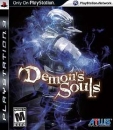
Everyone knows most journalists are shitty gamers. Demon's Souls, Dark Souls, and probably Dark Souls 2 are all great games, but one thing these games have in common with a game like Super Meat Boy, a platformer that is merely okay, is that they're advertised as being hard games. If you look up reviews of games that have even a marginal difficulty spike, the games will be slammed simply because they're difficult, but games that are advertised as being hard games, something that once again is becoming the in thing for video games, they don't mark off because of the games difficulty. But again. Only when advertsed. Regardless of your opinion on the difficulty of these games, Demon's Souls and Dark Souls are "advertised" as brutally hard games where you will die a lot. Well of course, let's ignore difficulty and throw praise towards the game since they're making it clear that everyone is going to die. Not just because the journalists are extremely shitty gamers.
Because Demon's Souls and Dark Souls are advertised as difficult games, they've clearly got a following who will be interested. Might as well review the games based on expectations of that following. With the following because of difficulty these games have, there are also a lot of posts here and there that people don't like them. So coincidentally, as shitty as journalists are at video games, they all just happen to rate these games high.
However they have no problem docking other games a few points because of difficulty. Castlevania Dracula X Chronicles is a reasonably difficult game. It's actually not nearly as difficult as the original or most other classic style Castlevania games. I've even recorded videos of not taking damage in every stage except against the final boss, and I realize that that just says I'm good at the game, but you should just take my word that it's really not that difficult(will post a playlist below for those interested. Includes bosh rush as well.) But anyways. Even in some of the higher scoring reviews, they're almost constantly bitching about difficulty. https://www.youtube.com/watch?v=Ey84svvU6_0&list=PLB905DD74DCE5746E
"The biggest problem with this Castlevania title is its difficulty. Challenge is, as we have stated many times before, not a bad thing. But when Rondo of Blood preserved its fundamental, old-school mechanics, it also preserved the problems that were present in many older platformers. For one thing, jumping can be a huge problem. Some of the jumps, even when timed precisely, can still plunge you to your death and force you to start over, washing away the previous fifteen minutes of gameplay. It may not seem too frustrating right now, but we can assure you that it feels intensely unforgiving during play. Furthermore, stair control can be a serious issue as well. If you jump when on a stairwell, you have to continue to hold up on the directional pad when you land, or else you'll fall through the stairs, which often results (once again) in death. Oh dear.
http://www.ign.com/articles/2007/10/25/castlevania-the-dracula-x-chronicles-review?page=2"
About the IGN review. I just want to say no fucking duh when you jump while on the stairs you'll need to hold up to stay on them. You might want to land onto the ground next to them instead of landing back on them. And oh noes, you have to restart the stage after dying all your lives. Heaven forbid.
Eurogamer's review has the reviewer using a trope like, "as a big fan of the Castlevania series, I've played through the original Rondo of Blood on the PC Engine" then the rest of the review turns to him bitching about the difficult and how he sucks dick at video games. Literally, most of the review is his bitching about difficulty, but then he ends it with a quote I'm going to pick apart.
"This is really a release made for, and by, Castlevania fans. If you don't think much of the series, this isn't going to change your mind. I wouldn't think much of it either if it only included the remake, but the tip-top ports of the original Rondo of Blood and Symphony of the Night bump the score up a couple of marks easily.
http://www.eurogamer.net/articles/castlevania-the-dracula-x-chronicles-review"
So first thing I'm going to point out is as I mentioned above, he stated he was a big fan of the Castlevania series and played the original Rondo of Blood, but then in his ending quote states it's for Castlevania fans by Castlevania fans and pretty much wouldn't give a damn if it was the remake only. Clearly pointing out the whole "I'm a big Castlevania fan" is bullshitting the reader. Then states that the original Rondo of Blood and SotN bump the score up a couple of points easily. So seeing the game received a 7/10, he'd review it as a 5/10 if not for the extras.
Obviously there are other games I could have chosen where journalists bitch about the difficulty, but that one was the first one that came to mind, and it's really not that difficult of a game. Where Demon's Souls and Dark Souls have comments in the reviews about how balanced they are because you'll die if you make the slightest mistake, these same reviews have bitching about how you'll die if you're off on a jump. Maybe you get what I'm pointing out, maybe you don't, but because it's got a following and the game is advertised and praised because of its difficulty, they don't mark off on the game being difficult like they would other games.
God Hand is yet another game that got bashed because it was a difficult game. However God Hand is just like Demon's Souls in a way in that you can progress through the game without getting hit if you're good enough. You can block break every enemy if they throw up a block, you can evade every enemy attack with the right analog. God Hand was released as a budget release though and more than likely they didn't think it'd be a game that received the following it has. I'm sure if God Hand had a 1080p remake, I'm sure it'd get a 8.5/10 atleast now that they know most people who have played it love the game, but back then it got bashed because it wasn't one of the big releases and they didn't think it'd have a fanbase.
Anyways. That's my opinion. I think reviews are less about their opinion and more about what the consumer wants to see. Whatever will get them more hits on average.