


Player2 on 03 November 2012
They failed to realize that 2D Mario =/= 3D Mario to begin with.










They failed to realize that 2D Mario =/= 3D Mario to begin with.



Nintendo backed out of a partnership with Sony to develop the SNES successor because Sony wanted full branding rights to the console (basically, they wanted Nintendo to become a 1st party developer). Nintendo attempted a deal with Philips to provide the disc dive instead but it never made it through. Nintendo was then forced to keep using cartridges which also made Nintendo late to the generation.
Because the cost of cartridges was high, Nintendo had to charged 3rd parties a very high licensing fee. Sony being able to use CD's was able to charge a very low licensing fee and the cost per disc was also very low. This pushed a lot of 3rd parties into Sony's camp just for the economics of it all.
Many big titles were originally planned for the new Nintendo console but were then moved to the Sony console (the most famous being Final Fantasy VII).
Once Sony (and later MS with buckets of money) grabbed a majority of the 3rd party pie, Nintendo was in a tough position to compete. Keep in mind that both MS and Sony were more than 40 times larger than Nintendo during the late N64 and early GC days.
The rEVOLution is not being televised



A couple of things:
*Sticking with carts was a huge, tactical, error, since carts cost *a lot* more, per copy, than CDs at the time which made it cost-prohibitive to make a game on N64.
*Sticking with carts was a huge, tactical, error, since you could fill a CD with reams of useless, CGI, garbage that wowed the mindless masses, i.e. Nintendo mis-read (or didn't much care about) their audience beyond pre-teens.
*The N64 hardware, at the time, was cutting edge tech that was extremely difficult for third parties to come to grips with since it was the first machine capable of 'real' 3D graphics, thus increasing dev costs dramatically when cart prices were already making publishers gag.
*Nintendo's marketing was *feeble* in the post-SNES era. They had no idea how to mount a successful campaign to challenge SONY, instead sticking with the tried and true 'all ages' mentality that had seen them in good stead through two generations of hardware.
Beyond that, the damage was done.
It didn't really matter that the GameCube showed up with hardware that was (at least) on par with the other machines. They were written off as the kiddie company, an image they carried with them from the SNES years that SEGA pinned on them via genius marketing campaigns--Nintendo also did themselves no favors with things like the Mortal Kombat debacle.
(In a way, SEGA's most lasting gift to SONY and MS was branding Nintendo un-hip, for seemingly all time, in the mind's of the teen-to-20-something market.)
That's basically the condensed overview of Nintendo's descent into irrelevance, prior to the Wii. (I worked on the 'journalist' side of things during that era, and I can tell you from innumerable talks with devs and pubs that the kiddie thing and the cart thing is what scared most devs and pubs off.)




They failed to keep its gaming audience as they reached their teens/early adulthood, and those gamers basically basically en mass moved to the PS1.
Both the N64 and GameCube were viewed as the "kiddie" consoles for their perspective generations. Not so much because of Nintendo's first-party offerings, but the lack of major-hitters from 3rd parties. If the N64 had gone with a disc-based system (or Nintendo's deal with Sony and the Play Station hadn't fallen through, for that matter) it would definitely have attracted the 3rd party games that went to the Play Station because of its extra space. Those 3rd parties offered the "mature" games that defined the PS brand.
Not to mention that Nintendo already had a bad relationship with 3rd parties from the NES and SNES era. in the 8-bit era 3rd parties had to jump through hoops to get their games published, and were limited to five games a year because Nintendo was gun-ho about quality control. The market was recovering from a crash, so Nintendo had good reason to do so. They didn't have to keep strict regulations in the SNES era, though, and that's when 3rd parties started to look for other options. The genesis offered that option to some extent, but when the PS1 came along they just left Nintendo behind and didn't look back.
TL; DR, Nintendo fell from grace because it sucked with 3rd parties.
Tag (Courtesy of Fkusumot) "If I'm posting in this thread then it's probally a spam thread."
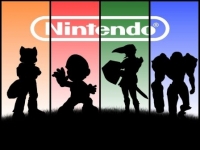


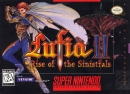
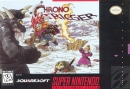
SNES weren't really "golden" days. Sales compared to NES were down significantly, and there was very stiff competition from Genesis. Up until the Wii, each Nintendo console since NES had noticeable declines in install base.





I can only speak for myself, but I don't know that Nintendo changed, but rather that they didn't really evolve their focus as gamers grew older. There is nothing wrong with that, it just means some people moved on.
My first gaming system was an Atari 2600 that my father bought for my sisters but which I soon took over. The first system I paid for myself, though, was the NES, which took all of my birthday and Christmas savings. I followed that up with the SNES. I was solidly a Nintendo fanboy, ordered the magazine and everything.
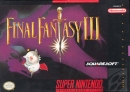
But I was growing up, my tastes were changing, and quite honestly, I got bored with platformers. Pretty EVERYTHING was a platformer back then. Then I stumbled onto Final Fantasy 3 (J6) and it blew me away. It was, quite honestly, the most important moment in gaming for me. Unfortunately, though, experiences like that were few and far between on Nintendo consoles.
The reason I'm giving all that background is to provide context for what came next--Final Fantasy 7. I still, to this day, remember when I first saw the commercial on television. The Playstation won me in that single moment. Suddenly Nintendo was a part of my childhood and seemed kind of boring and predictable. Nintendo games are fine for what they are, but I had the impression that Nintendo was satisfied with what they were doing and had no intention of going after straying gamers. Rather, their stance was that they were at the top so gamers had to come to them. Perhaps it wasn't arrogance but it sure felt like it.
The variety of the PS2 cemented my break with Nintendo. Variety is what I wanted then, and still want. Sure, I still miss Zelda, but it just didn't feel like Nintendo cared if they had my business or not. They're very centered on their own formulas and pathways, which is fine. It just so happened that I could find more and different experiences elsewhere which better suited my changing tastes.




They made an expensive system that used expensive cartridges (nintendo 64) and it damaged them for good, only game boy saved them. This fatal mistake from nintendo allowed playstation to rise i believe, which was simply cheaper to develop games for. Sony was able to do this again with PS2 and gave it more appeal (somehow), while nintendo somehow didn't recover with gamecube despite being such a decent system. Meaning, Nintendo had to try to target a different audience to Sony and it sort of paid off with Wii.
Xbox Series, PS5 and Switch (+ Many Retro Consoles)
'When the people are being beaten with a stick, they are not much happier if it is called the people's stick'- Mikhail Bakunin
Prediction: Switch 2 will outsell the PS5 by 2030


| ECM said: A couple of things: *Sticking with carts was a huge, tactical, error, since carts cost *a lot* more, per copy, than CDs at the time which made it cost-prohibitive to make a game on N64. *Sticking with carts was a huge, tactical, error, since you could fill a CD with reams of useless, CGI, garbage that wowed the mindless masses, i.e. Nintendo mis-read (or didn't much care about) their audience beyond pre-teens. *The N64 hardware, at the time, was cutting edge tech that was extremely difficult for third parties to come to grips with since it was the first machine capable of 'real' 3D graphics, thus increasing dev costs dramatically when cart prices were already making publishers gag. *Nintendo's marketing was *feeble* in the post-SNES era. They had no idea how to mount a successful campaign to challenge SONY, instead sticking with the tried and true 'all ages' mentality that had seen them in good stead through two generations of hardware. Beyond that, the damage was done. It didn't really matter that the GameCube showed up with hardware that was (at least) on par with the other machines. They were written off as the kiddie company, an image they carried with them from the SNES years that SEGA pinned on them via genius marketing campaigns--Nintendo also did themselves no favors with things like the Mortal Kombat debacle. (In a way, SEGA's most lasting gift to SONY and MS was branding Nintendo un-hip, for seemingly all time, in the mind's of the teen-to-20-something market.) That's basically the condensed overview of Nintendo's descent into irrelevance, prior to the Wii. (I worked on the 'journalist' side of things during that era, and I can tell you from innumerable talks with devs and pubs that the kiddie thing and the cart thing is what scared most devs and pubs off.) |
That's true, but I think that if Nintendo had played things right in the N64 days they could have easily shaken off Sega's branding.
Yamauchi didn't know what he was doing. He was too arrogant to change.
Tag (Courtesy of Fkusumot) "If I'm posting in this thread then it's probally a spam thread."



my credentials: I've been playing since NES and only the last twelve years have I been on non-Nintendo platforms.
what went wrong is games matured into a mainstream media via controversial and intellectual story telling. Nintendo refused to move away from the old model of; games are for everyone, children and up. Thusly, developers shy from investing in Nintendo's fractured business model.
what went right is Nintendo stayed true to the idea that games aren't about graphics. They are about color, emotion, and fun. They devoted resources into filing games with surprises and new experiences. They also remained the technological pioneers of the industry.
jmo




@viper1 Ninty wasnt forced to do anything, LOL. Stop trying to always make them the victim, they CHOSE to stick to cartridges and they paid for it. Everything else i agree with for the most part

About Us |
Terms of Use |
Privacy Policy |
Advertise |
Staff |
Contact
Display As Desktop
Display As Mobile
© 2006-2026 VGChartz Ltd. All rights reserved.


