By using this site, you agree to our Privacy Policy and our Terms of Use. Close

Forums - Politics - Is there anything tax cuts CAN'T fix?

mrstickball said:
vlad321 said:

What is hilarious is that you seem to think that US's dominance is because of Capitalism. Luckily, I however do know how to respond to you if you actually believe that to dispel any illusions you might have.

During WWII every major industry was destroyed except for the US. Literally, everyone else was bombed out and destroyed and the US was left untouched. Obviously that is great for business if you are the only supplier in the world. This is what led to what you jsut called "its golden age." Remeber how factory workers in car companies could have amazing quality of life? That's because they were the ONLY workers inthe world for several decades while the rest of the world competed. Notice how everything started going downhill super fast when the other countries got their shit together? Then around the 80s is when the broken philosophy of the US caught up with it and you had staglflation. How did the US get out of that? $13 trillion to date (started with nearly 3 trillion under Reagan). If you give most nations $13 trillion, they too would be on top.

Basically the US succeeded DESPITE Capitalism, not BECAUSE of it. They succeeded out of sheer dumb luck of having an ocean between them and the Nazis. Now that its luck has run out, it is only running on empty fumes and debt.

Edit: This should have been implicit when I mentoined WWII but I jsut want to make sure you realize that there was a huge talent drain DURING WWII, again to sheer dumb luck.

Your history is impaired my friend.

It wasn't a matter of industries being destroyed during WW2 which caused US to be the dominant manufacturer in the world - Bretton Woods was responsible for that, which gave the US a massive advantage  in trade since the agreement regulated the exchange rate which was favorable - essentially what China does now. You bring up car manufacturers, which is interesting as they are still (in America) paid extremely well - their quality of life is still very good. The only issue with it today is that they have competition from non-union companies which can produce a better car that is cheaper in most respects.

Stagflation didn't occur in the 1980s under Reagan. It occured in the 1970's under Carter (and the seeds were sown under Nixon as well). Reagan fixed stagflation. Look it up - http://economics.about.com/od/useconomichistory/a/stagflation.htm .

You argue that $13 trllion in debt made us great. If that is the case, then you should turn your eyes to every European country which have spent vastly, VASTLY more money per capita than we have. US debt per person is $45,000 per person. In the UK it is more than three times that amount. Germany, Finland, Spain, Portugal, Sweden, Denmark and so on are all much higher as well. By your logic then, all of the argued European countries are in a far worse position, as they've spent sums of money far in excess of the United States. For example, Norway's public debt is ten times higher per capita than Americas.

Don't get me wrong, I agree that debt is a very bad thing - thus why I deride the European system. They have taken on amounts of debt that border on insanity.

The US isn't running on empty fumes and debt. If you believe so, then I highly suggest moving away from here. America has the potential to be great, the question is if we utilize our resources and our people to be great. Due to excessive regulations and restrictions, that is a difficult proposition, but I believe that given our unique blend of society and resources, we could do many things that others cannot if we are allowed to.

The only impairment in history I have is that I thought Carter was also in the early 80s, causing the staglfation. Everything else stands.

You cherry-pick and deflect matters in a very artful and tactful manner though. I love how you just dismiss a very simple economic fact like the one wehre every industrialized nation was completely in ruins by the end of WWII, except for the US which was literally untouched. Then you try to play it off to a, relatively, minor fact for the times. Yes, being dominant currency is important, but it pales in comparison to being the only supplier of  many goods. I also did not bring up car manufacturers, I rbought up the workers who worked on the assembly lines in factories, which ended up getting kicked out once other nations began to be competative again and US businesses realized they needed to pay them less and lay them off to remain profitable.

I also need to point out that Reagan's deregulation is not what fixed stagflation, is was the ridiculous amount of money he spent on constructing bombs. As I mentioned earlier, there is no difference between making bombs and building roads or waging an army. What deregulation did was cause a nuclear meltdown over in Japan a few months ago, which I am sure you have heard of, among many other atrocities from businesses.

As it stands if you look at the best living and worst living (within reason, obviously we don't count Ghana and Haiti, etc.) you will notice that the countries with the lower living conditions have less debt as % of GDP, meanwhile the ones with the best living conditions are the ones that have the obscene amounts of debt. This trend is almost without fail. Basically, well being is directly linked to the amount debt a country has and the US has a lot of it.


Tag(thx fkusumot) - "Yet again I completely fail to see your point..."

HD vs Wii, PC vs HD: http://www.vgchartz.com/forum/thread.php?id=93374

Why Regenerating Health is a crap game mechanic: http://gamrconnect.vgchartz.com/post.php?id=3986420

gamrReview's broken review scores: http://gamrconnect.vgchartz.com/post.php?id=4170835


Around the Network
Vetteman94 said:
mrstickball said:
Vetteman94 said:

Social Security only Taxes the first $90,000 $106,000, so not all money earned is taxed for Social Security.  And the Total tax rate is 10.4%, 6.2 for the employer, 4.2 for the employee

And I refuse to believe that comparitive Health Insurance for people that need Medicare is $4900, my grandfathers supplemental insurance is $8K a year,  full coverage for him would Total close $30K.  For the average healthy person in their 30s or 40s, yes $4900 is probably plenty, but most people at Medicare age arent. 

Minor corrections

Medicaid which caters to an entirely different demographic is also $7,900 per recipient. The service varies from $5,000 - $8,000 per state depending on benefits, and is still higher than private insurance.

Feel free to look up the data. Every government health care system in the US is more expensive than private insurance - Medicare, Medicaid, and of course, the champion, the Veterans Administration (about $8,500 per person).

I just gave you an example that says you are wrong,  private insurance for my grandfather that would match what he recieves from medicare would total $30K a year.  A perfectly healthy 65 year old would have a tough time getting health insurance for even close to that $4900. Hell my insurace is $5000 a year, and Im only 31.  You are the one claiming this is possible, you provide me with that information

You provided one anecdotal point of information and argued that it should circumvent all held statistics and data on health expenses in America.

Your example is one person. My example is over 60 million Americans on Medicare/Mediciad.

Here's the data:

http://www.medpac.gov/chapters/Jun10DataBookSec2.pdf

That is from the government concerning Medicare. As per Chart 2-2, the average cost of an enrollee under 65 is above the median for Medicare expenses. Not below. Now, the question becomes: How does this compare to private insurance costs of those above 65 (for comparison) and those below?

Glad you asked:

Lets look at the data: The average person 65+ (that is all groups above 65) costs more at $6,140. Comparatively, the Medicare .PDF I sent you states that the median for the 65+ age group is over $9,000 - 50% higher than that of private insurances.

Now, lets look at other private plans:

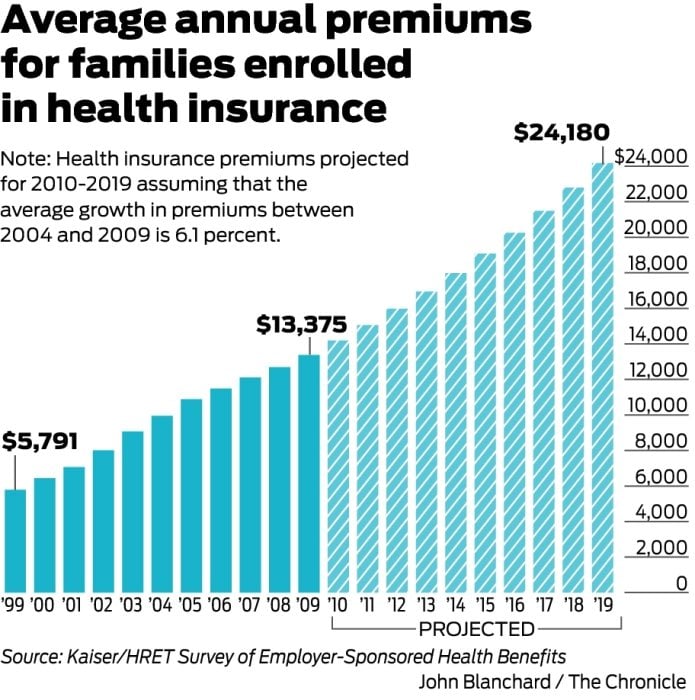
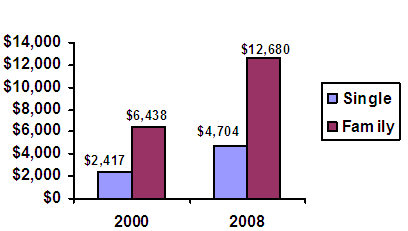
Here are family household plans by year:

(As of 2009, the average household was paying slightly more than one Medicare enrollee)

This one is from the AARP which reports similar results for family costs (about $12,600 per family) and pegs individual plans at an average of $4,700 per person in 2008.


Back from the dead, I'm afraid.

vlad321 said:

The only impairment in history I have is that I thought Carter was also in the early 80s, causing the staglfation. Everything else stands.

You cherry-pick and deflect matters in a very artful and tactful manner though. I love how you just dismiss a very simple economic fact like the one wehre every industrialized nation was completely in ruins by the end of WWII, except for the US which was literally untouched. Then you try to play it off to a, relatively, minor fact for the times. Yes, being dominant currency is important, but it pales in comparison to being the only supplier of  many goods. I also did not bring up car manufacturers, I rbought up the workers who worked on the assembly lines in factories, which ended up getting kicked out once other nations began to be competative again and US businesses realized they needed to pay them less and lay them off to remain profitable.

I also need to point out that Reagan's deregulation is not what fixed stagflation, is was the ridiculous amount of money he spent on constructing bombs. As I mentioned earlier, there is no difference between making bombs and building roads or waging an army. What deregulation did was cause a nuclear meltdown over in Japan a few months ago, which I am sure you have heard of, among many other atrocities from businesses.

As it stands if you look at the best living and worst living (within reason, obviously we don't count Ghana and Haiti, etc.) you will notice that the countries with the lower living conditions have less debt as % of GDP, meanwhile the ones with the best living conditions are the ones that have the obscene amounts of debt. This trend is almost without fail. Basically, well being is directly linked to the amount debt a country has and the US has a lot of it.

Can you provide any evidence from any economist that believes that stagflation was fixed by Reagan's military budget?

As for the economic argument about WW2: I will not deny that having most of Europe in ruins was advantageous for the US, but to argue that is the only reason America has done well for the past ~50 years is incredible. What about the periods before WW2?

Compare the data:

What was capitalism in America like pre-WW2? If you look at the data, America's GDP per capita was still incredible in 1900 without any world wars destroying any industrial capacity in Europe. So what am I looking for, exactly?

Finally, if you are arguing that debt is good, shouldn't you be praising Reagan, Bush and Obama?


Back from the dead, I'm afraid.

HappySqurriel said:
Akvod said:
mrstickball said:
Akvod said:
GDP=Consumption Spending.
Government consumption/spending=Consumption/Spending

*pats hands*

We have plenty of credit flowing around (due to the Fed's infusion of it into the banks and the increased spending by American consumers). Ending the tax cuts for the rich won't kill investment.

If you don't want to end the tax cuts for the rich in return for increased spending, at least do it in return for a larger tax cut for the lower and middle class.

Keep tax cuts for the poor and middle class, end the Bush tax cuts, increase spending, rebuild our infrastructure (has to be done anyway, might as well use this as an opportunity), impose modest reformations on Medicare and Medicaid and BOOM! You fucking fix the economy, and solve America's long and short term debt problems.

51% of Americans paid no taxes last year. Exactly how much more should you lower taxes on them?

Income Tax=/=All taxes

http://krugman.blogs.nytimes.com/2011/04/22/zombie-tax-lies/


Just as a side note, Paul Krugman is one of the most intellectually dishonest economists out there and after repeately getting "schooled" on his inaccurate heavily biased blog posts by average people making comments he closed his blog to comments. At many points in time these commentors demonstrated that his views on economics depended mostly on what the Democrats or Republicans were doing at the time, and he has repeatedly been found to condemn an approach taken by the Republicans and then support the same approach when taken by the Democrats.

Or to put it another way, listening to Krugman on economics is kind of like listening to a nutritionist that has been hired by McDonalds on whether fast food is good for you.


Ad hominem. And if you want to play that game, I can always point to his shiny Nobel Prize.

He's been heavily critical of Obama BTW, and he is basing his views on what he said 10 years ago after his studies on Japan (liquidity trap). He did criticize the Obama stimulus and even predicted the political implications (it's failure would lead to discredit stimuluses in general and prevent a proper one being proposed).


Akvod said:
HappySqurriel said:
Akvod said:
mrstickball said:
Akvod said:
GDP=Consumption Spending.
Government consumption/spending=Consumption/Spending

*pats hands*

We have plenty of credit flowing around (due to the Fed's infusion of it into the banks and the increased spending by American consumers). Ending the tax cuts for the rich won't kill investment.

If you don't want to end the tax cuts for the rich in return for increased spending, at least do it in return for a larger tax cut for the lower and middle class.

Keep tax cuts for the poor and middle class, end the Bush tax cuts, increase spending, rebuild our infrastructure (has to be done anyway, might as well use this as an opportunity), impose modest reformations on Medicare and Medicaid and BOOM! You fucking fix the economy, and solve America's long and short term debt problems.

51% of Americans paid no taxes last year. Exactly how much more should you lower taxes on them?

Income Tax=/=All taxes

http://krugman.blogs.nytimes.com/2011/04/22/zombie-tax-lies/


Just as a side note, Paul Krugman is one of the most intellectually dishonest economists out there and after repeately getting "schooled" on his inaccurate heavily biased blog posts by average people making comments he closed his blog to comments. At many points in time these commentors demonstrated that his views on economics depended mostly on what the Democrats or Republicans were doing at the time, and he has repeatedly been found to condemn an approach taken by the Republicans and then support the same approach when taken by the Democrats.

Or to put it another way, listening to Krugman on economics is kind of like listening to a nutritionist that has been hired by McDonalds on whether fast food is good for you.


Ad hominem. And if you want to play that game, I can always point to his shiny Nobel Prize.

He's been heavily critical of Obama BTW, and he is basing his views on what he said 10 years ago after his studies on Japan (liquidity trap). He did criticize the Obama stimulus and even predicted the political implications (it's failure would lead to discredit stimuluses in general and prevent a proper one being proposed).


Mentioning the Nobel Prize is an appeal to authority ... and not even a good apeal to authority. After all, Nobel prizes are given out for political reasons more than anything else, as can be seen by the Nobel Peace prize won by Obama.

http://www.americanthinker.com/2010/08/paul_krugman_gives_up_1.html

"..."

"For example, Robert Barro, the distinguished Harvard economist, noted that Krugman "just says whatever is convenient for his political argument. He doesn't behave like an economist." The New York Times ombudsman Daniel Okrent observed that Paul Krugman has "the disturbing habit of shaping, slicing and selectively citing numbers in a fashion that pleases his acolytes but leaves him open to substantive assaults." James Taranto at the Wall Street Journal, after listing the falsities in Krugman's latest piece on climate last week, hazarded that perhaps "Krugman makes himself ridiculous merely to make our job easy.""

"..."

"For example, when Krugman a month ago drew one of his famous "trend lines" based on a single point, a blogger named rjh immediately responded, "These trend lines you are drawing all over the place. Pardon my French, they are complete garbage." And nearly half of Krugman's commenters joined to point out that Krugman was arguing junk. Krugman was forced to make two defensive replies; both were immediately refuted."

"..."

"But things got worse for the professor. Matching Krugman's repeated claim that the "stimulus" was too small, Sean produced peer-reviewed economic science from Alesina, who examined 92 attempts at stimulus since 1970 in OECD countries and found that tax cuts, but not spending, stimulated. Krugman stammered a reply, but the damage was done; his acolytes had learned that economic science existed that contradicted Krugman's claim (central to Obama's "stimulus" legislation) that government's spending your money helps an economy."

"..."

"Krugman's blog commenters were especially relentless in pointing out his inconsistencies. In one post, Krugman admitted that "politicians will always find ways to shield the powerful." Posters piled on, pointing out that Krugman's universal policy prescription gave politicians more power under the assumption that they would defend "the proletariat." Krugman replied that he was "sure that there's a large literature" on government cronyism and corruption. Secure in his big-government ideology, he admitted that he had never read that literature. But like the ideologue that he is, Krugman then expressed his faith (the only word appropriate) that "bureaucracy will do a heckuva job" if it is not "downgraded and devalued." Bloggers responded by citing the latest economic science showing the impossibility of Krugman's "utopian dictatorship-by-bureaucracy.""

"..."

"Krugman had also had enough. On July 23, Krugman showed that he was clearly no longer "in love" with his commenters. Now he called them "ranters" and "trolls." On July 28, Krugman changed his comment moderation policy. Claiming that "ranters ... say the same thing every time," Krugman announced that he was going to throw away posts longer than "three inches." His thinking must have been thus: Three inches are sufficient to write "Krugman is brilliant," but not sufficient to present a documented and persuasive rebuttal to whichever of Krugman's standard arguments he was peddling that day.

"Within 24 hours, those outside the Times had taken notice. Stephen Spruiell at the NRO noted the absurdity of Krugman's complaint that bloggers might use the same responses to rebut Krugman's repeated statements of the same ideology. Wrote Spruiell:
"This [is] from the guy who has spent the entire summer rewriting the same blog post", Spruiell went on to point out that "Krugman's sycophants ... also say the same thing every time." "Krugman's policy seems geared to limit comments to "Yay Dr. K!" "Way to go!" "Keynes was right!" etc."
"..."
Listening to Krugman on economics is kind of like listening to the Pope talk about religion. There is no doubt what he will say, and there is no amount of contradictory information that would ever get him to reconsider his beliefs.


Around the Network
vlad321 said:

The only impairment in history I have is that I thought Carter was also in the early 80s, causing the staglfation. Everything else stands.

You cherry-pick and deflect matters in a very artful and tactful manner though. I love how you just dismiss a very simple economic fact like the one wehre every industrialized nation was completely in ruins by the end of WWII, except for the US which was literally untouched. Then you try to play it off to a, relatively, minor fact for the times. Yes, being dominant currency is important, but it pales in comparison to being the only supplier of  many goods. I also did not bring up car manufacturers, I rbought up the workers who worked on the assembly lines in factories, which ended up getting kicked out once other nations began to be competative again and US businesses realized they needed to pay them less and lay them off to remain profitable.

I also need to point out that Reagan's deregulation is not what fixed stagflation, is was the ridiculous amount of money he spent on constructing bombs. As I mentioned earlier, there is no difference between making bombs and building roads or waging an army. What deregulation did was cause a nuclear meltdown over in Japan a few months ago, which I am sure you have heard of, among many other atrocities from businesses.

As it stands if you look at the best living and worst living (within reason, obviously we don't count Ghana and Haiti, etc.) you will notice that the countries with the lower living conditions have less debt as % of GDP, meanwhile the ones with the best living conditions are the ones that have the obscene amounts of debt. This trend is almost without fail. Basically, well being is directly linked to the amount debt a country has and the US has a lot of it.

You really want to go there?  And the banking regulations did such a bang up job preventing the economic collapse...oh wait.


The rEVOLution is not being televised

HappySqurriel said:
Akvod said:
HappySqurriel said:
Akvod said:
mrstickball said:
Akvod said:
GDP=Consumption Spending.
Government consumption/spending=Consumption/Spending

*pats hands*

We have plenty of credit flowing around (due to the Fed's infusion of it into the banks and the increased spending by American consumers). Ending the tax cuts for the rich won't kill investment.

If you don't want to end the tax cuts for the rich in return for increased spending, at least do it in return for a larger tax cut for the lower and middle class.

Keep tax cuts for the poor and middle class, end the Bush tax cuts, increase spending, rebuild our infrastructure (has to be done anyway, might as well use this as an opportunity), impose modest reformations on Medicare and Medicaid and BOOM! You fucking fix the economy, and solve America's long and short term debt problems.

51% of Americans paid no taxes last year. Exactly how much more should you lower taxes on them?

Income Tax=/=All taxes

http://krugman.blogs.nytimes.com/2011/04/22/zombie-tax-lies/


Just as a side note, Paul Krugman is one of the most intellectually dishonest economists out there and after repeately getting "schooled" on his inaccurate heavily biased blog posts by average people making comments he closed his blog to comments. At many points in time these commentors demonstrated that his views on economics depended mostly on what the Democrats or Republicans were doing at the time, and he has repeatedly been found to condemn an approach taken by the Republicans and then support the same approach when taken by the Democrats.

Or to put it another way, listening to Krugman on economics is kind of like listening to a nutritionist that has been hired by McDonalds on whether fast food is good for you.


Ad hominem. And if you want to play that game, I can always point to his shiny Nobel Prize.

He's been heavily critical of Obama BTW, and he is basing his views on what he said 10 years ago after his studies on Japan (liquidity trap). He did criticize the Obama stimulus and even predicted the political implications (it's failure would lead to discredit stimuluses in general and prevent a proper one being proposed).


Mentioning the Nobel Prize is an appeal to authority ... and not even a good apeal to authority. After all, Nobel prizes are given out for political reasons more than anything else, as can be seen by the Nobel Peace prize won by Obama.

http://www.americanthinker.com/2010/08/paul_krugman_gives_up_1.html

"..."

"For example, Robert Barro, the distinguished Harvard economist, noted that Krugman "just says whatever is convenient for his political argument. He doesn't behave like an economist." The New York Times ombudsman Daniel Okrent observed that Paul Krugman has "the disturbing habit of shaping, slicing and selectively citing numbers in a fashion that pleases his acolytes but leaves him open to substantive assaults." James Taranto at the Wall Street Journal, after listing the falsities in Krugman's latest piece on climate last week, hazarded that perhaps "Krugman makes himself ridiculous merely to make our job easy.""

"..."

"For example, when Krugman a month ago drew one of his famous "trend lines" based on a single point, a blogger named rjh immediately responded, "These trend lines you are drawing all over the place. Pardon my French, they are complete garbage." And nearly half of Krugman's commenters joined to point out that Krugman was arguing junk. Krugman was forced to make two defensive replies; both were immediately refuted."

"..."

"But things got worse for the professor. Matching Krugman's repeated claim that the "stimulus" was too small, Sean produced peer-reviewed economic science from Alesina, who examined 92 attempts at stimulus since 1970 in OECD countries and found that tax cuts, but not spending, stimulated. Krugman stammered a reply, but the damage was done; his acolytes had learned that economic science existed that contradicted Krugman's claim (central to Obama's "stimulus" legislation) that government's spending your money helps an economy."

"..."

"Krugman's blog commenters were especially relentless in pointing out his inconsistencies. In one post, Krugman admitted that "politicians will always find ways to shield the powerful." Posters piled on, pointing out that Krugman's universal policy prescription gave politicians more power under the assumption that they would defend "the proletariat." Krugman replied that he was "sure that there's a large literature" on government cronyism and corruption. Secure in his big-government ideology, he admitted that he had never read that literature. But like the ideologue that he is, Krugman then expressed his faith (the only word appropriate) that "bureaucracy will do a heckuva job" if it is not "downgraded and devalued." Bloggers responded by citing the latest economic science showing the impossibility of Krugman's "utopian dictatorship-by-bureaucracy.""

"..."

"Krugman had also had enough. On July 23, Krugman showed that he was clearly no longer "in love" with his commenters. Now he called them "ranters" and "trolls." On July 28, Krugman changed his comment moderation policy. Claiming that "ranters ... say the same thing every time," Krugman announced that he was going to throw away posts longer than "three inches." His thinking must have been thus: Three inches are sufficient to write "Krugman is brilliant," but not sufficient to present a documented and persuasive rebuttal to whichever of Krugman's standard arguments he was peddling that day.

"Within 24 hours, those outside the Times had taken notice. Stephen Spruiell at the NRO noted the absurdity of Krugman's complaint that bloggers might use the same responses to rebut Krugman's repeated statements of the same ideology. Wrote Spruiell:
"This [is] from the guy who has spent the entire summer rewriting the same blog post", Spruiell went on to point out that "Krugman's sycophants ... also say the same thing every time." "Krugman's policy seems geared to limit comments to "Yay Dr. K!" "Way to go!" "Keynes was right!" etc."
"..."
Listening to Krugman on economics is kind of like listening to the Pope talk about religion. There is no doubt what he will say, and there is no amount of contradictory information that would ever get him to reconsider his beliefs.

Your argument is an conclusion. You keep saying he's been refuted. And whatever article you're referencing is blowing the commenting moderation way too much. You do know that it's annoying to hear the same libertarian commentors call for Gold Standards and completely ignore the main topic of the blog post every single time? You can agree that there are liberal trolls that'll continue to bring up the Iraq War or Bush, on a completely different article/blog post on Obama's policy right? And what should those comments get? The boot.

Look, if your argument is that he's been completely discredited and nobody takes him seriously, I'll just point to his huge blog visit numbers, how he's a professor at Princeton, his recent Gerald Loeb Award, etc.


But that's wayyyy off topic. I simply linked to him, since he gave a much better explanation. You can't fudge the facts and figures he posted on that blog.


So, what do you suggest we do right now? Interest rates are near zero, yes Businesses aren't investing yet. Consumers still aren't spending as much as they used to, and we have a lot of cash just sitting in banks. We've been under the Bush tax cuts for so long, yet we're still in a period of stagnation. We're essentially becoming Japan, and like Japan, we ended up doing half assed poorly executed stimuluses that don't really translate into job creation.

I mean, the fact is that we're out of options. We can keep the tax cuts for the rich, but that just simply keeps up where we are. Balancing the budget would cause more insecurity, rather than more business confidence (and we can see how the UK did after its attempt at austerity). I mean, the whole problem I have with Freshwater econ, is that it all sounds so mythical or the principles they go under are just way too unbelievable.

Once government gets smaller, people will sigh and start spending again. Businesses will start investing again (even though they can borrow money cheaply) because they know government is off their backs (even though investment is based on expectation of demand). Keep taxes for the rich, since we don't want crowding out (even though savings have gone up and the treasury pumped money in). Watch out for inflation (even though we even had a moment of deflation during the recession), maybe we should go back to the gold standard (Milton Friedman would roll in his grave).


Fuck, at least Milton Friedman was skeptic, which is always good and reasonable (skeptical at how the government can execute discretionary policy properly). Now the new conservatives are religiously fixed onto taxes and the budgets (ironically they're both conflicting things).


Akvod said:

So, what do you suggest we do right now? Interest rates are near zero, yes Businesses aren't investing yet. Consumers still aren't spending as much as they used to, and we have a lot of cash just sitting in banks. We've been under the Bush tax cuts for so long, yet we're still in a period of stagnation. We're essentially becoming Japan, and like Japan, we ended up doing half assed poorly executed stimuluses that don't really translate into job creation.

I mean, the fact is that we're out of options. We can keep the tax cuts for the rich, but that just simply keeps up where we are. Balancing the budget would cause more insecurity, rather than more business confidence (and we can see how the UK did after its attempt at austerity). I mean, the whole problem I have with Freshwater econ, is that it all sounds so mythical or the principles they go under are just way too unbelievable.

Once government gets smaller, people will sigh and start spending again. Businesses will start investing again (even though they can borrow money cheaply) because they know government is off their backs (even though investment is based on expectation of demand). Keep taxes for the rich, since we don't want crowding out (even though savings have gone up and the treasury pumped money in). Watch out for inflation (even though we even had a moment of deflation during the recession), maybe we should go back to the gold standard (Milton Friedman would roll in his grave).


Fuck, at least Milton Friedman was skeptic, which is always good and reasonable (skeptical at how the government can execute discretionary policy properly). Now the new conservatives are religiously fixed onto taxes and the budgets (ironically they're both conflicting things).


The answer to "What do we do know?" is both very simple and very complicated ...

The simple answer is that we should return the government to a position where they're a referee in the economy rather than an active participant, and their primary goal should be to eliminate corruption and to prevent dangerous behaviours within the economy. For far too long the government has been heavily involved in trying to "correct problems" by encouraging dangerous behaviours because they're corrupt and are trying to appease a valued lobby group, large corporation or union.

Further, they should simplify the tax code. All corporations should be taxed under the same simple rules regardless of the industry they're in and regardless of how large they are, and all individuals should face the same rules regardless of the lifestyle they lead. Subsidies should be eliminated that try to promote an industry, product or encourage a particular behaviour.

The government should phase out social programs ... Social Security should be replaced by an actual pension fund, Medicare should be replaced by an acual insurance program that is amortized over a person's career, and unemployment insurance should become actual insurance. All other federal social programs should be eliminated and/or become the responsibility of the state.

Military spending should be reduced, the emphasis should be on having the most advanced and best trained military not necessarily the largest.


I could go on and on and on but it is kind of pointless ... It would be easy to cut government spending in half, eliminate the deficit, cut taxes, and provide the same/better outcomes for all citizens over a 5 to 10 year period but it will never happen because there isn't the political will.


vlad321 said:
mrstickball said:
vlad321 said:

What is hilarious is that you seem to think that US's dominance is because of Capitalism. Luckily, I however do know how to respond to you if you actually believe that to dispel any illusions you might have.

During WWII every major industry was destroyed except for the US. Literally, everyone else was bombed out and destroyed and the US was left untouched. Obviously that is great for business if you are the only supplier in the world. This is what led to what you jsut called "its golden age." Remeber how factory workers in car companies could have amazing quality of life? That's because they were the ONLY workers inthe world for several decades while the rest of the world competed. Notice how everything started going downhill super fast when the other countries got their shit together? Then around the 80s is when the broken philosophy of the US caught up with it and you had staglflation. How did the US get out of that? $13 trillion to date (started with nearly 3 trillion under Reagan). If you give most nations $13 trillion, they too would be on top.

Basically the US succeeded DESPITE Capitalism, not BECAUSE of it. They succeeded out of sheer dumb luck of having an ocean between them and the Nazis. Now that its luck has run out, it is only running on empty fumes and debt.

Edit: This should have been implicit when I mentoined WWII but I jsut want to make sure you realize that there was a huge talent drain DURING WWII, again to sheer dumb luck.

Your history is impaired my friend.

It wasn't a matter of industries being destroyed during WW2 which caused US to be the dominant manufacturer in the world - Bretton Woods was responsible for that, which gave the US a massive advantage  in trade since the agreement regulated the exchange rate which was favorable - essentially what China does now. You bring up car manufacturers, which is interesting as they are still (in America) paid extremely well - their quality of life is still very good. The only issue with it today is that they have competition from non-union companies which can produce a better car that is cheaper in most respects.

Stagflation didn't occur in the 1980s under Reagan. It occured in the 1970's under Carter (and the seeds were sown under Nixon as well). Reagan fixed stagflation. Look it up - http://economics.about.com/od/useconomichistory/a/stagflation.htm .

You argue that $13 trllion in debt made us great. If that is the case, then you should turn your eyes to every European country which have spent vastly, VASTLY more money per capita than we have. US debt per person is $45,000 per person. In the UK it is more than three times that amount. Germany, Finland, Spain, Portugal, Sweden, Denmark and so on are all much higher as well. By your logic then, all of the argued European countries are in a far worse position, as they've spent sums of money far in excess of the United States. For example, Norway's public debt is ten times higher per capita than Americas.

Don't get me wrong, I agree that debt is a very bad thing - thus why I deride the European system. They have taken on amounts of debt that border on insanity.

The US isn't running on empty fumes and debt. If you believe so, then I highly suggest moving away from here. America has the potential to be great, the question is if we utilize our resources and our people to be great. Due to excessive regulations and restrictions, that is a difficult proposition, but I believe that given our unique blend of society and resources, we could do many things that others cannot if we are allowed to.

The only impairment in history I have is that I thought Carter was also in the early 80s, causing the staglfation. Everything else stands.

You cherry-pick and deflect matters in a very artful and tactful manner though. I love how you just dismiss a very simple economic fact like the one wehre every industrialized nation was completely in ruins by the end of WWII, except for the US which was literally untouched. Then you try to play it off to a, relatively, minor fact for the times. Yes, being dominant currency is important, but it pales in comparison to being the only supplier of  many goods. I also did not bring up car manufacturers, I rbought up the workers who worked on the assembly lines in factories, which ended up getting kicked out once other nations began to be competative again and US businesses realized they needed to pay them less and lay them off to remain profitable.

I also need to point out that Reagan's deregulation is not what fixed stagflation, is was the ridiculous amount of money he spent on constructing bombs. As I mentioned earlier, there is no difference between making bombs and building roads or waging an army. What deregulation did was cause a nuclear meltdown over in Japan a few months ago, which I am sure you have heard of, among many other atrocities from businesses.

As it stands if you look at the best living and worst living (within reason, obviously we don't count Ghana and Haiti, etc.) you will notice that the countries with the lower living conditions have less debt as % of GDP, meanwhile the ones with the best living conditions are the ones that have the obscene amounts of debt. This trend is almost without fail. Basically, well being is directly linked to the amount debt a country has and the US has a lot of it.


Military spending with deficits is one of the greatest causes of inflation. To say that building bombs stopped stagflation is wrong.

You are wrong about spending money on roads being no different to spending money on bombs. Roads pay for themselves, over time, as the increased economic activity generated by the road being in place means that the demand for money will increase to eventually catchup with the supply. Military spending does not do this, as there is very little value in the bomb after its creation, indeed, it is often blown up.


Machina said:
Ssenkahdavic said:

Yes.


haha, great picture xD

Best part is, when i found the pic the caption underneath said it was about an hour from where I live :)