

JGarret on 09 October 2009
This is an article from: http://www.industrygamers.com/galleries/opinion-what-if-nintendo-never-launched-the-wii/
The Twilight Zone...
Nintendo has been dominating this console generation with the Wii. In terms of both sales and mainstream awareness, no other video game company has had such a dramatic turnaround in just a few years. While the GameCube was only slightly competitive with the PS2 and Xbox, it's been a complete reversal with the Wii. Now it's Microsoft and Sony who are trying to keep up with Nintendo.
By taking a different approach to the market with the Wii, Nintendo took a major risk, but it's a gamble that has paid off in spades. Can you imagine how different things would be right now for both Nintendo and the entire game industry had Nintendo gone down the same old path of more horsepower, better graphics? The impact of the Wii has been so massive that it's not only lined Nintendo's coffers with endless cash (to the point that they've been named top company in the world), but it's also completely overhauled the video game industry landscape.
Some of you may find this to be a pointless exercise, but we can't help thinking about what could have been. On the following pages we examine how very different the industry would be right now in this “alternate universe” in which Nintendo simply launched a GameCube 2..
Nintendo probably in third place
Let's face it – the GameCube didn't exactly have stellar third-party support. Other than the usual first-party Nintendo games that most people purchase Nintendo platforms for, there was nothing on the GameCube that screamed “buy me.” The PS2 had everything and Microsoft's relatively new Xbox was gaining support quickly. Nintendo knew it had to do something to really shake up the market if they ever wanted to get back to their “glory days” of the Super Nintendo.
Launching a GameCube 2 with hardware specs comparable to the Xbox 360 might have seemed like a “safe” move for Nintendo, but in reality there would be nothing safe about that. A GameCube 2 would have been far more expensive to R&D and manufacture for the company, and the mindshare over the past several years was clearly in favor of Sony and Microsoft. The odds are Nintendo would have spent even more money on GameCube 2, still launched a year after Xbox 360, and the results probably wouldn't have been much better than GameCube.
People sometimes act like Nintendo is this altruistic entity that is trying to do good for the entire video game industry, but let's not forget that they are first and foremost a corporation and will do whatever it takes to profit. After a careful examination of the industry and their place in it, Nintendo's key decision makers figured out that in order to regain the upper hand they'd have to go in a radically different direction and disrupt the marketplace. It was a truly brilliant business move.
Nintendo doesn't 'print money'
If Nintendo hadn't launched the Wii and went with a GameCube 2 instead, the odds are the company would not be in the enviable cash-rich position it's in. Sure, it would still have the handheld empire and the hugely successful DS business boosting its bottom line, but without the Wii the business would not have reached the incredible heights it has in recent years.
Although it's true that the Wii has declined in recent months leading up to the price cut and the company's profit has taken a hit Nintendo still has a market capitalization of nearly $53 billion. At one point in late 2007, Nintendo was riding so high that its stock became the second most valuable in all of Japan, trailing only automaker Toyota.
Nintendo has always produced its consoles in a way that makes them quickly profitable for the company (as opposed to Sony or Microsoft), so it's not like a GameCube 2 would have been a drag on the bottom line, but it wouldn't have rocketed Nintendo's shares on the market either.
Industry expansion nowhere close to where it is today
2008 was the best year to date in the history of the U.S. video game industry, as total sales soared above $21 billion. There's no denying the huge impact that the Wii had last year. NPD figures showed that the top 10 Wii titles accounted for 44 percent of sales, and practically every month's software chart was dominated by Wii titles (usually from Nintendo). The Wii sold more than 10 million units in the U.S. last year, which was more than Xbox 360 and PS3 combined.
Nintendo's plan to expand the market by going after more casual gamers, “non-gamers” and even seniors worked to perfection. Whether or not a sizable chunk of these new gamers remains actively interested in the market or even transitions to more core experiences remains to be seen, but it's pretty clear that if Nintendo had launched a more traditional GameCube 2 instead that the game industry would not have exploded the way it did. It's likely that it would have grown anyway, because there are certainly other forces at work, but Nintendo's Wii push was a major catalyst that cannot be ignored.
Motion controls never take off?
The idea of motion sensing certainly wasn't invented by Nintendo, but the introduction of the Wii and the incredible mainstream penetration that Nintendo managed to achieve with the platform has truly brought the idea of motion controls to the forefront. Walk down the street and mention the Wii to just about anyone, and they'll likely know about the Wii's “waggle” gameplay.
It's taken some time, but finally four years later in 2010, both Microsoft and Sony will launch their own motion control setups. We're sure both companies would argue that they've been working on these technologies independently for years and that Nintendo had nothing to do with it. There may be a grain of truth to that, but it's clear that Nintendo's massive success with motion controls and catering to the mainstream has given both Microsoft and Sony major food for thought and they're envious of what Nintendo has managed to do. They want that mainstream, casual audience. They see the dollar signs flashing in their eyes. If Nintendo had simply launched a GameCube 2, we seriously have to wonder if Project Natal and Sony's motion wand would be seeing the light of day next year, if ever.
'Exergaming' waiting to be fully discovered
Similar to the motion control trend, exercising with a video game is another phenomenon not invented by Nintendo – gamers have been dancing around with Konami's Dance Dance Revolution for years – but it's something that once again was handled with just the right approach (in terms of both design and marketing) that the Wii really helped spotlight exergaming.
Besides standard motion sensing games like Wii Sports, which some people played so vigorously that they were dripping with sweat, Nintendo created an entire game (and balance board peripheral) to promote fitness. Wii Fit was an instant mega-hit, and has sold around 22 million units worldwide. The balance board has practically become a platform unto itself and third parties have been inspired to cash in on the exercise trend with their own games, like EA Sports Active or Majesco's Jillian Michaels Fitness Ultimatum.
Just like they did with Wii itself, Nintendo took a risk by launching a peripheral that was essentially a glorified bathroom scale. At this point we should know not to be surprised by anything Nintendo does, but who could have expected a game like Wii Fit to do so incredibly well? It's doubtful we would have seen anything of this sort on a GameCube 2, and the entire exercise genre probably would still be waiting in the wings to be discovered.
Nintendo doesn't become supremely arrogant
Success is a funny thing. It can get to your head. This was clearly evident during the PlayStation 2 days for Sony, and if you were a member of the media it seemed like you had to practically grovel at their feet for a measly quote, which would only reinforce their “god complex.” With the PS3 limping out of the gate, Sony took a punch to the gut and this editor can tell you from personal experience that their attitude suddenly changed. Why? Because now they needed us, of course. They wanted to try to get some good press to repair the PlayStation brand.
Now, Nintendo has become the new Sony. Nintendo is far and away the market leader, and they don't need to placate game industry press. They've become somewhat arrogant, and it's quite evident in their boastful remarks in interviews and press releases. While Nintendo has always seen itself as one of the most innovative companies in the video game business, the success of the Wii has elevated their status and made them forget about good old fashioned humility.
Zelda in HD brings gamers to tears
Most of you likely remember the “controversy” surrounding The Legend of Zelda: Wind Waker's announcement. Gamers had been anticipating a more realistic Zelda, and the new cartoonish, cel-shaded Zelda took many by surprise. After some time many came to actually embrace the new look, but that didn't satiate their desire for a high-end realistic looking Zelda. When Twilight Princess was unveiled, gamers finally got what they had been clamoring for, except for one problem: thanks to the Wii's lack of visual fidelity the game was not in high-definition.
There's been a lot of speculation about a “Wii HD” lately, but had Nintendo launched a GameCube 2 instead of the Wii, the odds are we already would have seen a Zelda game in all its HD glory. The reaction to this would no doubt be nearly orgasmic. Have you ever heard audience members at Nintendo conferences screaming like little girls? Just imagine that multiplied tenfold. As great as it would have been for Nintendo fanboys and the hardcore crowd, the GameCube 2 just wouldn't have been the right move for Nintendo in 2006.
GameCube 2 eventually compared to Dreamcast
If Nintendo had launched a GameCube 2, it definitely would have had some incredible games. Nintendo always pumps out some top-rate games for its platforms and GameCube 2 wouldn't have been any different. As we alluded to earlier, however, third-party support on the system would have become a problem when compared to Xbox 360 and PS3, and after some time the Dreamcast comparisons probably would have kicked in. After all, Sega's much beloved system was perceived as having a high quality software library (fueled in large part by Sega's first-party efforts), but the console's lifespan was unfortunately cut short due to the market conditions and Sega's poor business position.
This brings us to our last point...
Worst case scenario: Nintendo exits console hardware
It could be argued that the Wii basically saved Nintendo's place in the console business. Had the company instead gone down the expected path of more power, better graphics and launched a GameCube 2, it's conceivable that support would have dwindled to the point that Nintendo would have had to seriously consider cutting the system off like Sega did with the Dreamcast. The company would have then gone on to focus on its thriving handheld business, while expanding its IP onto other consoles like Xbox 360 and PS3. Could you imagine Mario appearing on an Xbox 360? Crazy indeed, but this editor never thought he'd see Sonic on a Nintendo platform either.
Ultimately, looking back at Nintendo's decision to launch the “Revolution,” we see that the company did what was necessary to ensure its continued success in the console space. Sure, it felt like like a startlingly bold move at the time, but it now seems like it was the only intelligent move Nintendo could make.
Nintendo has been dominating this console generation with the Wii. In terms of both sales and mainstream awareness, no other video game company has had such a dramatic turnaround in just a few years. While the GameCube was only slightly competitive with the PS2 and Xbox, it's been a complete reversal with the Wii. Now it's Microsoft and Sony who are trying to keep up with Nintendo.
By taking a different approach to the market with the Wii, Nintendo took a major risk, but it's a gamble that has paid off in spades. Can you imagine how different things would be right now for both Nintendo and the entire game industry had Nintendo gone down the same old path of more horsepower, better graphics? The impact of the Wii has been so massive that it's not only lined Nintendo's coffers with endless cash (to the point that they've been named top company in the world), but it's also completely overhauled the video game industry landscape.
Some of you may find this to be a pointless exercise, but we can't help thinking about what could have been. On the following pages we examine how very different the industry would be right now in this “alternate universe” in which Nintendo simply launched a GameCube 2..
Nintendo probably in third place
Let's face it – the GameCube didn't exactly have stellar third-party support. Other than the usual first-party Nintendo games that most people purchase Nintendo platforms for, there was nothing on the GameCube that screamed “buy me.” The PS2 had everything and Microsoft's relatively new Xbox was gaining support quickly. Nintendo knew it had to do something to really shake up the market if they ever wanted to get back to their “glory days” of the Super Nintendo.
Launching a GameCube 2 with hardware specs comparable to the Xbox 360 might have seemed like a “safe” move for Nintendo, but in reality there would be nothing safe about that. A GameCube 2 would have been far more expensive to R&D and manufacture for the company, and the mindshare over the past several years was clearly in favor of Sony and Microsoft. The odds are Nintendo would have spent even more money on GameCube 2, still launched a year after Xbox 360, and the results probably wouldn't have been much better than GameCube.
People sometimes act like Nintendo is this altruistic entity that is trying to do good for the entire video game industry, but let's not forget that they are first and foremost a corporation and will do whatever it takes to profit. After a careful examination of the industry and their place in it, Nintendo's key decision makers figured out that in order to regain the upper hand they'd have to go in a radically different direction and disrupt the marketplace. It was a truly brilliant business move.
Nintendo doesn't 'print money'
If Nintendo hadn't launched the Wii and went with a GameCube 2 instead, the odds are the company would not be in the enviable cash-rich position it's in. Sure, it would still have the handheld empire and the hugely successful DS business boosting its bottom line, but without the Wii the business would not have reached the incredible heights it has in recent years.
Although it's true that the Wii has declined in recent months leading up to the price cut and the company's profit has taken a hit Nintendo still has a market capitalization of nearly $53 billion. At one point in late 2007, Nintendo was riding so high that its stock became the second most valuable in all of Japan, trailing only automaker Toyota.
Nintendo has always produced its consoles in a way that makes them quickly profitable for the company (as opposed to Sony or Microsoft), so it's not like a GameCube 2 would have been a drag on the bottom line, but it wouldn't have rocketed Nintendo's shares on the market either.
Industry expansion nowhere close to where it is today
2008 was the best year to date in the history of the U.S. video game industry, as total sales soared above $21 billion. There's no denying the huge impact that the Wii had last year. NPD figures showed that the top 10 Wii titles accounted for 44 percent of sales, and practically every month's software chart was dominated by Wii titles (usually from Nintendo). The Wii sold more than 10 million units in the U.S. last year, which was more than Xbox 360 and PS3 combined.
Nintendo's plan to expand the market by going after more casual gamers, “non-gamers” and even seniors worked to perfection. Whether or not a sizable chunk of these new gamers remains actively interested in the market or even transitions to more core experiences remains to be seen, but it's pretty clear that if Nintendo had launched a more traditional GameCube 2 instead that the game industry would not have exploded the way it did. It's likely that it would have grown anyway, because there are certainly other forces at work, but Nintendo's Wii push was a major catalyst that cannot be ignored.
Motion controls never take off?
The idea of motion sensing certainly wasn't invented by Nintendo, but the introduction of the Wii and the incredible mainstream penetration that Nintendo managed to achieve with the platform has truly brought the idea of motion controls to the forefront. Walk down the street and mention the Wii to just about anyone, and they'll likely know about the Wii's “waggle” gameplay.
It's taken some time, but finally four years later in 2010, both Microsoft and Sony will launch their own motion control setups. We're sure both companies would argue that they've been working on these technologies independently for years and that Nintendo had nothing to do with it. There may be a grain of truth to that, but it's clear that Nintendo's massive success with motion controls and catering to the mainstream has given both Microsoft and Sony major food for thought and they're envious of what Nintendo has managed to do. They want that mainstream, casual audience. They see the dollar signs flashing in their eyes. If Nintendo had simply launched a GameCube 2, we seriously have to wonder if Project Natal and Sony's motion wand would be seeing the light of day next year, if ever.
'Exergaming' waiting to be fully discovered
Similar to the motion control trend, exercising with a video game is another phenomenon not invented by Nintendo – gamers have been dancing around with Konami's Dance Dance Revolution for years – but it's something that once again was handled with just the right approach (in terms of both design and marketing) that the Wii really helped spotlight exergaming.
Besides standard motion sensing games like Wii Sports, which some people played so vigorously that they were dripping with sweat, Nintendo created an entire game (and balance board peripheral) to promote fitness. Wii Fit was an instant mega-hit, and has sold around 22 million units worldwide. The balance board has practically become a platform unto itself and third parties have been inspired to cash in on the exercise trend with their own games, like EA Sports Active or Majesco's Jillian Michaels Fitness Ultimatum.
Just like they did with Wii itself, Nintendo took a risk by launching a peripheral that was essentially a glorified bathroom scale. At this point we should know not to be surprised by anything Nintendo does, but who could have expected a game like Wii Fit to do so incredibly well? It's doubtful we would have seen anything of this sort on a GameCube 2, and the entire exercise genre probably would still be waiting in the wings to be discovered.
Nintendo doesn't become supremely arrogant
Success is a funny thing. It can get to your head. This was clearly evident during the PlayStation 2 days for Sony, and if you were a member of the media it seemed like you had to practically grovel at their feet for a measly quote, which would only reinforce their “god complex.” With the PS3 limping out of the gate, Sony took a punch to the gut and this editor can tell you from personal experience that their attitude suddenly changed. Why? Because now they needed us, of course. They wanted to try to get some good press to repair the PlayStation brand.
Now, Nintendo has become the new Sony. Nintendo is far and away the market leader, and they don't need to placate game industry press. They've become somewhat arrogant, and it's quite evident in their boastful remarks in interviews and press releases. While Nintendo has always seen itself as one of the most innovative companies in the video game business, the success of the Wii has elevated their status and made them forget about good old fashioned humility.
Zelda in HD brings gamers to tears
Most of you likely remember the “controversy” surrounding The Legend of Zelda: Wind Waker's announcement. Gamers had been anticipating a more realistic Zelda, and the new cartoonish, cel-shaded Zelda took many by surprise. After some time many came to actually embrace the new look, but that didn't satiate their desire for a high-end realistic looking Zelda. When Twilight Princess was unveiled, gamers finally got what they had been clamoring for, except for one problem: thanks to the Wii's lack of visual fidelity the game was not in high-definition.
There's been a lot of speculation about a “Wii HD” lately, but had Nintendo launched a GameCube 2 instead of the Wii, the odds are we already would have seen a Zelda game in all its HD glory. The reaction to this would no doubt be nearly orgasmic. Have you ever heard audience members at Nintendo conferences screaming like little girls? Just imagine that multiplied tenfold. As great as it would have been for Nintendo fanboys and the hardcore crowd, the GameCube 2 just wouldn't have been the right move for Nintendo in 2006.
GameCube 2 eventually compared to Dreamcast
If Nintendo had launched a GameCube 2, it definitely would have had some incredible games. Nintendo always pumps out some top-rate games for its platforms and GameCube 2 wouldn't have been any different. As we alluded to earlier, however, third-party support on the system would have become a problem when compared to Xbox 360 and PS3, and after some time the Dreamcast comparisons probably would have kicked in. After all, Sega's much beloved system was perceived as having a high quality software library (fueled in large part by Sega's first-party efforts), but the console's lifespan was unfortunately cut short due to the market conditions and Sega's poor business position.
This brings us to our last point...
Worst case scenario: Nintendo exits console hardware
It could be argued that the Wii basically saved Nintendo's place in the console business. Had the company instead gone down the expected path of more power, better graphics and launched a GameCube 2, it's conceivable that support would have dwindled to the point that Nintendo would have had to seriously consider cutting the system off like Sega did with the Dreamcast. The company would have then gone on to focus on its thriving handheld business, while expanding its IP onto other consoles like Xbox 360 and PS3. Could you imagine Mario appearing on an Xbox 360? Crazy indeed, but this editor never thought he'd see Sonic on a Nintendo platform either.
Ultimately, looking back at Nintendo's decision to launch the “Revolution,” we see that the company did what was necessary to ensure its continued success in the console space. Sure, it felt like like a startlingly bold move at the time, but it now seems like it was the only intelligent move Nintendo could make.




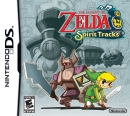
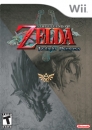






 (mostly)