By using this site, you agree to our Privacy Policy and our Terms of Use. Close

Forums - Sony - Best TV for PS4 Pro?

Samsung KS8000. It is by far the best (affordable) HDR LED TV out right now. In fact, it is probably the only choice right now. Input lag with HDR @ 4K is only 22ms. The Sony 850D (and X850C and X900C and X930D) with HDR is 90+!!!! That is terrible! The 800D is much better for a smaller, more affordable HDR TV (33ms).

I really wanted to like the Sony TV's as I am in the market looking and researching, but that HDR input lag kills them. Sony pushing HDR with the PS4 Pro better put out a firmware update to allow Game mode while doing HDR like the Samsung does. The X800D allows the same input lag with HDR, which makes me believe Sony can provide a fix for the other models.

Vizio P series and LG 8500 series both are in the 60s range with HDR which again is horrible for gaming.

Note: The models I am listing are ones that are actually worth getting with somewhat decent HDR. Lower models color gamut and contrast and brightness are basically terrible to really enjoy HDR, so don't waste your time.


Around the Network
Wildcard36qs said:
Samsung KS8000. It is by far the best (affordable) HDR LED TV out right now. In fact, it is probably the only choice right now. Input lag with HDR @ 4K is only 22ms. The Sony with HDR is 90+!!!! That is terrible!

Considering Sony only has two TVs this year without HDR, you'll need to be more specific. 


The 800D's have pretty good input lag, and while input lag is important, so are noise algorithms; without them, your screen will be generating tons of artifacts.


Watch me stream games and hunt trophies on my Twitch channel!

Check out my Twitch Channel!:

www.twitch.tv/AzurenGames

Azuren said:

OLED loses too much grayscale to be considered good at blacks; OLED also has a very short lifespan, only three years until the blues begin degrading; OLED is subject to burn in, making it less than ideal for extended gaming sessions; the OLEDs (from LG) also lack a noise algorithm, meaning artifacting will become an issue as well.

In the review they call it a little imperfection in the darker colors
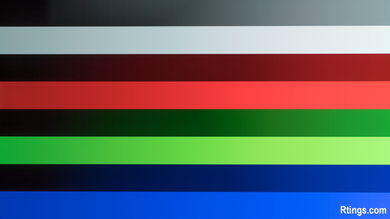
http://ca.rtings.com/tv/reviews/lg/b6

You're right, that's pretty bad for games where you're wandering around in the dark a lot of the times.
Btw they don't call it burn in anymore, image retention is the new phrase, as it clears up after a few hours or days. Not great. Start a movie after a game and see the HUD imposed until it fades away?

I did not know they still had a short lifespan with colors fading over time. I had the same with an expensive plasma tv, was great at first, is pretty faded now. And had burn in too from 4:3 content. Basically the only way to watch 4:3 content is to zoom or stretch it to get rid of the color difference where the borders are.

What's the problem with artifacting? The tv doesn't generate the noise I hope? Or does it show up with streaming content and cable tv? (I don't think any noise algorithm can clean up the stuff they sell here as HD cable lol) But yeah I can see that sharp drop off in the lower brightness amplifying any visible artifacting.

Oh, well, CAD 6,000 saved. (too much here anyway)

They're still good tvs, a friend of mine has one and says it's great. (Has it less than a year though)


SvennoJ said:
Azuren said:

OLED loses too much grayscale to be considered good at blacks; OLED also has a very short lifespan, only three years until the blues begin degrading; OLED is subject to burn in, making it less than ideal for extended gaming sessions; the OLEDs (from LG) also lack a noise algorithm, meaning artifacting will become an issue as well.

In the review they call it a little imperfection in the darker colors

http://ca.rtings.com/tv/reviews/lg/b6

You're right, that's pretty bad for games where you're wandering around in the dark a lot of the times.
Btw they don't call it burn in anymore, image retention is the new phrase, as it clears up after a few hours or days. Not great. Start a movie after a game and see the HUD imposed until it fades away?

I did not know they still had a short lifespan with colors fading over time. I had the same with an expensive plasma tv, was great at first, is pretty faded now. And had burn in too from 4:3 content. Basically the only way to watch 4:3 content is to zoom or stretch it to get rid of the color difference where the borders are.

What's the problem with artifacting? The tv doesn't generate the noise I hope? Or does it show up with streaming content and cable tv? (I don't think any noise algorithm can clean up the stuff they sell here as HD cable lol) But yeah I can see that sharp drop off in the lower brightness amplifying any visible artifacting.

Oh, well, CAD 6,000 saved. (too much here anyway)

They're still good tvs, a friend of mine has one and says it's great. (Has it less than a year though)

Noise algorithms generate noise, and for an important reason.


When a smart TV takes an image, it doctors it. A bunch of little things to make the image cleaner. Unfortunately, this generates artifacts from "mistakes". Noise algorithms generate a light noise over the image to help render those artifacts unseen, while also remaining light enough to be unseen from a reasonable viewing distance. Not enough, and you see the artifacts. Too much, and you see the noise. LG has an issue with the former, and Panasonic with the latter. Samsung uses noise algorithms as well, but dial them back significantly to retain a "clean" image at the expense of visible artifacting. Sony, on the other hand, found the sweet spot, but even that sweet spot will have visible noise from around 2 feet away. So to keep your game free of nasty artifacts, a Sony is the best choice. 


The colors fading is an issue of where those colors come from. The chemicals they use have a half-life, so it sets a definitive lifespan on the panel. Sony actually makes the world's best OLED panel (it's used in studio production for movies like Angry Birds), but the blues go bad even faster; only 6 months until degradation. 


And I assure you, that "image retention" is not temporary, and it will stick.


Watch me stream games and hunt trophies on my Twitch channel!

Check out my Twitch Channel!:

www.twitch.tv/AzurenGames

Wildcard36qs said:

Samsung KS8000. It is by far the best (affordable) HDR LED TV out right now. In fact, it is probably the only choice right now. Input lag with HDR @ 4K is only 22ms. The Sony 850D (and X850C and X900C and X930D) with HDR is 90+!!!! That is terrible! The 800D is much better for a smaller, more affordable HDR TV (33ms).

I really wanted to like the Sony TV's as I am in the market looking and researching, but that HDR input lag kills them. Sony pushing HDR with the PS4 Pro better put out a firmware update to allow Game mode while doing HDR like the Samsung does. The X800D allows the same input lag with HDR, which makes me believe Sony can provide a fix for the other models.

Vizio P series and LG 8500 series both are in the 60s range with HDR which again is horrible for gaming.

Note: The models I am listing are ones that are actually worth getting with somewhat decent HDR. Lower models color gamut and contrast and brightness are basically terrible to really enjoy HDR, so don't waste your time.

Replying to the rest of your post:


90ms sounds bad, but it really isn't (I use the 930D, which has the worst input lag- I can only notice it when I attempt to notice it, and even then it's not game breaking). I worry more about the fidelity of the picture, and Samsung's active choice to turn down their algorithms will mean artifacting. Not only that, but you lose 120hz@1080p, AND your analog video inputs.


As far as LG and Vizio are concerned: no. LG TVs don't use noise algorithms at all, and Vizio buys bad panels from Sony (and sometimes Samsung) to save on manufacturing costs. These panels are prone to shorting themselves out, and are the very reason why Vizio is known as a "subpar" TV brand.


Watch me stream games and hunt trophies on my Twitch channel!

Check out my Twitch Channel!:

www.twitch.tv/AzurenGames

Around the Network

OLED is cool and all, but thr tech needs at least another 2/3 years to mature. So right now its just too steep a price to pay for the privilege of being a beta tester.

Go with the Samsung 8000 series. I love Sony, but won't even advice you to get one. They don't even make their own displays anymore.... and the Sammy's are better. And cheaper too.


Intrinsic said:
OLED is cool and all, but thr tech needs at least another 2/3 years to mature. So right now its just too steep a price to pay for the privilege of being a beta tester.

Go with the Samsung 8000 series. I love Sony, but won't even advice you to get one. They don't even make their own displays anymore.... and the Sammy's are better. And cheaper too.

TV salesman here. For quality, Sony still has Samsung beat. Many KU and KS models come back for green lines and OS corruption, where Sony's only ever come back for preferential reasons ("I need something bigger/smaller", "I decided to go with a cheaper brand", "my husband/wife said they ONLY want ____ brand")


And OLED is more accurately a dead end, just like Plasma was.


Watch me stream games and hunt trophies on my Twitch channel!

Check out my Twitch Channel!:

www.twitch.tv/AzurenGames

Azuren said:
Intrinsic said:
OLED is cool and all, but thr tech needs at least another 2/3 years to mature. So right now its just too steep a price to pay for the privilege of being a beta tester.

Go with the Samsung 8000 series. I love Sony, but won't even advice you to get one. They don't even make their own displays anymore.... and the Sammy's are better. And cheaper too.

TV salesman here. For quality, Sony still has Samsung beat. Many KU and KS models come back for green lines and OS corruption, where Sony's only ever come back for preferential reasons ("I need something bigger/smaller", "I decided to go with a cheaper brand", "my husband/wife said they ONLY want ____ brand")


And OLED is more accurately a dead end, just like Plasma was.

Well.... I'm not gonna agree with jist cause you are a salesman. Yes I know Sony probably has everyone beat on quality, but their TVsalso suffer a lot from banding and uneven lighting. And most their recent models (especially with them going super thin which comes at a cost) don't come with local dimming zones which hurts their overall black levels. 

Samsung has always had quality issues. But right now they make the better TV.

And I think you saying Oled is a dead end like plasma actually made me lose any form of respect I could have for you. Why is it a dead end? Cause of burn in? if you say that then you really must not know that every display tech in use today wasn't always as good as they are right now. It basically took LCD displays almost 12yrs to get to where they are now. And on all fronts except burn in and overall peak brightness OLED has them beat. 

And the life span of the blue oled is only going to see improvemments with each nee iteration. Especially with LGs WRGB pixel structure. I could start going into all the different reasons why Oled is the future and all round better tech..... but that's not what this thread is about. There are just things oled can do and will do that LED displays never will. And I'll say just one of them, in time Lords will make having 100" plus displays economically feasible. But as I said that's another matter for a different kinda thread. 


Azuren said:

Noise algorithms generate noise, and for an important reason.


When a smart TV takes an image, it doctors it. A bunch of little things to make the image cleaner. Unfortunately, this generates artifacts from "mistakes". Noise algorithms generate a light noise over the image to help render those artifacts unseen, while also remaining light enough to be unseen from a reasonable viewing distance. Not enough, and you see the artifacts. Too much, and you see the noise. LG has an issue with the former, and Panasonic with the latter. Samsung uses noise algorithms as well, but dial them back significantly to retain a "clean" image at the expense of visible artifacting. Sony, on the other hand, found the sweet spot, but even that sweet spot will have visible noise from around 2 feet away. So to keep your game free of nasty artifacts, a Sony is the best choice. 


The colors fading is an issue of where those colors come from. The chemicals they use have a half-life, so it sets a definitive lifespan on the panel. Sony actually makes the world's best OLED panel (it's used in studio production for movies like Angry Birds), but the blues go bad even faster; only 6 months until degradation. 


And I assure you, that "image retention" is not temporary, and it will stick.

Ah thanks. For my understanding, they add film grain to hide unwanted artifacts, or rather LG doesn't. I thought that wouldn't be neccesary anymore on 10 bit panels, guess not.

How are modern LCD/LED tvs with banding? Journey suffers a lot on my old 8 bit LCD panel due to banding issues that crept up over time. That's where my projector really outperforms LCD tv. Smooth color gradients don't look very nice anymore on my 52" Sharp Aquos. (It's 10 years old though) Ironically it's black level is much better than my faded Panny Plasma.


Robert_Downey_Jr. said:

I mean there's a 43" Sony that has HDR10 but no OLED then there's a 55" LG that is OLED but is about $1,000 more expensive.

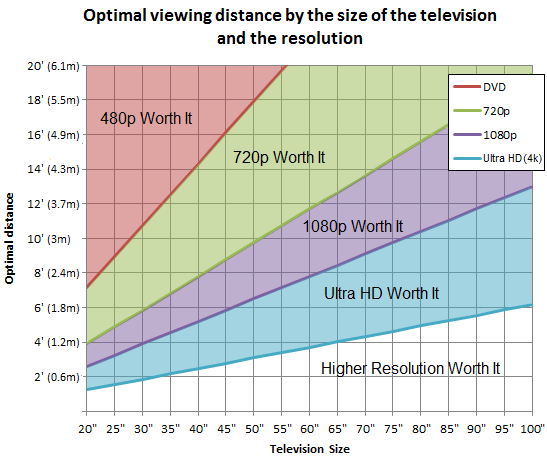
For 4k, 43" is probably not enough unless you're really close to the TV. The right size depends on the viewing distance.