Maraccuda said:
sc94597 said:
Maraccuda said:
That is a fair point, but I meant typical JRPG pattern by throwing a curve ball into the plot that doesnt quite make complete sense, the protagonist having a special origin rather than what is initially told,
|
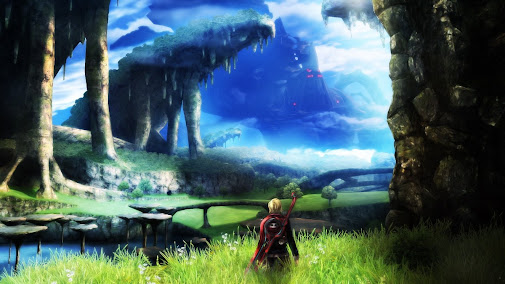
Are these really JRPG/Anime tropes or literary ones in general?I am interested though, what didn't really make sense in the story? I thought consistency and a lack of plot holes was Xenoblade's better traits over its predecessors (Gears and Saga.)
|
Yeah I meant them as tropes specific to JRPG/anime stories.
Well Ive never played any Xenogears or Xenosaga so I cant comment on their consistencies but with bronze face why did he eat people? I originally thought it was to gain immunity from the Monado, and despite winning a battle he fled due to what seemed like his immunity dried up.
And the whole thing with Zanza being chained up but then happily 'died' to be free was confusing. And how Shulk originally died when he was a child but was revived as a vessel for Zanza saying his was just a shell, but when Zanza's spirit left his body he regained a soul.
The final revelation that the world was created from a scientific experiment gone wrong is fine although a little cliche.
*If a point I made was wrong, forgive me, I havnt played the game for about 3 years now.
|
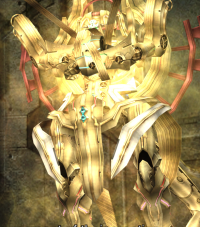
By Bronze Face do you mean Metal Face? Or Zord? There is no immunity to the Monado, it has to do with the restrictions of the Monado since the mode it is in determines its effectiveness. So you can force it. Zord, the fat one who ate people did so because his machine body is programmed to, that's the purpose of the mass produced face mechon, as explained by Egil: the whole purpose of the Mechon is to kill off the life on Bionis to deplete it's energy. That's why he ate people: to steal ether away from Zanza essentially.
Zanza never died, as explained later. That was just Egil's friend; Zanza was just using him. Zanza is merely the Bionis's soul, he doesn't have a body. That's why he needed one. Now as for whether he allowed himself to be imprisoned or was truly stuck is unclear, though I think it's the former: he could have abandoned the giant's body, but he needed a new one to transfer to. That's why he waited for a new vessel, Shulk. The Monado acts as a sort of medium or bridge for him to trasfer his soul into another body.
Now Shulk being dead but being revived by Zanza as a "shell" is an example of Zanza simply being plain mistaken, which is part of the point: his falibility is emphasized throughout the narrative. He's wrong about the nature of his status, wrong about the Monado, and it even seems he is wrong or deluded about his own past. For example, he claims he has remade the world many times. However, the rest of the story tells us this is quite false: the whole reason he fought Meyneth is because that's what he wanted to do but she would never go for it. Shulk being a hollow shell was, again, just a mistake on Zanza's part, believing that he could destroy the soul but not the body or that life can exist without a soul.
In short, Zanza's gone crazy from his power. This is contrasted with Meyneth, who is also falible but kind. But both are contrasted with Alvis, who is unfalible and benevolent. That's where the Gnostic elements come in: Meyneth and Zanza are teh demiurge, Alvis is the Monad. Zanza and Meyneth are essentially false gods while Alvis is the true God.
I don't personally view the experiment bit as a cliche, but your mileage will vary on that. To me, it was suitable and fit the narrative without being hackneyed.