ICStats said:
walsufnir said:
What? So you say the system overhead fluctuates, let's say, every ten ms? That's most likely not true and I would be glad to be told otherwise with data.
|
Sure, it does. System overhead is some amount of time on a core per frame. Some of it will be in a burst like some 'ms' at the end of a frame; some of it just background tasks.
If you're doing a 5ms CPU benchmark then system overhead should be unnoticeable since the are 4 cores. System will take one, and the benchmark should run on another with little contention. You would see the overhead when you try to pack all 4 cores like in a full game.
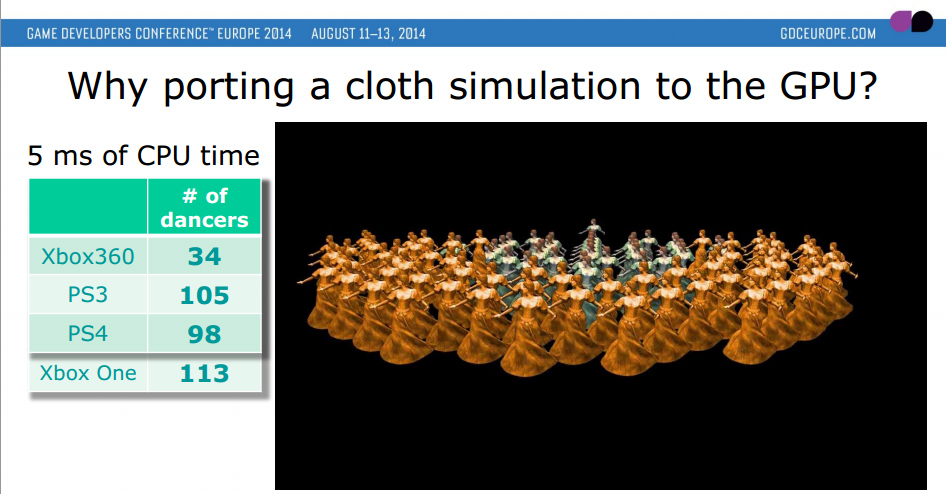
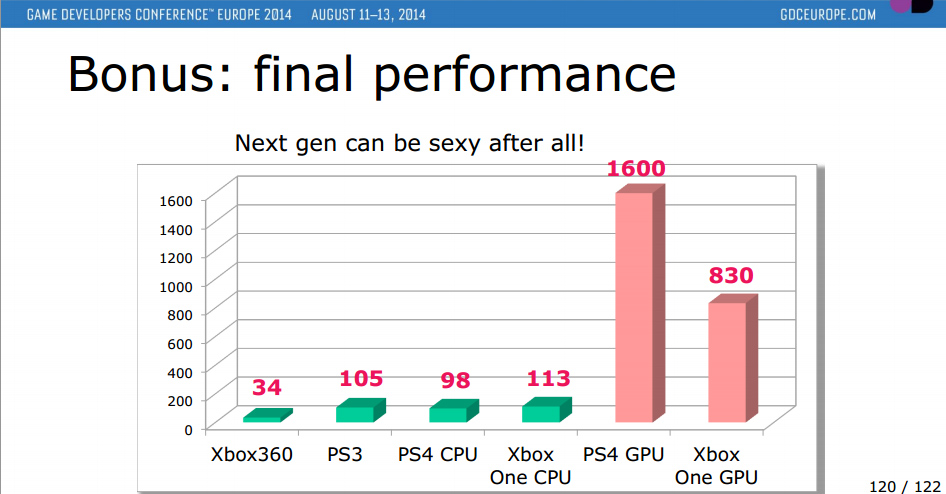
The point of doing these measures like "number of dancers in 5ms" is for budgeting. You have some budget per frame, say for Ubisoft's 30fps games the amount of CPU time per frame is (4 * 33.3ms - System_Overhead). Their benchmark tells them how many dancers they can do per ms, but you have to count system overhead to determine number of dancers per frame.
|
Actually this is indeed an interesting topic to talk about as this gen we have full fledged multi-tasking operating systems with a specific scheduler at hand in both systems which, when measuring and judging performance, plays a significant role outside of pure specs which influences performance possibly greatly.
But something seems wrong with what you are trying to say: Both systems take 2 of their 8 cores for operating system purposes so I don't see why the remaining 6 cores should suffer from that, other than the scheduler does some bad work but even then this is intransparent for the remaining cores which are for game purposes.
Anyway, these are details we will probably never get to know but I do know that dev tools nowadays also consider schedulers of the current gen consoles.