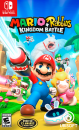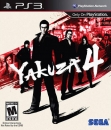


I say that Nintendo should be acquiring companies that round out their skillset, rather than trying to obtain big IPs (like GTA) - there's only one major publisher I think Nintendo should consider buying. So here's who I'd have them acquire:
1. Platinum Games: This studio makes some rather... risque games, and their games are very much different from anything that Nintendo makes. I think just about everyone would agree with me on this one, so I'll move on.
2. High Voltage Software: Say what you will about their game-making skills, but when it comes to the pure technological skill of this company, you really can't doubt it. No other company, Nintendo included, were able to get more graphical effects out of the Wii. Acquiring HVS could result in Nintendo having a new in-house game engine that they could then offer to third parties who want to make exclusive games. Meanwhile, HVS's game-development skills are somewhat wanting... but only in the ways that Nintendo excels - art direction, story, and pure gameplay. Nintendo's oversight of their game development could result in some remarkable games. Nintendo would also get access to the IP "The Conduit", which has the potential to be a great franchise.
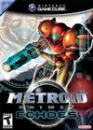
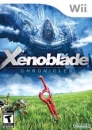
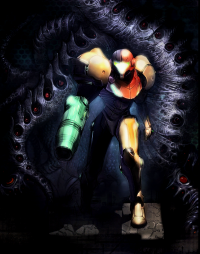
3a. Sega: Nobody can really deny that Sonic has performed best on Nintendo platforms since Sega went third-party. But what is notable is that Sega's IP library is roughly 50% IPs perfectly aligned with Nintendo's library and 50% franchises that would comfortably fill out genres and styles that Nintendo lacks. Beyond this, the acquisition of Sega would provide Nintendo with a natural and effective opportunity to create a secondary publishing brand. Nintendo would contain the vast array of family-friendly titles that Nintendo is best known for, plus many of Sega's classic IPs (like Sonic). Sega would then be the publishing name for the various "mature", "hardcore", and/or "dark" titles, such as Fatal Frame, Bayonetta, Pandora's Tower, Monster Hunter, The Conduit, House of the Dead, and perhaps Metroid, Disaster: Day of Crisis, and Xenoblade.
This could work either as an acquisition of Sega, or a merger with Sega Sammy. The former option would probably be the easier option, but the latter would allow Nintendo to expand their market by also adding Sammy's pachinko market and all of the other subsidiaries within Sega Sammy, which includes various music, movie, and animation companies, to name a few. This would allow them to diversify, and thus perhaps protect themselves in case of major struggles like what happened in the last couple of years. Also, while acquiring Sega would probably be easier, it would also be expensive, while a merger with Sega Sammy would not cost them anything.
3b. Valve: An alternative option to Sega is Valve. In this case, this would be a merger, and the following benefits arise - Nintendo would obtain access to some notable American-oriented franchises, the Steam platform, the Source (and related) engine, and an extensive group of partners. Being an American company, a natural arrangement would arise in which Valve would become the American arm of Nintendo, and as with the case with Sega, it would provide a natural segregation of games into two distinct brands.
Having the Steam platform would enable Nintendo to dramatically improve their online shop, enhance the opportunity to get a wider variety of games on the service, and also enable Nintendo to naturally provide their own franchises on PC and mobile type platforms in a controlled manner. Furthermore, the Steam platform and Steambox would provide Nintendo with an option to develop titles that their dedicated home consoles would not be able to handle, thereby providing Nintendo with a location to prepare their developers for the next generation of dedicated home console.
4. US development studios: n-Space, Telltale Games, Demiurge Studios: These studios would expand Nintendo's development capabilities in distinct ways, and also provide a few IPs along the way. n-Space has a lot of experience in development on Nintendo platforms, primarily handheld, and are the studio behind Geist and Heroes of Ruin, and Nintendo might be able to revive "Winter" as well. Telltale brings the Sam & Max franchise, and tend towards episodic gaming. Demiurge has worked cooperatively with other studios to support development of various titles, and would likely benefit well from Nintendo's guidance. They could also assist Retro just as well, allowing Retro to have more titles in development simultaneously.
5. European development studios: Frozenbyte (Finland), Two Tribes (Netherlands), Frontier Developments (UK): Frozenbyte makes the Trine series, Two Tribes makes the Toki Tori series, and Frontier Developments made the LostWinds series. These three studios clearly have a lot of skill, and would bring a lot to Nintendo's European development capabilities.
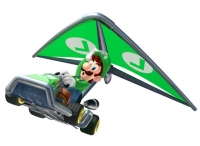
6. Other development studios: Tantalus Media (Australia), Next Level Games (Canada), NCSoft (South Korea): To round out the list, we have some other studios that would benefit Nintendo. Tantalus is perhaps the most notable Australian developer, and has good potential. Next Level Games was behind Luigi's Mansion 2 and the modern Punch Out games, so their value is undoubtable. NCSoft's skill is in MMOs, so they'd certainly expand Nintendo's capabilities, and might also enhance Nintendo's Korean market sales.
There are, of course, some other ideas, like Mojang, but these seem like the most plausible options amongst worthy independent studios.




Existing User Log In
New User Registration

Register for a free account to gain full access to the VGChartz Network and join our thriving community.