By using this site, you agree to our Privacy Policy and our Terms of Use. Close

Forums - General - So Detroit is now Bankrupt...

CDiablo said:
KylieDog said:
the2real4mafol said:

2. How can Detroit become prosperous again? if possible


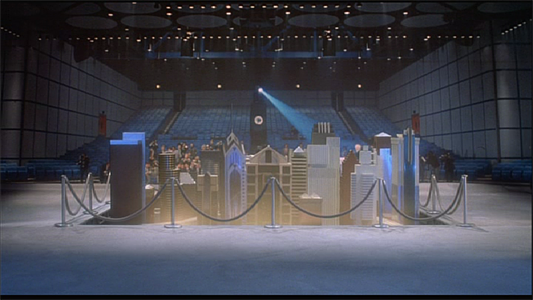
I give you...


Delta City!

Thats a stupid idea. I cant imagine all the scum being cleaned up by the police force they have out there. Half the populus are heavily armed gangsters and the other half are nuke heads. If you can name one cop or one type of cop that can clean up the city ill paypal you $100.

He does exist; his name is "Robocop".


Around the Network
darkknightkryta said:
MikeRox said:


Greece, Portugal and Ireland have all required bailouts from the EU to stop them going bankrupt. Spain and Italy are also currently struggling quite badly with financial problems. They are all suffering from very high unemployment and ongoing recessions.

France are in a much better position, but there are concerns for them too. The UK was a big worry, but at the moment recent data has been relatively positive. Though it has turned out our recession in 2008 was far bigger and deeper than anybody had previously thought. Germany have weathered it fairly well throughout, but their population are getting a bit fed up of the "Bailouts" and feeling like they are bank rolling other countries' irresponsibility.

Thats my little snapshot of Europe anyway.

As for Japan, their economy has been stagnant for a good decade. Their current government are now printing loads of Yen to try and bump start their economy. They've not had any real growth in a long time now and are very indebted.

I just went to go look at Greece's debt, they're sitting at 500 billion.  I gotta ask, cause I'm missing a huge peice of the puzzle, but why is the U.S. allowed to sit at 11 trillion dollars of debt but Greece is at bankruptcy and needs a bailout?  Or even here in Canada, we've accumulated that much debt, but we don't need a bailout.  I'm honestly asking this cause these numbers don't make sense to me, is there some magic accounting magic at work here?

There are a few factors.

A big one is, the US has it's own currency, and can use the central bank to print money on demand as needed. Greece have no control over the value of their currency as they use the Euro, this has been most of the European countries which are in difficulty's problem. They can't devalue their currency to help boost exports and manufacturing because although this would be right for their economies, it would be wrong for other countries using their Euro.

It effectively leaves them very limited as to what they can do to boost their competitivity on the global market.

Another is the US is a much much bigger economy than Greece's. Although the US debt is massively higher so is US GDP. Greece's debt is significantly higher than it's GDP, whereas the US's isn't, it's current roughly the same.

The reason Greece's debt has become so unmanageable though, is that because lenders are less and less satisfied with their ability to repay their debts, the interest rates they are having to pay when rolling that debt over in new bond sales etc is increasing, meaning it's costing them more and more to service their debt. The US (along with the UK/Germany etc) still enjoys very low interest rates, in the UK's case, the interest rate paid on it's debt is currently at a record low.

A lot of it is purely "speculation" of lenders beliefs in a country's ability to repay their debts. Countries like Italy and Spain which are on the borderline of concern the interest rates are pretty fluctuant at the moment as investors gain, then lose confidence in their ability to repay their debts.

In Greece's case, it got to the point where the country couldn't raise enough money to reservice their existing debt and a default would have been inevitible without the bail out. The US however is able to service it's debts, and is able to raise new funds to roll over it's debt at the moment without any problems and so is currently no where near as likely to default on any of it's repayments to any creditors.

Hope that makes a bit of sense :)


RIP Dad 25/11/51 - 13/12/13. You will be missed but never forgotten.

darkknightkryta said:

Yes, but why hasn't the U.S. dollar depreciate to crap like it should have already?  What's keeping it up?

Part of it is that the US Dollar is the global currency.  For example if you are China and buy oil from Saudi Arabia you do so with US Dollars.  It is still considered a valued and honored form of currency world wide.

This is why the US does panic a bit when a rival like the Euro could be a competitive alternative in that regard.


If I was the US, I'd be more panicked over the Yuan than the Euro. They're already calling for a currency other than the dollar in China.


RIP Dad 25/11/51 - 13/12/13. You will be missed but never forgotten.

Mike and Augen, makes sense :D. Though I'm still not sure why there isn't uncertainty with the U.S. dollar considering the U.S. is running deficits in the trillions with no repayment of debt in sight for the foreseeable future, or ever. But with the world using U.S. currency as you've stated no one will dare depreciate it. What a load of crock the global economy is.


Around the Network
timmah said:
Mr Khan said:
timmah said:
Mr Khan said:

Workers quit and go where? Labor is a buyer's market, inherently, and all companies would push wages down as low as they felt they could for the job to still be "worth it" (and not in terms of what the job is fairly worth, but that you can hit a point where the pay is so low that people would just rather go on welfare)

If that were actually true, then why are only 6% of employees paid minimum wage? Oh, because labor competition is what actually sets wages.

Some interesting stats on this...

  • Only about 6% of the workforce actually makes at or below minimum wage at any given time
  • The vast majority of these are young people and/or people with very little education or in part time positions
  • The industry with the highest number of people making these low hourly wages is the foodservice industry, where tips make up the difference, leading to actual incomes generally above minimum wage. If you take these out (since they make more than minimum wage when you include tips), the above figure would drop much lower.
  • Almost nobody STAYS at minimum wage, unless in a tip-based position, but they make more than the statistic suggests anyway

The fact is, as long as you get a halfway decent education, there's absolutely no way you should be stuck in a minimum wage position. Hell, I worked at a fast food restaurant while in high school and was only at minimum wage for 3 months there! If companies could really 'push down' wages without a minimum wage as you (wrongly) suggest, they should be able to 'push down' wages to the minimum wage with one in place, but that's not the case. Why do the vast, overwhelming majority of workers (in both union and non-union positions) make above the minimum wage? There's no law stating they have to pay their employees what they do.. It's because the market has set reasonable value on those jobs, not a government regulation.

That's a fact, Jack!

EDIT: If employers really had the power to just go as low as they wanted, why is the average hourly earnings in the US about $24? http://www.bls.gov/eag/eag.us.htm . The current minimum wage has almost zero impact on real hourly rates.

Does that "average" earning take into account the people who make $1000 in the time it takes to sneeze?

As far as we can tell in the meanwhile, most people on the minimum wage are NOT teenagers, but are "full" adults, and 40% of them are classed as breadwinners (pulled from... somewhere in the Department of Labor).

As for the questions of why companies would try to push down? Even for professional positions, companies are trying to find ways to get away with paying people little to nothing, but they call them internships. Fortunately unpaid, work-producing internships for for-profit companies are in the process of being outlawed. Next they just need to crack the non-profit sector.

You do make a valid point that a company's desire for long-term worker retention usually leads to seniority-based pay raises even for low-end positions, but the entry level wage would certainly sink across the board (until it hits that dirt-poverty threshold. But then again, internships dodge the dirt-poverty threshold and still people compete for them) if the laws mandating it vanished.

This takes into account those who make an hourly wage, the 'rich' are generally salaried.

You miss the point that only 6% of all workers make minimum wage (about 4% if you factor out tip-based positions, which you should) or lower at a given time, 50% of those are young people, 30(ish)% in the service industry (so most likely make more), that leaves the rest who are generally TEMPORARILY at that low a wage, are part time (not the breadwinner), are just starting in a position, and/or are extremely low skilled. Even so, the extremely low skilled worker will generally not be at minimum wage permanently. Again, if your hypothesis were true, there should be a far larger, and more statistically significant portion of the population making the minimum.

It is a near statistical impossibility for anybody with half a bran, a high school diploma, and a decent work ethic to be in a minimum wage position long-term. This is undeniable.

Even though most of the poplulation will literally NEVER make minimum wage, those that do DO NOT stay there, period. Your hypothesis just doesn't match up with the reality of how the market works.

Hell, even the average cashier at WalMart makes about $10/hr!

EDIT: In a good economy (more robust job market), the percentage at minimum wage is about half, so again, market sets wages...

This. Thanks for saving me having to write the exact same thing. 

The market, not the government, sets wages. If minimum wage is so good why isn't it $20/hour? Well then because workers would be fired and prices would jump. Just let the market decide a fair wage for the job at hand.