By using this site, you agree to our Privacy Policy and our Terms of Use. Close

Forums - Gaming - Do you, Sony and Microsoft see a future in Motion Control?

true, they also didn't invent motion controls. I remember using a chopping motion to slice a carrot years before the wii came out.
I know Nintendo didnt invent erganomics but they were the first to bring it into controller design to any degree


'You should try everything once in your life except incest, homosexuality and morris dancing' - Oscar Wylde (sort of)

Around the Network
RolStoppable said:
leo-j said:
@rol

Nintendo did not start analog controls. Also If the ps1 was released BEFORE N64 how da F did they copy analog controls?


The point isn't whether or not Nintendo invented these technologies, in most cases they didn't. The point is that Nintendo made these technologies the standard for controllers, something other companies failed to do.

The PS1 controller with analog sticks was released after the N64 controller was shown. Sony knows just too well, that Nintendo often has the right ideas to push gaming forwards, so they quickly added analog sticks to their controller (and later rumble). 


 I don't understand, why u are even trying to educate, that ignorant adolsent, rol. He's arguments and logic make my 10 year old brother seem like Einstien. I just sit back and laugh at every post he makes, at first it was anoying, but now its generally funny!!!


Nintendo & Sony Supporter

Currently own- DS, PSP, PS2, Wii, Xbox 360, PS3 DreamCast.

Man i have too many consoles..... 

Quotes to live by!

"Life is either a daring adventure or nothing"- Helen Keller

"i am not discouraged, because every wrong attempt discarded is another step forward"-Thomas Edison

"Man is not the creature of circumstancesCircumstances are the creatures of men"


Nintendo copyes D pad idea
http://en.wikipedia.org/wiki/D-pad

evolution to the analogue stick nintendo used
http://en.wikipedia.org/wiki/Analog_stick

Nintendo brings rumble to the world
http://en.wikipedia.org/wiki/Nintendo_64_controller

and we all know nintendo did not invent wireless technology they just implimented it into their controlers. alot of things like tv remotes were wireless long be4 nintendo created a wireless remote, theres wireless car locking and garage door opening and im tired ect ect


Keep it real guys, dont hate mario, hate the player

Currently playing:
Geometry Wars galaxies, Animal Crossing wild world, Pangya swing with style, SSX Blur

Everyone here is speaking the truth in regards to [bold]console gaming. Just because the arcades have been using an excellent form of analog for decades the console market was using the analog joystick poorly. When Nintendo started using the D-pad with the NES it provided more accurate controls for thetypes of games that were being played on the system. (2-d Shooters, Platformers, Button Mashing brawlers). The D-pad was just far superior for 2-D gaming and became the industry standard for the entire 2-D era.

16-bit comes along and more inputs become necessary because of the new types of games coming to the console market (Fighting, Racing, Sports). All of these types of games gained enormous popularity and required more than just 2 buttons to play. Thus Nintendo came up with the Diamond configuration and the shoulder buttons for their SNES controller. This configuration demonstrated supreme egronomics for the fastest input and became the industry standard that still holds up today in one form or another.

PS1/64, Sony innovates with CD and 3-D graphics but continues to use the D-pad for all their games. This resulted in tank like controls for many 3-D or isometric games. Nintendo knew that current inputs were inferior and innovation once again came about because of the type of games being played; FPS, 3-D adventure, and 3-D Racing all needed faster movement in 3-D space something only an anolg joystick could provide. Nintendo also came up with an add on pack that allows for rumble vibrations in the controller. It was ridiculed as gimmicky at the time because it "didn't add anything to gaming", but once people tried it out they thought it was neat. Both these innovations became industry standards in controller technology.

Last Gen- Nothing changes dramatically other than a vast improvement in graphics and game size. Nintendo creates a wireless controller for its system that is superior in every way to previous attempts at wireless. Wireless becomes the industry standard (I don't think Nintendo necessarily caused this to happen though I think it just happened in the same way cell phones or wireless internet became popular it was just so damn convenient)

Current Gen- Nintendo sees a shrinking market and growing disinterest and recycled play mechanics. They realize that the market needs to expand and the only way to do it is to change the way games are played. They first create the DS with its touch and standard screens. This allows traditional games to be played on the hand held as well as allowing for a completely new gaming experience that is highly intuitive and addictive which they hope will draw a new demographic to gaming. Next they create the Wii with its motion controls and IR pointer. The amount of inputs available still allows for traditional game and is some cases (if done right ) allows for superior, simpler, or more enjoyable control over analog (FPS, Sports, Puzzle, Point & Click Strategy, simulation, party games ect.). The controls are ridiculed as gimicky and the system labled a fad.

Prediction for next gen- Motion controls and IR sensors become industry standard.


@theultimatelife

Have you played an Intellivison? The damn thing wasn't a D-pad it was 9 numbers set up in much the same way your Num Lock area on your keyboard is. You need a picture?


 Does that look anything like a fucking D-pad?

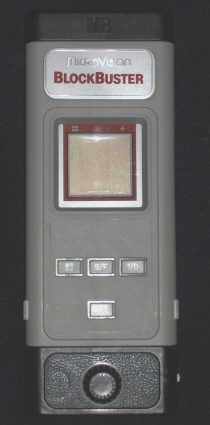
The other example that came before  1982 when Nintendo developed the Game & Watch with the cross pad design was the microvison looked like this:


Nintendo Game & Watch 1982:

Did you even look at the pictures or do any research before you posted that drivel"

One last pic for you:


Around the Network

we can thank nintendo for sholder buttons and rumble! lol everything else concerning controler design has been done be4 nintendo and nintendo was just a stepping stone towards perfecting it. but although motion controles have been experimented with in the past the new usage of them is kinda like the maturing stages of the creation of the perfect analogue stick. So while nintendo didnt bring the d pad, or in reality the analogue stick to controlers nintendo just built upon that technology to bring it to its next level and is now continuing to build further

for something to be able to make something standard is has to not have been standard in the past and we see that analogue sticks and d pads were all features to some degree in previous consolse controllers.

A button layout could even be chalanged on its standardness on the fact that the companies do what ever they want and place buttons however they want. If the diamond patern was so standard y did nintendo opt for a different design on the GC and now completly thrown it out the window on the wii? maybe it was just the thing to do during the time of the SNES and N64 cos nintendos changed that so called standard when they started developing the GC controler. if every one did it and kept to it as a rule then it would be a 'standard'

what is standard for a controler is at least one analogue stick and one d pad and some buttons and nintendo was not the first to do any of these they had their place in line. introducing the sholder buttons could be the only real thing nintendo has done that has contributed to what was allready there


Keep it real guys, dont hate mario, hate the player

Currently playing:
Geometry Wars galaxies, Animal Crossing wild world, Pangya swing with style, SSX Blur

so what, they simplified the button inputs into a 4 way directional pad (edit* i take that back, after doing ur so called research that circle buddy is the original d pad concept the article i read refers to, so what if i didnt look at the pic, i didnt need to, the article i read was right) and placed the action buttons to the side? nothing that wasnt allready being done was being done it was just being done is a different design, no need to lose a nut over it rasone all im saying is nintendo took what was allready there and improved on it, they didnt invent input devices, they just improved them


Keep it real guys, dont hate mario, hate the player

Currently playing:
Geometry Wars galaxies, Animal Crossing wild world, Pangya swing with style, SSX Blur

"The Intellivision's unique controller featured the first alternative to a joystick on a home console, a circular pad that allowed for 16 directions of movement by pressing it with the thumb" i dont know what your talking about but there is ur original concept behind a directional pad @ rasone Maybe you should do some research be4 u start dribbling what ever it is thats commen out ur mouth cos its definatly not common sence, looks like what uve said has come back on u, u should be more careful talking about things until u know what ur talking about EDIT* oh and i also remembered that u can slide a card over thoes buttons that has pictures and stuff of things to press, (a custom interface) so you could even hav had a d pad shaped drawing on a card that went over thoes buttons to act a d pad Game controller specs Twelve-button numeric keypad (0–9, Clear, and Enter) "Four" side-located "action buttons" (where the top two are actually electronically the same, giving three distinct buttons) "Directional Disk", capable of detecting 16 directions of movement "Overlays" that would slide into place as an extra layer on the keypad to show game-specific key functions They also had side buttons which could have been a precurser to the sholder buttons featured on nintendos console


Keep it real guys, dont hate mario, hate the player

Currently playing:
Geometry Wars galaxies, Animal Crossing wild world, Pangya swing with style, SSX Blur

The history of consoles is riddled with innovations labeled as "gimmicks" which slowly gain support. To wit:

* The NES introduced the D-Pad, which Atari fans and arcade players complained lacked the grip of a joystick

* The SNES implemented the standard "4 face button + shoulder button" layout, which many felt was too complex compared to the setups of the NES, SMS, etc.

* The N64 introduced the analog stick, which led a number of people to complain that it lacked the directional precision of a D-Pad

* The PS2 introduced analog face buttons, which were criticized as pointless for anything but racing games

* The DS introduced stylus controls, which were immediately dubbed a gimmick that would never have practical use by many gamers

In all of these cases, the arguments against the interface change were ignored and continued support was offered. More than likely, the Wii's combination of motion control and IR camera will enjoy similar continued support. Although I will say this: the next generation is unlikely to see Nintendo using the exact same setup as the Wii. There will be legacy Wii Remote support, but I see them moving towards an even more user-friendly interface. They may even try to bring back the Power Glove's system (and with far more success; 20+ years of technology improvements and all that).


Sky Render - Sanity is for the weak.

The D-pad that is the industry standard is the cross shape. There is a reason no one uses the Intellivisons control scheme Because it sucks. I'd like to see you try to play any current games with that god awful thing in place of the cross shaped D-pad.

The innovation was not the invention of that convoluted definition of yours but rather the implementation of the modern D-pad. Something Nintendo did first with the Game & Watch hand helds.

Lets not forget that the definition of innovation is not[/] invention but rather the introduction of something new or starting something for the first time. Nintendo introduced all of these things to console gaming and that is why the recieve so much [/]deserved credit.

http://www.thefreedictionary.com/innovation