









Zippy6 said:
The T239 in the Switch 2 supposedly has 64 Ampere Tensor Cores, the same as the RTX 2050 Laptop, so it's basically going to be slow with it's DLSS processing compared to the majority of DLSS capable GPU's. Unfortunately the T239 does not have the Deep Learning Accelerator the T234 had, which could have greatly reduced the overhead of DLSS on Switch 2.
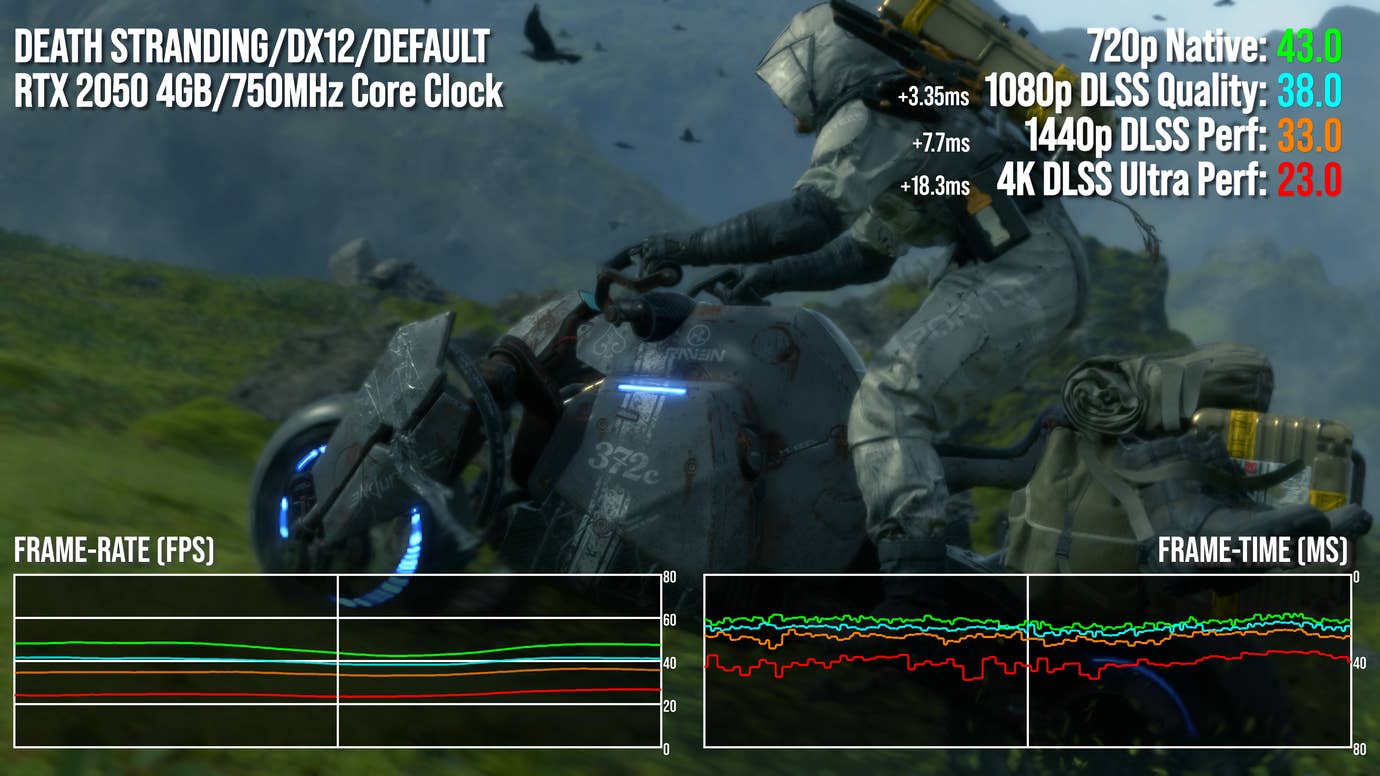
Scaling from 720p to 1080p with DLSS is a 12% performance hit on the RTX 2050 Mobile, I assume 540p to 1080p takes more out of the tensor cores so yeah a 14-15% hit in performance going from 540p to 1080p may be about right. But really with the low number of tensor cores and the lack of the Deep Learning Accelerator it seems for the most part DLSS is going to be used to scale to 1080p, occasionally 1440p and 4k almost never. The performance hit using DLSS to upscale to 4k on the RTX 2050 Mobile is huge. Nintendo/Nvidia didn't go all in on DLSS for the Switch 2. Still for 1080p gaming it's going to be great, and handheld will especially benefit. |
I'm not sure how much DLAs are important for upscaling (I don't think they are), tensor cores are what's important for DLSS - 2 NVDLA units where in T234 cause they had purpose there.
SW2 has 48 tensor cores - 2050 mobile indeed has 64, it's just Richard (DF) running everything at 750Mhz to try to emulate SW2 GPU (it should've been 755MHz, but it's close enough).
Anyway, looking at that 720p Native to 1440p DLSS Performance (which is 720 native), and then doing some math comparing how 1080p vs 1440p DLSS Performance scales from official numbers on Ampere...yeah, again comes out as 14-15% for 1080 DLSS Performance.


