









| mZuzek said: 37°C? Well, that sounds hot... but I've no idea without a comparison to other consoles and stuff. I hope it does remain cool enough during gameplay, I wouldn't feel exactly super comfortable holding something too hot (then again I don't think I'll be playing it in handheld mode too often). |
It should be comfortable, near body temperature. For reference here is the NVIDIA Shield thermals:


"When taken at face value, NVIDIA seems to have created a perfect storm for themselves: the Tegra K1 is one of today’s fastest mobile processors and it will spend the vast majority of its life running demanding applications. Meanwhile, the SHIELD Tablet’s external skin is coated in a soft-touch finish rather than aluminum which can act as a quasi external heatsink. By all sane thinking, this SHIELD should run extremely hot….but it doesn’t. Nor does the K1’s performance throttle, even when it’s being used in Max Performance mode.
After two hours of continual gaming in Trine 2 (which is arguably one of the most demanding games available right now) the SHIELD Tablet remains relatively cool to the touch. Granted, there is a hot spot over the K1 itself but we can see that NVIDIA’s internal heatsink design is able to disperse the heat across several square inches. The hottest section never went above 56°C while the area directly behind the battery was only slightly warm."
Other examples:
"The heat distribution of the Hi10 Pro is not very even. On the plus side, the tablet only reaches a maximum of 36 degrees C on the back - low enough to where holding it during normal use never feels uncomfortable."


http://www.notebookcheck.net/Chuwi-Hi10-Pro-Tablet-Review.186738.0.html
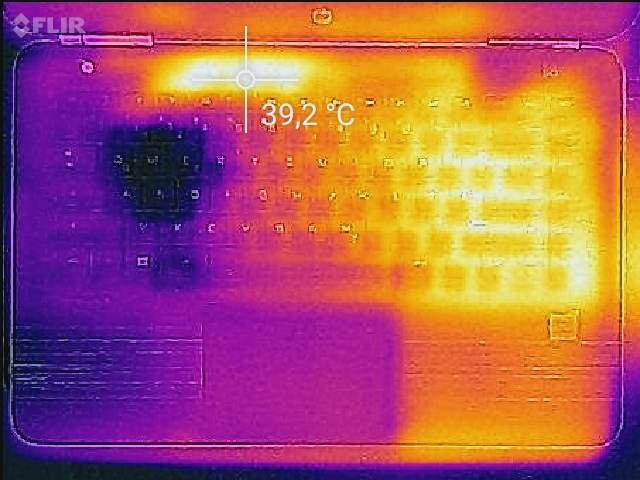
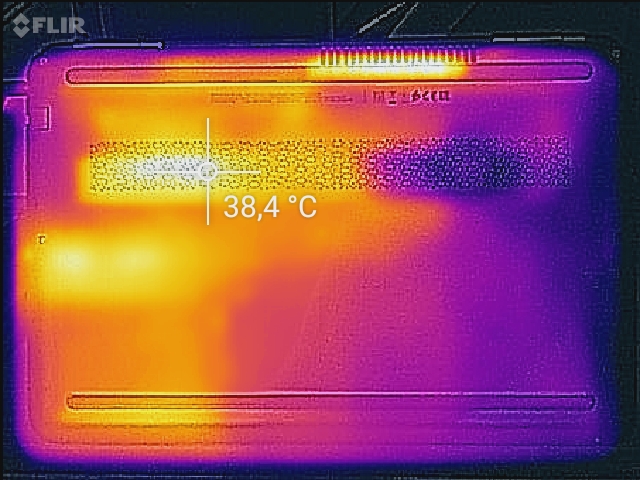
"The Pavilion performed our stress test in the same manner in both AC and battery modes. The CPU clocked at 2.4 GHz in the first few minutes of the test. The graphics core fluctuated between 500 and 900 MHz. The processor then throttled to 1.6 GHz while the GPU's speed increased to 900 to 1000 MHz. The laptop's temperature development remained within tight limits. The temperatures on all measuring points remained clearly below 40 °C during the stress test. The temperatures are lower in routine use."
http://www.notebookcheck.net/HP-Pavilion-14-al103ng-Notebook-Review.189777.0.html


