Well you along time ago people loved to deride Sony consumers all the time. They were pretty lowly and casual. Though the term casual wasn't used. Other companies hated Sony for their product and thought it was a piece of shite. Their success just flabergasted them as to why anyone would want such a low qaulity piece of garbage. Why would any one want a low powered device that was portable, small and convient. You know sorta like the DS low powered ness. No i'm not talking about the Play Station.
Linky linky(http://news.cnet.com/Handling-new-market-disruptions/2010-1041_3-5090715.html)
"While vacuum tube makers worked feverishly in their labs on targeting the existing market, the first application emerged in a new value network on the third axis of the disruption diagram: a germanium transistor hearing aid, an application that valued the low power consumption that made transistors worthless in the mainstream market.
Then, in 1955, Sony introduced the world's first battery-powered pocket transistor radio--an application that again valued transistors for attributes that were irrelevant in mainstream markets, such as low power consumption, ruggedness and compactness.
Compared with the tabletop radios RCA made, Sony pocket radio's sound was tinny and laced with static. But Sony thrived, because it chose to compete against nonconsumption in a new value network.
When the crisis became clear, the manufacturers of vacuum tube products couldn't just switch to the new technology.
Rather than marketing its radio to consumers who owned tabletop devices, Sony instead targeted the rebar of humanity--teenagers, few of whom could afford big vacuum tube radios.
The portable transistor radio offered them a rare treat: the chance to listen to rock 'n' roll music with their friends in new places out of the earshot of their parents. The teenagers were thrilled to buy a product that wasn't very good, because their alternative was no radio at all.
The next application emerged in 1959 with the introduction of Sony's 12-inch black-and-white portable television. Again, Sony's strategy was to compete against nonconsumption, as it made televisions available to people who previously couldn't afford them, many of whom lived in small apartments that lacked the space for a floor-standing television. These customers were delighted to own products that weren't nearly as good as the large TVs in the established market, because the alternative was no television at all."
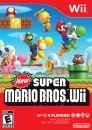
Ok ok, the topic is that Mario is casual. Well I understand that, but instead look at it this way. Sony portable products are not viewed as casual. Instead Sony started a revolution by using a new value curve of low power, but for everyone*cough* Wii/DS *cough* that moved the big companies away from over investment in curve. So the portable became STANDARD. So while Nintendos Mario is "casual" now(not that he used to be). Mario will once again not be considered derided as causual. You can be sure that Mario based on Sony and MS is going to live forever.
Of course the above information won't fit some peoples view points and will be ignored next time the issue about casual comes up and insist that pushing hardware is the only was to go and will never imagine that Sony was once a current day Nintendo or Nintendo is again pulling a Sony.










.gif)
 GETTIN' CHRONOCRUNK


 (Former) Lead Moderator