Hmm... well, rental and lending have talked through and are mostly in agreement already, so I'll bypass those 2. (I have no problems with either of them, through rental fees and local single use of a single license.)
The used market I also have no problems with. It can be a way to get games that are out of print. (Look at a Gamestop's PS2 section.) In addition, the publisher has already been paid for that copy, even if it turns over several times. If I am a developer, and I sell 50,000 copies of a game, then I expect to see 50,000 copies out there. Right of sale means that I know some may choose to sell their game, so be it. The job on me is to give them the value to encourage them to not sell it. Most of the time in the current market, this is through DLC, be it free or paid. The best example of this right now is DQIX in Japan. Reports have stated that only about 1/3 the expected number of copies is going to the used market because of the extra quests that S-E is releasing for it.
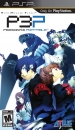
Whether I have done my job or not, used games typically take more looking for than a new game. Is it worth the extra time you spend looking to save what averages out to 10%? And it's going to take you even more time to save that 10% if I did my job and people aren't wanting to trade it in. When DQIX comes out in the US, it will most likely cost $39.99, and be $34.99 used. But the few trade-ins continues. You can get it locally new for $40, or you can go 2 towns over and get the closest used copy for $35, provided that it's still there. Is that kind of work worth $5? Not to mention that when you buy new, you know that you're getting everything, including any extras. (Persona 4, for instance, comes with a music CD.) Used has no guarantee of everything there; you could get the game disk only, with no proper case, instruction manual, or CD. Given the $29.99 new/$26.99 used pricing, I'll pay that $3 to get everything else.
So both new and used are in the same place. What now? Again, the first obvious answer is paid DLC. If you had my game, then sold it, you have no way of using that DLC anymore. Furthermore, there is a chance that the person who bought your used copy may choose to buy my DLC also, resulting in my seeing more money, even if it's less than the actual new copy. But I didn't do DLC. Oops? At that point, it comes to mercy of market, but it does have a way of correcting. In most stores (which is by far the largest scale of used games), you get store credit. Odds are pretty good (if not mandated, aka Gamestop) that you're going to get more games or accessories at some point. Someone may trade my game in, and buy the new game X that just came out as a result of this credit. I don't think the publisher of X will complain. Conversely, someone may trade in, say, 3 games, and have enough credit to get one of my games new for "free". They didn't pay the store a cent, yet I got a sale. I'm not complaining. At this point, the gaming industry really needs to be looked at as an ecosystem.
There will always be people who always buy used to save those few dollars. (This is akin to those who shop for clothing exclusively at Salvation Army.) Conversely, there will also always be those who have to have a new game on release day. This second group may be largely responsible for feeding the first, but it still keeps gaming going. What can happen is that someone in group 1 may just hear about this game they have to have, and join group 2. This is how we keep moving forward.
Piracy, on the other hand, is a problem. I release a game, and ship out 50,000 copies. Unbeknownst to me, there are 80,000 people who want to have it, and the initial 50,000 sell out fairly quickly. I go ahead and run another 50,000 for restocking. However, in that time, someone puts my game up for free download, and gets 100,000 people to get the game, including 10,000 of the initially interested group. I ship out the second batch, and instead of selling 30,000 from it, I sell 20,000 from it. At this point, I have to either receive back unsold stock or offer retailers a credit on it to drop the price. The piracy has meant that I now have to do this for 10,000 more copies, a clear loss of revenue on 2 sides- a game didn't sell, AND I still have to pay for it being printed.
But how do you know those people would have bought it? Truth be told, that's irrelevant. Instead of money, they used another resource, time, which indicates that it did have some worth to them. But you say that you wouldn't have bought it anyway? That still doesn't mean that you're entitled to it for free. For instance, I will never buy Mac OSX. (Insert other software of your liking, if you prefer.) Does this mean I can download it for free? No, because if I'm still willing to spend the time, then it had some worth to me. As far as I'm concerned, I didn't lose the 10,000 sales from the initially interested. I lost 100,000 sales. Time is money; I put my time and some money into making the game, and would expect to see more money back. This is the offer made by the entertainment industry. I do not want an unskilled person's time, regardless of the fact that I am not even seeing said use of their time, for a copy of my game. The ideas within have been stolen 100,000 times.
Are there any possible goods to piracy? Of course, but the goods are far outweighed by the bads. Of those 100,000 downloads, maybe 1,000 decide to support me and buy the game because they like it. I'm still down 9,000 of the initial demand sales. A few years later, I release a sequel. That 1,000 may choose to skip the pirate copy and buy it outright. Great for me, I get another 1,000 sales! But of that 10,000 that I lost from the first game, 3,000 continue with pirating it, and don't even consider buying the sequel anymore. Now I'm down 2,000 sales. So before the game even comes out, my market has been shrunk by piracy.
I'm sure that a few people will disagree with me, but unfortunately, the effects of this have already shown up in the anime industry. As downloaded anime took off, sales of R2s to the rest of eastern Asia plumetted, sometimes as much as 90% in some areas. Sales were also down in the 2 largest sales regions, Japan and North America. It has put some studios on both sides of the Pacific out of business, and a fair number of others are hurting. However, this is also a harder industry to fix than gaming. Sure, I think that the publishers would like to stop the used game sales also, but it's the piracy that's really pushing things toward digital downloads. If we can't authenicate it, you can't play it. And there's this small something in me that says that DivX's ideas may not be dead yet...