By using this site, you agree to our Privacy Policy and our Terms of Use. Close

Forums - Gaming - Which tells the better story for a game?

Final-Fan said:
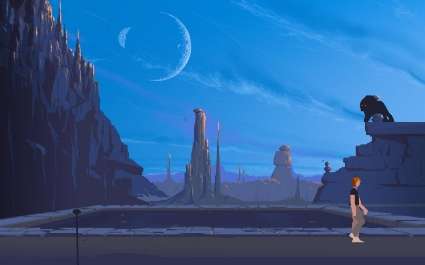
Now, if you'd picked THIS image...

I think too many people are taking the "image" thing a little too literally... It's representative of telling a story through environment, not an actual image.

Nice example, BTW. I think more people may have understood the point had Twesterm gone with a BioShock or Portal screen.


Or check out my new webcomic: http://selfcentent.com/

Around the Network

I'm gonna side with the images, because I prefer any type of storytelling that doesn't take the control out of your hands and put it into a camera. I think a better image would have been any of those "the cake is a lie" parts of Portal. Or finding a room with all the chairs knocked over. It doesn't have to be an image within the environment, but it can be the environment itself.

That FF12 intro was way too long. Wedding/war/funeral. Could have flashed 3 images, ring, fire, grave, and saved me 7 minutes. I probably would have cared more about the dead guy that way too. In the video he just looked like an idiot.

EDIT: I see this thread is older than I thought and I've been beaten to the Portal images several times.  Uh... good work team!


Jo21 said:

final fantasy of couse =).

even in those pre rendered cut scenes there is each pixel of detail put to it.
japanase know how to put a soul into games =D

even if square enix its  money greedy bastard, their artist are hell of perfectionish (LOVE).


 As much as I commend most things Japanese, you mustn't underestimate the way details settle the atmosphere and even the story in games such as Half-Life, Bioshock or Portal.

''The cake is a lie!'' is truly one of the greatest videogame lines ever.


^^^
Portal. When I was near the end of the game, and I saw the areas where it looked like someone had escaped, and was living on beans and bottled water, it sent chills down my spine. More powerful than most cutscenes could ever hope to be.


Half-Life 2 has some of the finest storytelling in gaming history. It is direct yet subtle, realistic and fully interactive. The fact that Freeman doesn't speak actually lends more to the narrative imo.


Around the Network
Mummelmann said:
Half-Life 2 has some of the finest storytelling in gaming history. It is direct yet subtle, realistic and fully interactive. The fact that Freeman doesn't speak actually lends more to the narrative imo.


 Silent protaganists rule. I think games offer the player the unique chance to actually be IN the story, rather than it being fed to you like in a movie. That's what makes games such a potentially interesting story telling medium.


twesterm said:
KungKras said:
LOL WUT


It's a simple question-- which of those two above things tell a more compelling story?  I'm just curious what people think, of course I guess in this case it's also more fitting to have played Half-Life and Half-Life 2.

So if you haven't played those, just pretend I showed this picture:
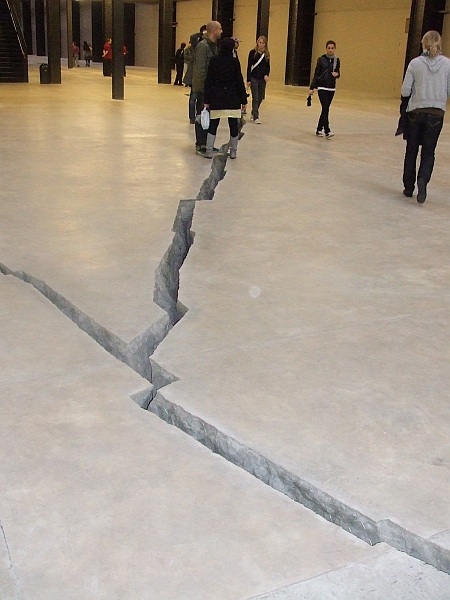
(it's not a game image but it still works, and this one is a little better not knowing the context)


Isn't that from the Tate Modern?  If not they had the exact same concept there which I went to see.

OT - Let me answer this way:


1) the cut-scene or cinematic can currently convey more information and narrative detail, however it does so simply by relying on existing cinema conventions for the most part - i.e. we stop playing a game for a bit and watch a movie instead to convey some dialogue, narrative, etc.

2) the immersive approach often doesn't convey as much story for most people (probably) however I think it is more honest to gameplay and the better approach to take in a game.  It also (as to be fair it does in cinema/art) allows for more subtle presentation and asks the viewer to derive the needed info from the information


So I prefer mainly unbroken immersion or minimal cut-scenes where they suit the game.

Really though I still think one of the biggest challenges facing game narrative as it evolves is handling dialgue well.

Take Half Life 2 - you can wander around ignorning important dialogue, character beats, etc.  Hardly ideal.  On the other hand too much cut-scene and you wonder why they didn't just make a movie instead.  Also hardly ideal.

Although some of the mechanics where obvious, I did this EP2 of Half Life managed to juggle both quite well, even if it did so by blocking you in and using various visual/level cues to get you to look/pay attention where you should be.

I should add I overall favour FPS view for deep immersion as any other view puts you in the role of watching more than directly experiencing (IMHO of course).  TPS can be a nice mix I guess based on Uncharted and Gears but I'd still rather look out at the world through my character's eyes.

EDIT : Meant to also cite Portal as an amazing example of a story/narrative told wonderfully without any breaks in immersion, cut-scenes, etc.  Fantastic title.


Try to be reasonable... its easier than you think...

The problem here is that you guys are comparing conventional movie-esque videos that have narrative and dialog to pictures that don't have any of that. Pictures that don't tell you what to think, but let you think for yourself.

What you guys need to do is go watch videos that are expressive and non-narrative, and have no guided story and spoken words. Videos that don't outright tell you a specific story with strict guidelines; videos that let your mind wander and think of what exactly is going on.

If I can find that video I mentioned earlier, I'll post it here. I doubt I will though, which is a pity. =\



d21lewis said:
^^^
Portal. When I was near the end of the game, and I saw the areas where it looked like someone had escaped, and was living on beans and bottled water, it sent chills down my spine. More powerful than most cutscenes could ever hope to be.

Yeah I was laughing my ass off for most of it, thinking it was all fun and games and portals, but when I got to those areas I got really scared and I tried to just live in there and look for beans.


From a pure storytelling perspective, cinematics are light years ahead.

You don't spend years at the film school just because it is fun or cool, you spend years because cinematography is one of the most complex forms of expression, as it incorporates most of all others.
Cinematics in games allow you to have complex narratives with multiple points of view, cinematic framing and lens effects, sometimes fully interactive (Shenmue) sometimes both interactive and non-interactive at the same time (MGS4 microwave scene), which can even be considered an evolution over standard film storytelling as it allows to both keep the cinematic storytelling tehniques intact 'and' create an unprecedented level of connection between the player and the character.

Sure, if you want to keep moving the character while the other characters talk to you, it may be a better approach from a pure gameplay continuity perspective (which some will rightfully argue that it is what gaming is all about), but as a pure storytelling method it is rudimentary and limited to a single perspective, though it also has the advantage of beeing incredibly cheap to produce.

In the end it all comes down to what one wants. Good storytelling "for a game", or good storytelling [period].


"You have the right to the remains of a silent attorney"