US-Israeli bombing destroys oldest medical research center in Iran
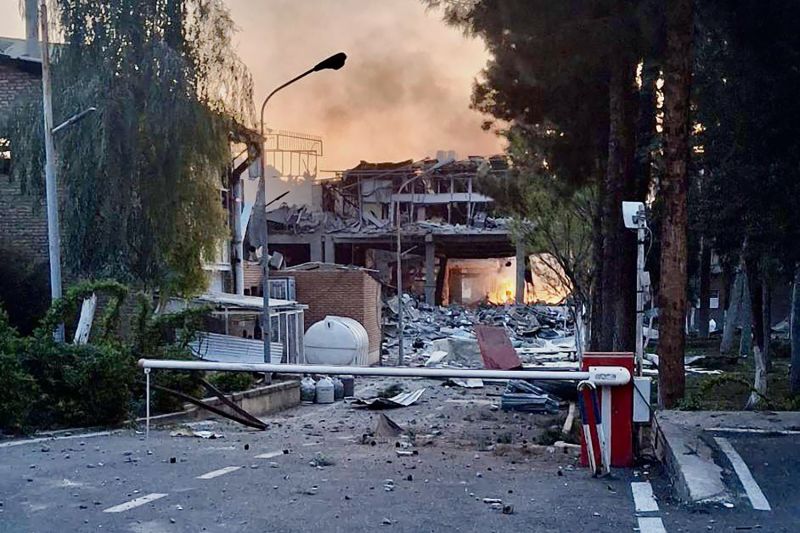
The Pasteur Institute of Iran has been destroyed in an airstrike
US-Israeli strikes hit one of the leading health research institutions in Iran, a government official said Thursday, as relief agencies warned against mass attacks on medical facilities in the region.
The Pasteur Institute of Iran, one of the “century-old pillars” of global health in the region, was struck in a “direct assault on international health security,” Hossein Kermanpour, head of the information center at the Iranian Ministry of Health, posted on X.
Established in 1920, the institute is the first and oldest public health center in Iran – where staffers pioneered vaccine development and research on the prevention of infectious diseases.
CNN has reached out to CENTCOM and the Israeli military for comment.
More than 30 days of US-Israeli bombing on Iran and retaliatory Iranian strikes on Israel has depleted medical systems and laid waste to entire neighborhoods in Iran and Lebanon, killing thousands of people across the Middle East.
At least 316 health care and emergency centers have been damaged in Iran since February 28, the Iranian Red Crescent reported on April 1. On average, health care systems in Iran, Lebanon and Israel have come under attack about once every six hours, the NGO, Save the Children said on March 31.
US stock futures sink as Trump rattles markets with lack of clear exit plan
US stock futures dropped Thursday after President Donald Trump pledged to escalate the conflict in the Middle East.
Dow futures fell by 670 points, or 1.4%, in premarket trading. S&P futures dropped 1.6%, and those tied to the tech-heavy Nasdaq 100 declined by 2.1%.
Stocks had rallied earlier this week, posting their best day since May on Tuesday as optimism rose that the United States might make an effort to end the war with Iran. But the sell-off came after Trump, in an April 1 evening address to the nation, revealed no clear exit strategy and no solution to the effective closure of the Strait of Hormuz, which has choked off one-fifth of the global supply of oil.
Trump said the war would drag on for at least two to three more weeks and even signaled an escalation in the conflict, with the United States potentially targeting Iran’s oil facilities. Already, thousands of US troops have been sent to the region, in potential preparation for a ground war.
The S&P 500 just posted its worst quarterly performance since September 2022.
“Markets will only recover in a true and sustainable way once global energy markets begin to normalize,” Kyle Rodda, senior financial market analyst at Capital.com, said in a note to clients.
Thursday marks the last trading day of the week, with markets closed Friday in observance of the Good Friday holiday.
Joe Kent: Iran War, Israeli Influence & Creating ISIS
Joe Kent is the former Director of the National Counterterrorism Center, who resigned in March 2026 due to the war against Iran. Kent discusses the mistake of attacking Iran, the intrusive influence of Israel over U.S. foreign policy, ignoring that Iran is a rational actor, the pro-war bias in Washington, the U.S. contribution to creating ISIS, the curse of the forever wars, and the hubris following the military intervention in Venezuela.










 Currently Online