By using this site, you agree to our Privacy Policy and our Terms of Use. Close

Forums - General - What are your favourite books, and what do they mean to you

Tagged games:

Tober said:

Oh I love reading. To many to call out.

But if I have to highlight my fauvorite author. It's Terry Pratchett.

The Discworld series (and his others) are a wonderful mirror in the Human soul. Re-packaging the real world into a fantasy world and just having hilarious fun with it. Smiles all over.

I love Pratchett as well! He's one of my favourite authors, I love how we weaves absurdist comedy and clever, imaginative fantasy together.

What is your fav book of his? For me it's gotta be either A Thief of Time or The Colour of Magic.


Around the Network
curl-6 said:
Tober said:

Oh I love reading. To many to call out.

But if I have to highlight my fauvorite author. It's Terry Pratchett.

The Discworld series (and his others) are a wonderful mirror in the Human soul. Re-packaging the real world into a fantasy world and just having hilarious fun with it. Smiles all over.

I love Pratchett as well! He's one of my favourite authors, I love how we weaves absurdist comedy and clever, imaginative fantasy together.

What is your fav book of his? For me it's gotta be either A Thief of Time or The Colour of Magic.

Small Gods is my favorite. Second is Hogfather.


I'd say my favorite of Discworld (having read about dozen first and couple others including Hogfather) is Reaper Man. The comic version of Mort is beautiful.
Jumpin said:


Dracula - Bram Stoker
Frankenstein - Mary Shelley

I read both in recent years and while I greatly enjoyed Frankenstein, I found Dracula really tiresome read. Maybe it's because first half has been retold so exactly in movies or just the format of diary entries etc.


There are so many fantastic ones, I could probably name 50. But I will restrict myself to just a handful. I think the two that probably mean the most to me are:

Don Quixote by Miguel de Cervantes
It is probably the most entertaining novel I have ever read, extremely funny and creative.

Anna Karenina by Leo Tolstoy
A book that feels truly lived. Every character is interesting, and it covers basicly every aspect of life. So beautiful.

Right behind those two there are some other classics, such as:
Frankenstein by Mary Shelley
Wurthering Heights by Emily Brontë
Madame Bovary by Gustav Flaubert
Lolita by Vladimir Nabokov
Death in Venice by Thomas Mann
Love in the Time of Cholerad by Gabriel Garcia Marques
The Name of the Rose by Umberto Eco

Some contemporary ones that left an impression:
The Song of Achilles by Madeleine Miller
A Little Life by Hanya Yanagihara
Piranesi by Susanna Clarke

In non-fiction I will highlight:
The Sixth Extinction by Elizabeth Kolbert
Empire of Pain by Patrick Radden Keefe


I'm currently reading the Andromeda Strain and it's utterly brilliant; it was first published in the 1960s, but it's so forward thinking it still feels shockingly modern.

Michael Crichton is one of my all time favourite authors, I loved Jurassic Park, Eaters of the Dead, Prey, Congo and Timeline from him as well.


Around the Network
Lucca said:

The two books who have impacted me the most, even noticeably changing my world view in some way, were Things Fall Apart, by Chinua Achebe, and The Bell, by Iris Murdoch. Some other more recognizeable highlights were Tolstoy's The Death of Ivan Ilyich and Hemingway's The Old Man and the Sea.

I read Things Fall Apart a long while back and I did not get the appeal at all. Could you describe how it impacted you, what you liked, or even how it changed your world view?


JuliusHackebeil said:
Lucca said:

The two books who have impacted me the most, even noticeably changing my world view in some way, were Things Fall Apart, by Chinua Achebe, and The Bell, by Iris Murdoch. Some other more recognizeable highlights were Tolstoy's The Death of Ivan Ilyich and Hemingway's The Old Man and the Sea.

I read Things Fall Apart a long while back and I did not get the appeal at all. Could you describe how it impacted you, what you liked, or even how it changed your world view?

Yes, of course!

The starting point has to be the context in which the book was written and published: during pre-independence Nigeria, still under British rule, in a world where most other books published in English about Africa–and certainly all of the popular ones–were written by European men. The image of African people was that of Conrad's Heart of Darkness: an animalistic, inhuman, mass of bodies.

The first thing I liked is how Achebe takes the time to describe, or to register, the traditions of Igbo people. I find it interesting to read about cultures I'm not familiar with. I also like how, much like how he does with the characters, he describes these traditions not as animalistic and irrational, but not as immaculate and perfect either–I feel like that's a trap a lot of progressive people fall into when approching non-European cultures. Not here, though; in fact, many characters have issues with the culture. He represents this culture and these characters as deeply human.

What one would call the "plot" of the book then serves to build these deeply human characters. I am always reminded of the chapter with the mother worryingly looking for her child, and how much empathy one feels for that character. Okonkwo is not a hero, he's obviously very far from it, and that works in favour of the story. We're described a world where, other than for superficial cultural aspects, we could see ourselves. The characters think about the same things we all do, they worry about the same things, they care about their family, their friends, their community. They grief, they cry, they hide their feelings to keep an appearence. Some of them are nicer than others, some are straight-up bad people. They're human, though, they–much like us–should have a right to be wrong.

Spoiler!

But, at the end, it's all over. Okonkwo is suddenly killed and relegated to a line in a book. The people are converted or decimated, they're denied their culture, their humanity. Their failures, Okonkwo's short-temper, for example, is, to the British, reason for them to die. The brutality with which this is carried out by the colonizers is really shocking. The switching of the perspective at the end really drives it home: we spent an entire book reading about this complex, flawed man, but at the end the man responsible for his death thinks: "One could almost write a whole chapter on him. Perhaps not a whole chapter but a reasonable paragraph, at any rate." It changed my world view by forcing me to imagine how many Okonkwos there are and there were, how many actual lives, how many real complex people are reduced to numbers, lines, unimportant parts of overarching events, frequently recorded by people uninterested in actually preserving the importance of that person or culture.
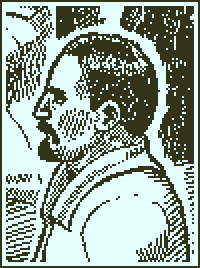
I'll paste here a paragraph I wrote after finishing my reading (which was quite a while ago), which I think summarizes it pretty nicely:

The development of Okonkwo throughout the book, only for him to be killed so abruptly at the end and relegated to a single paragraph in a colonialist's book, hits even harder when we think of all the people we know would be affected by his death, and the inevitable change in the Igbo world that Okonkwo noticed. We are forced to imagine how many stories, how many cultures, how many peoples, how many lives were forgotten or erased throughout the period of colonization, not only in Africa but also on every other continent.

With that being said, I understand when people tell me it didn't appeal to them. It is pretty slow-paced and relies on the reader being open to getting to know the Igbo culture. It could also feel redundant if the reader has already interacted with more recent media dealing with similar themes. That's why I brought the context up, it can be useful to read it with that in mind. I also found that it can be helpful to keep some short notes on the characters and key concepts, especially if the reader doesn't speak a language that looks like Igbo. It helps avoid some confusion, some not knowing who is who, and as a bonus helps you feel more connected with the world.


Lucca said:
JuliusHackebeil said:

I read Things Fall Apart a long while back and I did not get the appeal at all. Could you describe how it impacted you, what you liked, or even how it changed your world view?

Yes, of course!

The starting point has to be the context in which the book was written and published: during pre-independence Nigeria, still under British rule, in a world where most other books published in English about Africa–and certainly all of the popular ones–were written by European men. The image of African people was that of Conrad's Heart of Darkness: an animalistic, inhuman, mass of bodies.

The first thing I liked is how Achebe takes the time to describe, or to register, the traditions of Igbo people. I find it interesting to read about cultures I'm not familiar with. I also like how, much like how he does with the characters, he describes these traditions not as animalistic and irrational, but not as immaculate and perfect either–I feel like that's a trap a lot of progressive people fall into when approching non-European cultures. Not here, though; in fact, many characters have issues with the culture. He represents this culture and these characters as deeply human.

What one would call the "plot" of the book then serves to build these deeply human characters. I am always reminded of the chapter with the mother worryingly looking for her child, and how much empathy one feels for that character. Okonkwo is not a hero, he's obviously very far from it, and that works in favour of the story. We're described a world where, other than for superficial cultural aspects, we could see ourselves. The characters think about the same things we all do, they worry about the same things, they care about their family, their friends, their community. They grief, they cry, they hide their feelings to keep an appearence. Some of them are nicer than others, some are straight-up bad people. They're human, though, they–much like us–should have a right to be wrong.

Spoiler!

But, at the end, it's all over. Okonkwo is suddenly killed and relegated to a line in a book. The people are converted or decimated, they're denied their culture, their humanity. Their failures, Okonkwo's short-temper, for example, is, to the British, reason for them to die. The brutality with which this is carried out by the colonizers is really shocking. The switching of the perspective at the end really drives it home: we spent an entire book reading about this complex, flawed man, but at the end the man responsible for his death thinks: "One could almost write a whole chapter on him. Perhaps not a whole chapter but a reasonable paragraph, at any rate." It changed my world view by forcing me to imagine how many Okonkwos there are and there were, how many actual lives, how many real complex people are reduced to numbers, lines, unimportant parts of overarching events, frequently recorded by people uninterested in actually preserving the importance of that person or culture.

I'll paste here a paragraph I wrote after finishing my reading (which was quite a while ago), which I think summarizes it pretty nicely:

The development of Okonkwo throughout the book, only for him to be killed so abruptly at the end and relegated to a single paragraph in a colonialist's book, hits even harder when we think of all the people we know would be affected by his death, and the inevitable change in the Igbo world that Okonkwo noticed. We are forced to imagine how many stories, how many cultures, how many peoples, how many lives were forgotten or erased throughout the period of colonization, not only in Africa but also on every other continent.

With that being said, I understand when people tell me it didn't appeal to them. It is pretty slow-paced and relies on the reader being open to getting to know the Igbo culture. It could also feel redundant if the reader has already interacted with more recent media dealing with similar themes. That's why I brought the context up, it can be useful to read it with that in mind. I also found that it can be helpful to keep some short notes on the characters and key concepts, especially if the reader doesn't speak a language that looks like Igbo. It helps avoid some confusion, some not knowing who is who, and as a bonus helps you feel more connected with the world.

Wow, thank you for the detailed response.

Spoilers!!!

Honestly, I could not even remember that colonizers came and killed (part of) the Igbo people. Then again, Achebe did portray these people so flawed and humanly irrational, that it is easy to think that given the means they would have done the same.

I do remember Okonkwo trying to become a very different man in comparison to his father but doing so ended up in the same place - disgraced and burried at the woods, without their customs and honors. Weird how I forgot how he died, but remember that thing.

End Spoilers

There is a word in the dictionary of obscure sorrows that reminds me a little of your take aways: sonder: the realisation that every single persons life is as comlex and complicated as your own. And most people are not even background characters in your life, just as much as you will stay utterly insignificant the them.

And since you brought it up: I liked Heart of Darkness a lot. I think it is missunderstood and has a lot to offer. I do get why people dislike it though.


curl-6 said:

I'm currently reading the Andromeda Strain and it's utterly brilliant; it was first published in the 1960s, but it's so forward thinking it still feels shockingly modern.

Michael Crichton is one of my all time favourite authors, I loved Jurassic Park, Eaters of the Dead, Prey, Congo and Timeline from him as well.

The 1971 movie adaptation still haunts me!

I know Michael Crichton more from all the movies his work produced.

Sphere was a also a good movie from his work.


SvennoJ said:
curl-6 said:

I'm currently reading the Andromeda Strain and it's utterly brilliant; it was first published in the 1960s, but it's so forward thinking it still feels shockingly modern.

Michael Crichton is one of my all time favourite authors, I loved Jurassic Park, Eaters of the Dead, Prey, Congo and Timeline from him as well.

The 1971 movie adaptation still haunts me!

I know Michael Crichton more from all the movies his work produced.

Sphere was a also a good movie from his work.

Haven't seen that one yet but I should, the book is amazing.

I have seen the movie of Sphere and I enjoyed it, but I haven't read the book yet, that's next on my list, as his books are often different enough from the film to be worth checking out even if you've watched the adaptation.