Veknoid_Outcast said:
I see both sides of this. And, ultimately, I think this is more about optics than anything.
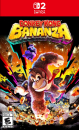
I paid $70 for Donkey Kong Bananza. And I loved it. You can read my review here: https://www.vgchartz.com/article/465231/donkey-kong-bananza-ns2/
The existence of $20 optional DLC doesn't make me love the game any less. In no way do I feel like the base game is missing out because it wasn't bundled with this DLC.
That said, the timing of this DLC suggests a certain cynical, money-grubbing approach by Nintendo. Had they held onto it and released it next summer, I think there would be far less disappointment and skepticism. I don't think the problem is the existence of the DLC, or even the price tag; it's that we can all tell it was developed in tandem with the base game but sold à la carte. |
I don't think the timing matters much. In a year's time, Nintendo and Switch 2 will still be successful, so the very reason why so many people want to hate will still be present.
How can anyone make the argument that something has been taken out of the game to be sold separately when Bananza is a complete game and this DLC is an entirely separate game mode that is its own thing? In order to be a money grab, it has to be something where more is charged than something is worth. But here we have a game and a DLC where the price/value ratio is fine in both cases. Nintendo releasing an expansion for one of their big games isn't something new either. The obvious positive here - that this particular DLC is something that actually doesn't expand the main game and can be skipped without regrets - goes over people's heads.
What the outrage over this DLC really is at its core is the continuation of "everything about Switch 2 is overpriced." A line of thinking that could never be reasonably justified, but the people who have been on board with this line of thinking cannot take the loss. It upsets them that Nintendo can charge their prices and that the market is seemingly taking no stand against it. It means they were wrong. It means they don't understand the value of money, what purchasing power is.
In many countries a €70 game today constitutes a lower percentage of a person's wage than a €60 game did in 2017. So while 70 is a higher number than 60, video games did not become more expensive; at least not Nintendo games, because they continue to forego the inclusion of microtransactions and small piece DLCs. Donkey Kong Bananza also happens to be 40-50% longer than Super Mario Odyssey, so even if you refuse to accept the argument about purchasing power, you are still left with "pay ~20% more to receive ~40% more content." That is a good deal, hence why the idea of taking a stand against Nintendo's prices is so stupid.
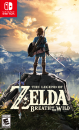
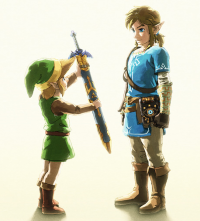
You look around and see people get worked up over €70+20 because the DLC was announced soon after the game's launch. Then you remember that €70+20 was a thing in 2017 already, only worse, because the DLC was announced before the game's launch, and it was story DLC. And then you remember that that wasn't worth the money-grubbing outrage at the time, because Breath of the Wild turned out fine.





 Currently Online