By using this site, you agree to our Privacy Policy and our Terms of Use. Close

Forums - PC - AMD first to reach 5GHz with FX-9590 processor

ethomaz said:

fordy said:

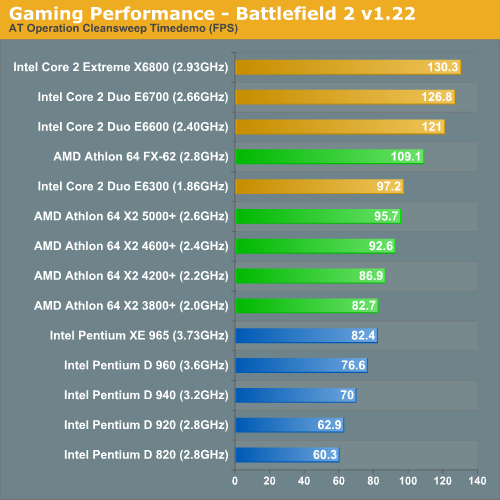
As mentioned before, the fact that AMD outperformed Intel for that time wasn't because the Athlon architecture was entirely spectacular, rather it was Intel's stubbornness to embrace NetBurst as part of it's marketing ploy to "make clockspeed count". This became more evident when Intel eventually scrapped NetBurst and moved to Core architecture, and overnight we saw Intel CPUs once again outperforming Athlons, despite the fact that Athlon had an on-die MMC. Once Intel followed suit with an on-die MMC in Nehalem, it only pushed their performance even more strides ahead of AMD.

The K8 architecture was really spectacular... it did miracle in performance until Intel moved to Core 2 (the first Intel Core was still below what AMD had at that time).

Core 2 changed everything...

You do realise that the first Intel Core was built entirely around a mobile concept, right? Desktop performance considerations weren't added until Conroe. The BRAND "Core" (actually codenamed Yonah) had nothing to do with Intel's architectural Tick-Tock "Core" phase (Which is where the Core 2 started)

http://en.wikipedia.org/wiki/Conroe_(microprocessor)


Around the Network
Soleron said:
disolitude said:
Scoobes said:
AMD, still chasing the clock speed dream. I somehow doubt this will come close to the single threaded performance of a similarly priced Intel chip. There is literally no point in AMD competing in the high end of CPUs, Intel just have way too many advantages.

APUs however...


Only advantage AMD have is price(not present here with this cpu), multithreaded performance and Steamroller which should yield 15-20% performance improvements while still using am3+ socket. People who invested in an am3+ mobo 3 years ago will certanly get their moneys worth.

I'll bet you that an AM3 Steamroller will never be released.

The reason I know this is that server roadmaps have to extend further and be more reliable than desktop ones, and they don't show a Steamroller CPU without an APU. And the economics of a new die and socket validation for a $150+ desktop part that doesn't come out on server are unworkable.

Youre prolly talking about this... http://www.amd.com/us/press-releases/Pages/amd-unveils-2013june18.aspx

Thats the server roadmap. I am pretty sure there will be both APUs and FX chips will see a similar roadmap announced shortly, if they havent already.


CGI-Quality said:
Scoobes said:
CGI-Quality said:

I'm going to stack it next to my chip (i7 3970X) and see where it goes. Issues I see here are temperature, in addition to lower performance. Even the console manufacturers realized it's not all about the clock speed anymore.

I have a sneaking supiscion your i7 will destroy this chip. The only advantage the AMD chips ever had was in highly threaded applications, and I don't think the advantage was particularly noticeable.

In games the i7 will win out.

Also, you may want some water cooling

I do water cool

Not to derail the thread but curious what kind of a watercooling loop you set up. Dual, tripple rad? Res or a T line? D5 pump? Got any pics? :p


fordy said:

You do realise that the first Intel Core was built entirely around a mobile concept, right? Desktop performance considerations weren't added until Conroe. The BRAND "Core" (actually codenamed Yonah) had nothing to do with Intel's architectural Tick-Tock "Core" phase (Which is where the Core 2 started)

http://en.wikipedia.org/wiki/Conroe_(microprocessor)


The first "Core" as in Conroe was heavily based upon Yonah, which in turn was based upon Dothan and Banias (Pentium M) which in turn was based upon a heavily modified P6 architecture (That dates back to the Pentium Pro several decades ago) with some new technology (At the time) found in the Netburst architecture. Aka the Willamatte/Northwood/Prescott etc' such as the buses, branch predictors etc'.

If you were around during the Gigahert race you will know AMD was always competitive with Intel starting with the very first Athlon, AMD had the definitive edge in floating point.
It wasn't untill Intel moved the L2 cache on-die mid way through the Pentium 3's life that it actually had a performance edge, that was untill AMD followed suit and then beat Intel to the 1ghz mark.
Then it was the Battle of the Pentium 3 Tualatin and Pentium 4 Willamatte against AMD's Thunderbird which again had the edge. (That said, Even the Tualatin was faster than the Willamatte.)
The Thunderbird wasn't without it's faults though, it didn't scale well with clockspeed and it was a stupidly hot running chip, however they were generally cheaper and could be pencil modded.
It wasn't untill around the Barton based Athlon that Intel's Pentium 4 started to have an edge over AMD, that was untill the Athlon 64 burst onto the scene and completely wiped the floor with Intels Pentium 4, AMD followed that up with the Athlon 64 x2 which easily beat Intels Pentium D and Extreme Edition processors.

Once the Core 2 had arrived, AMD bagan to falter, the origional Phenom was plagued with problems like the TLB bug, low clockspeed scaling and was expensive.
AMD did fix the issues with the Phenom and brought us the Phenom 2, but essentially that was only competitive with Intels prior generation Core 2 processors in terms of IPC, but again they were cheap.

So, pretty much through AMD's entire history starting with the origional Athlon vs Pentium 3 and despite having far smaller R&D budgets, fabrication deficits, they remained competitive with Intel right up untill the Core 2/Phenom.

Prior to the Pentium 3 and Athlon it was the Pentium 2/Celeron against AMD's K6, which whilst competitive in some tasks the performance crown was easily Intels, but in terms of price AMD was the better option. (Unless you count Cyrix in too.)
Granted in the K6 days, PC's were expensive, Cheap + PC didnt really go together, AMD, Cyrix and even IBM helped in that regard as Intel was forced to make a cheap CPU. Enter: The Celeron.

The FX is probably AMD's largest blunder to date, the FX 9590 I've seen selling for over $1,100 AUD here which is almost twice as expensive as the Core i7 3930K, which it still doesn't out-perform, however regular gamers really aren't the target of that chip, it's targeted at overclocking enthusiasts and companies like Dell who can advertise "5ghz" to attract buyers, it's actually very similar to Intels strategy during the Pentium 4 days.
Advertise silly clockspeeds to make the average person think it's faster, it worked for Intel so why not AMD?


www.youtube.com/@Pemalite

Pemalite said:
 

The FX is probably AMD's largest blunder to date, the FX 9590 I've seen selling for over $1,100 AUD here which is almost twice as expensive as the Core i7 3930K, which it still doesn't out-perform, however regular gamers really aren't the target of that chip, it's targeted at overclocking enthusiasts and companies like Dell who can advertise "5ghz" to attract buyers, it's actually very similar to Intels strategy during the Pentium 4 days.
Advertise silly clockspeeds to make the average person think it's faster, it worked for Intel so why not AMD?


While the FX9590 is an absolute non-consumer oriented product with a non-consumer friendly price, the 9370 priced at 329-349 depending where you look is not too bad. But like I said before, you could probably buy an 8320 for 160 and overclock it to 4.7ghz to match a 9370. 


Around the Network
Scoobes said:

Not sure how much of an improvement that'll be with the new Haswell chips out. Even the old Sandy Bridge CPUs outperform the majority of AMDs AM3+ chips.

Personally I think AMD should just forget about the performance end of the X86 market. Concentrate on APUs where they can leverage their GPU tech for more balanced hardware.

That approach doesn't work. Consumers look up or hear from their friends who makes "the best" chips and then buy a mid range chip from that company without bothering to check whether or not that is the best choice in the price segment.

That's why AMD will go bankrupt pretty soon and Intel and Nvidia will push their prices sky high (well they already did).


disolitude said:


While the FX9590 is an absolute non-consumer oriented product with a non-consumer friendly price, the 9370 priced at 329-349 depending where you look is not too bad. But like I said before, you could probably buy an 8320 for 160 and overclock it to 4.7ghz to match a 9370. 


I haven't had a chance to play with the 8320 yet, but I do have an FX 8120 in another system and it's been sitting on 4.8ghz for the last year or so.
It's performance at that speed was equivalent to a Phenom 2 x6 at 4ghz with a 3ghz NB clock that it replaced. (So I would expect Piledriver to do better!)

Value wise it's not a bad proposition as long as you don't go for AMD's greatest and they really do hold their own against Intel's quads if you do allot of Multi-tasking. (I.E. xSplit + gaming.)
If it wasn't for the fact I do more than just gaming, I would probably be very happy with a FX in my primary machine.

CGI-Quality said:

CORSAIR Hydro Series H60 (CWCH60) High Performance Liquid CPU Cooler

Hope that helps!

Do a custom water loop! :D


www.youtube.com/@Pemalite

CGI-Quality said:
disolitude said:
CGI-Quality said:
Scoobes said:
CGI-Quality said:

I'm going to stack it next to my chip (i7 3970X) and see where it goes. Issues I see here are temperature, in addition to lower performance. Even the console manufacturers realized it's not all about the clock speed anymore.

I have a sneaking supiscion your i7 will destroy this chip. The only advantage the AMD chips ever had was in highly threaded applications, and I don't think the advantage was particularly noticeable.

In games the i7 will win out.

Also, you may want some water cooling

I do water cool

Not to derail the thread but curious what kind of a watercooling loop you set up. Dual, tripple rad? Res or a T line? D5 pump? Got any pics? :p


CORSAIR Hydro Series H60 (CWCH60) High Performance Liquid CPU Cooler

Hope that helps!


Heh...I have the exact same cooler on my 8320. Cools good...


Pemalite said:
disolitude said:


While the FX9590 is an absolute non-consumer oriented product with a non-consumer friendly price, the 9370 priced at 329-349 depending where you look is not too bad. But like I said before, you could probably buy an 8320 for 160 and overclock it to 4.7ghz to match a 9370. 


I haven't had a chance to play with the 8320 yet, but I do have an FX 8120 in another system and it's been sitting on 4.8ghz for the last year or so.
It's performance at that speed was equivalent to a Phenom 2 x6 at 4ghz with a 3ghz NB clock that it replaced. (So I would expect Piledriver to do better!)

Value wise it's not a bad proposition as long as you don't go for AMD's greatest and they really do hold their own against Intel's quads if you do allot of Multi-tasking. (I.E. xSplit + gaming.)
If it wasn't for the fact I do more than just gaming, I would probably be very happy with a FX in my primary machine.

CGI-Quality said:

CORSAIR Hydro Series H60 (CWCH60) High Performance Liquid CPU Cooler

Hope that helps!

Do a custom water loop! :D

Yeah i breifly rocked an 8120 when it came out. was a little dissppinted since before it I had a fully watercooled i7 950 but it was great for overclocking.

The problem with watercooling these days is that you really have to go all out and watercool everything or just stick with AIOs for the CPU. However recent intel CPUs (3770k, 4770k) really dont benefit from watercooling much. 2600k was able to do 5ghz and beyond as long as you cool it properly but these new ones tend to crap out at 4.8/4.9 no matter what you do or how you cool it.

On the AMD side, the cpu does benefit from watercoolin but even at 5.2 ghz, it bottlenecks the GPUs with a proper GTX 780 sli that are overclocked and watercooled.


Pemalite said:
fordy said:

You do realise that the first Intel Core was built entirely around a mobile concept, right? Desktop performance considerations weren't added until Conroe. The BRAND "Core" (actually codenamed Yonah) had nothing to do with Intel's architectural Tick-Tock "Core" phase (Which is where the Core 2 started)

http://en.wikipedia.org/wiki/Conroe_(microprocessor)


The first "Core" as in Conroe was heavily based upon Yonah, which in turn was based upon Dothan and Banias (Pentium M) which in turn was based upon a heavily modified P6 architecture (That dates back to the Pentium Pro several decades ago) with some new technology (At the time) found in the Netburst architecture. Aka the Willamatte/Northwood/Prescott etc' such as the buses, branch predictors etc'.

If you were around during the Gigahert race you will know AMD was always competitive with Intel starting with the very first Athlon, AMD had the definitive edge in floating point.
It wasn't untill Intel moved the L2 cache on-die mid way through the Pentium 3's life that it actually had a performance edge, that was untill AMD followed suit and then beat Intel to the 1ghz mark.
Then it was the Battle of the Pentium 3 Tualatin and Pentium 4 Willamatte against AMD's Thunderbird which again had the edge. (That said, Even the Tualatin was faster than the Willamatte.)
The Thunderbird wasn't without it's faults though, it didn't scale well with clockspeed and it was a stupidly hot running chip, however they were generally cheaper and could be pencil modded.
It wasn't untill around the Barton based Athlon that Intel's Pentium 4 started to have an edge over AMD, that was untill the Athlon 64 burst onto the scene and completely wiped the floor with Intels Pentium 4, AMD followed that up with the Athlon 64 x2 which easily beat Intels Pentium D and Extreme Edition processors.

Once the Core 2 had arrived, AMD bagan to falter, the origional Phenom was plagued with problems like the TLB bug, low clockspeed scaling and was expensive.
AMD did fix the issues with the Phenom and brought us the Phenom 2, but essentially that was only competitive with Intels prior generation Core 2 processors in terms of IPC, but again they were cheap.

So, pretty much through AMD's entire history starting with the origional Athlon vs Pentium 3 and despite having far smaller R&D budgets, fabrication deficits, they remained competitive with Intel right up untill the Core 2/Phenom.

Prior to the Pentium 3 and Athlon it was the Pentium 2/Celeron against AMD's K6, which whilst competitive in some tasks the performance crown was easily Intels, but in terms of price AMD was the better option. (Unless you count Cyrix in too.)
Granted in the K6 days, PC's were expensive, Cheap + PC didnt really go together, AMD, Cyrix and even IBM helped in that regard as Intel was forced to make a cheap CPU. Enter: The Celeron.

The FX is probably AMD's largest blunder to date, the FX 9590 I've seen selling for over $1,100 AUD here which is almost twice as expensive as the Core i7 3930K, which it still doesn't out-perform, however regular gamers really aren't the target of that chip, it's targeted at overclocking enthusiasts and companies like Dell who can advertise "5ghz" to attract buyers, it's actually very similar to Intels strategy during the Pentium 4 days.
Advertise silly clockspeeds to make the average person think it's faster, it worked for Intel so why not AMD?

Actually, AMD's catch-up with Intel on the FPU front came more with the 3DNow! extensions introduced in the K6-2. This gave them a performance increase by introducing FP SIMD. The problem is, the Athlon never had the advantage that you mentioned. In fact, 19 of the new instructions that AMD added to the 3DNow set for the Athlon were mimics of Intel's SSE instruction set, putting them (according to Andandtech) "on par" with SSE.

AMD's performance gains over Intel were mainly due to Intel's oversights. For instance, both the P6 and K7 architectures could execute 3 instructions simultaneously. However, the P6 limited this to microcode instructions (microcode being essential in moving the x86 to a more RISC architecture at the time), whereas AMD's continued use of CISC allowed them to implement their simultaneous execution at the complex instruction level. Intel also took several hits with their Pentium III line being incredibly difficult to scale to higher clockspeeds (hence their move to NetBurst), and their plan to incorporate DDR SDRAM over the more expensive RAMBUS, which was mandatory with NetBurst in the early stages of its life.

Intel's stupid plight of aiming for higher clockspeeds with little actual performance gain was what caused their Pentium 4s to be operating in excess of 200W TDP (for the record, the recent Haswell desktop chipsets are operating around 60-85W TDP), as well as requiring a lot more measures to keep them cool. This forced Intel to (rightfully) cease NetBurst and work towards a "performance per watt" platform that they worked on with Yonah and the first Core (in fact, it gave impressive performance results for a mobile processor, which is why Intel decided to proceed further with it as their next Desktop architecture).

AMD can do what they like with advertising clock speeds (in fact, their controversial PR rating along with Cyrix was nothing but a marketing stunt, since it failed to resolve the fact that the number made no sense. In some areas, the Athlon excelled while in other aspects, the Intel performed way better than AMD's theoretical PR number). But as I said, if NetBurst has taught us anything, it's that clock speeds mean bugger all in the scheme of things. Your claim that it worked for Intel I'd happily debate, considering that Intel had major contracts with HP and Dell at the time, causing a higher marketshare. In the enthusiast side, gaming PCs back then were mostly Athlons.