By using this site, you agree to our Privacy Policy and our Terms of Use. Close

Forums - PC - Carzy Zarx’s PC Gaming Emporium - Catch Up on All the Latest PC Gaming Related News

vivster said:
That traversal coprocessor thing sounds pretty rad and believable. Considering that RT will be ubiquitous in the near future and that it does need huge amounts of dedicated processing it just makes sense to offload it from the main chip. It offers flexibility for the die size and for users who couldn't give a crap about RT for some reason. It also fits with the rumor that the 3090 will have a whooping 350W TDP, which would make sense if it sports a huge processing chip and another one dedicated for RT on the back, which then also would fit the weird double sided fan rumor. It might also be the first step for RT expansion cards in the future.

If this rumor is true I would imagine that the double sided design is exclusive to 3090 cards with all others sporting regular chips with RT cores on the die.

Ray Tracing expansion cards? Yeah, sure, like this approach worked so well for physic based cards in the past, right?


Please excuse my bad English.

Former gaming PC: i5-4670k@stock (for now), 16Gb RAM 1600 MHz and a GTX 1070

Current gaming PC: R5-7600, 32GB RAM 6000MT/s (CL30) and a RX 9060XT 16GB

Steam / Live / NNID : jonxiquet    Add me if you want, but I'm a single player gamer.

Around the Network
JEMC said:
vivster said:
That traversal coprocessor thing sounds pretty rad and believable. Considering that RT will be ubiquitous in the near future and that it does need huge amounts of dedicated processing it just makes sense to offload it from the main chip. It offers flexibility for the die size and for users who couldn't give a crap about RT for some reason. It also fits with the rumor that the 3090 will have a whooping 350W TDP, which would make sense if it sports a huge processing chip and another one dedicated for RT on the back, which then also would fit the weird double sided fan rumor. It might also be the first step for RT expansion cards in the future.

If this rumor is true I would imagine that the double sided design is exclusive to 3090 cards with all others sporting regular chips with RT cores on the die.

Ray Tracing expansion cards? Yeah, sure, like this approach worked so well for physic based cards in the past, right?

That you would stoop so low and use false equivalency.

Not sure what you are talking about. But whatever you are talking about it probably sucked because it was a gimmick while RT will be ESSENTIAL in games going forward. People like to buy essential things.


If you demand respect or gratitude for your volunteer work, you're doing volunteering wrong.

JEMC said:
vivster said:
That traversal coprocessor thing sounds pretty rad and believable. Considering that RT will be ubiquitous in the near future and that it does need huge amounts of dedicated processing it just makes sense to offload it from the main chip. It offers flexibility for the die size and for users who couldn't give a crap about RT for some reason. It also fits with the rumor that the 3090 will have a whooping 350W TDP, which would make sense if it sports a huge processing chip and another one dedicated for RT on the back, which then also would fit the weird double sided fan rumor. It might also be the first step for RT expansion cards in the future.

If this rumor is true I would imagine that the double sided design is exclusive to 3090 cards with all others sporting regular chips with RT cores on the die.

Ray Tracing expansion cards? Yeah, sure, like this approach worked so well for physic based cards in the past, right?

Good enough for a transition period, if it is easier/cheaper to separate it at first, also good for upgraders.

Floating-point-calculations were separated on co-processors (x87) a lot of years, until they were integrated in the main CPU.

3D-acceleration was separated on extra GPUs (3DFX) a few years.


vivster said:
JEMC said:

Ray Tracing expansion cards? Yeah, sure, like this approach worked so well for physic based cards in the past, right?

That you would stoop so low and use false equivalency.

Not sure what you are talking about. But whatever you are talking about it probably sucked because it was a gimmick while RT will be ESSENTIAL in games going forward. People like to buy essential things.

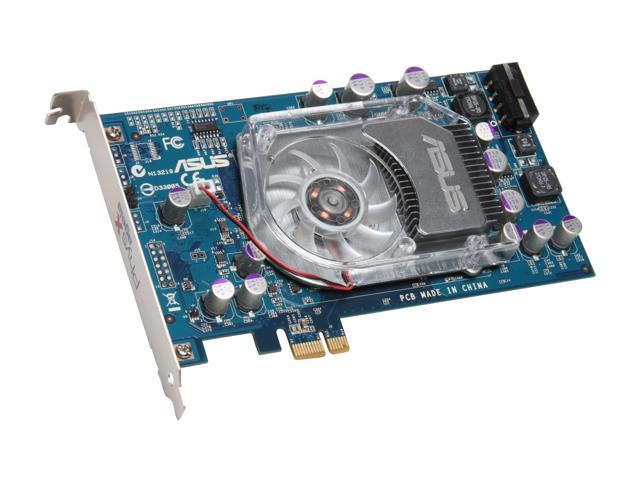
Sorry, I'm confused. How can you say that my comparison is low and false if you also say that I don't know what I'm talking about? C'mon, viv, you're smart enough to come with a better response, just look at Conina, and old enough to remember those PhysX cards. Here's one from your favorite brand:

Conina said:
JEMC said:

Ray Tracing expansion cards? Yeah, sure, like this approach worked so well for physic based cards in the past, right?

Good enough for a transition period, if it is easier/cheaper to separate it at first, also good for upgraders.

Floating-point-calculations were separated on co-processors (x87) a lot of years, until they were integrated in the main CPU.

3D-acceleration was separated on extra GPUs (3DFX) a few years.

You've gone way back in time to come with that x87 card!

Anyway, if we want Ray Tracing to take over fast, it needs to be implemented inside the GPU.The more GPUs that are capable of doing RT, the faster that devs will adopt it.


Please excuse my bad English.

Former gaming PC: i5-4670k@stock (for now), 16Gb RAM 1600 MHz and a GTX 1070

Current gaming PC: R5-7600, 32GB RAM 6000MT/s (CL30) and a RX 9060XT 16GB

Steam / Live / NNID : jonxiquet    Add me if you want, but I'm a single player gamer.

Conina said:
JEMC said:

Ray Tracing expansion cards? Yeah, sure, like this approach worked so well for physic based cards in the past, right?

Good enough for a transition period, if it is easier/cheaper to separate it at first, also good for upgraders.

Floating-point-calculations were separated on co-processors (x87) a lot of years, until they were integrated in the main CPU.

3D-acceleration was separated on extra GPUs (3DFX) a few years.

Remember when they offloaded graphics calculations to expansion cards called GPUs? Good thing that never took root.


If you demand respect or gratitude for your volunteer work, you're doing volunteering wrong.

Around the Network


PC Specs: CPU: 7800X3D || GPU: Strix 4090 || RAM: 32GB DDR5 6000 || Main SSD: WD 2TB SN850

vivster said:
Conina said:

Good enough for a transition period, if it is easier/cheaper to separate it at first, also good for upgraders.

Floating-point-calculations were separated on co-processors (x87) a lot of years, until they were integrated in the main CPU.

3D-acceleration was separated on extra GPUs (3DFX) a few years.

Remember when they offloaded graphics calculations to expansion cards called GPUs? Good thing that never took root.

That went a bit differently.

Graphics have always been handled by separate chips, same for audio. However in the past (mostly the 80's) , this could have been an entire array of separate chips to reach the result that was wanted.

This is also why graphics and sound cards are even a thing - there were just too many chips to put them all on the motherboard and needed their own RAM (unified RAM with overlapping or same memory address spaces wasn't a thing yet), so they got put onto extension cards to create more space. With the advent of 3D graphics, they also increasingly needed more cooling, first passive, then active, along with more bandwidth, so including them in the CPU like most other parts that were external before (Floating point processing unit, Northbridge, Southbridge...) wasn't exactly feasible without massive performance losses (hello APUs!). As a result of all this, we're using extension cards for GPUs to this very day, and is probably the only extension card which will survive for a long time for all the reasons mentioned above.


kirby007 said:
yes that RT eats resources like a fatman eats pies

I do not.


www.youtube.com/@Pemalite

Bofferbrauer2 said:
vivster said:

Remember when they offloaded graphics calculations to expansion cards called GPUs? Good thing that never took root.

That went a bit differently.

Graphics have always been handled by separate chips, same for audio. However in the past (mostly the 80's) , this could have been an entire array of separate chips to reach the result that was wanted.

This is also why graphics and sound cards are even a thing - there were just too many chips to put them all on the motherboard and needed their own RAM (unified RAM with overlapping or same memory address spaces wasn't a thing yet), so they got put onto extension cards to create more space. With the advent of 3D graphics, they also increasingly needed more cooling, first passive, then active, along with more bandwidth, so including them in the CPU like most other parts that were external before (Floating point processing unit, Northbridge, Southbridge...) wasn't exactly feasible without massive performance losses (hello APUs!). As a result of all this, we're using extension cards for GPUs to this very day, and is probably the only extension card which will survive for a long time for all the reasons mentioned above.

The reasons you listed for switching to expansion cards for 3d graphics can also be very true for RT. It's one of the most calculation intensive job a GPU can do and we're only at the beginning. Need for RT performance will explode in the coming decade, too much to be handled by a regular GPU.

I'm actually not too sure how long GPUs as extra cards will survive outside of the very high end and professional use cases. Integrated graphics are getting so good. I could even see a future where a PC gamer buys a RT card rather than a discrete GPU to upgrade their internal graphics.

Either way, the next decade is gonna get really exciting.


If you demand respect or gratitude for your volunteer work, you're doing volunteering wrong.

Pemalite said:
kirby007 said:
yes that RT eats resources like a fatman eats pies

I do not.

1. You aint fat

2. Get your mind out of the gutter i didnt mean that pie


 "I think people should define the word crap" - Kirby007

Join the Prediction League http://www.vgchartz.com/predictions

Instead of seeking to convince others, we can be open to changing our own minds, and seek out information that contradicts our own steadfast point of view. Maybe it’ll turn out that those who disagree with you actually have a solid grasp of the facts. There’s a slight possibility that, after all, you’re the one who’s wrong.