By using this site, you agree to our Privacy Policy and our Terms of Use. Close

Forums - Gaming - Why you should only have to buy your game once

Right now, you can go out and buy a game, and you may think that you own a copy of that game, and in some cases, that's true. But with any game you've bought that was released on more than one platform, you only own a copy of a specific version of that game. 

If you want to play "President Superstar McAwesomeVille" on your UpTopPlatform, but you only own the a copy of the version that plays on the DownLowPlatform, you're left out in the cold. Your options for playing said game on said platform are exactly the same as if you didn't buy the game in the first place. But you did buy the game, and you do own a copy of that game (even if it's a slightly different version), so why can't you play it on this platform where the game is available anyway?

1) Because my physical copy is made for a specific device?

Good thing we have games in digital form then! You don't need a physical copy of your retail game to play it on either the PS3, 360, PC or PSP, not to mention all the downloadable titles that are reserved solely for the digital space and have their place on all current generation devices (the 3DS is getting it, so it counts).

2) Because developers would lose money by not being able to sell the same game to the same people several times?

There is not a huge market for people who buy the same games twice (not counting remakes, remasters or heavily upgraded versions), so the extra cash generated by only selling you a specific version of the game is probably neglieble. I don't have anything to back that up with though, so feel free to give some input.

What I do know is that the industry is trying very hard to avoid piracy, and one reason why games might get pirated is because people don't want to buy a game they already own on another platform. 

So why are things the way they are? Well, Valve are doing their part and where any game bought on PC or Mac can be played on the other (so long as it's actually released on the platform), and they'll be expanding their efforts to the PS3 with Portal 2 allowing you to unlock a PC/Mac copy of the game.

There are still challenges, like how you deal with people getting rid of a game and thus no longer owning it, but it's something that can be solved, and Valve are presenting their solution first solution with Portal 2.

So technically, there's not really any reason why this shouldn't become the norm. It's all very doable in fact, and the biggest hurdle are the console makers opening up and allowing game ownership to work not just on their own platform, but on other platforms as well. Valve are making progress, but why not demand more, when there is really no reason we can't have more?



Around the Network

It is difficult to sell a copy of a game that works on multiple platforms as the hardware manufactures get a cut per game sold and therefore either game prices would go up or SONY/M$/Nintendo would see there profit margins shrink. 


Rainbird said:

Right now, you can go out and buy a game, and you may think that you own a copy of that game, and in some cases, that's true. But with any game you've bought that was released on more than one platform, you only own a copy of a specific version of that game. 

If you want to play "President Superstar McAwesomeVille" on your UpTopPlatform, but you only own the a copy of the version that plays on the DownLowPlatform, you're left out in the cold. Your options for playing said game on said platform are exactly the same as if you didn't buy the game in the first place. But you did buy the game, and you do own a copy of that game (even if it's a slightly different version), so why can't you play it on this platform where the game is available anyway?

1) Because my physical copy is made for a specific device?

Good thing we have games in digital form then! You don't need a physical copy of your retail game to play it on either the PS3, 360, PC or PSP, not to mention all the downloadable titles that are reserved solely for the digital space and have their place on all current generation devices (the 3DS is getting it, so it counts).

2) Because developers would lose money by not being able to sell the same game to the same people several times?

There is not a huge market for people who buy the same games twice (not counting remakes, remasters or heavily upgraded versions), so the extra cash generated by only selling you a specific version of the game is probably neglieble. I don't have anything to back that up with though, so feel free to give some input.

What I do know is that the industry is trying very hard to avoid piracy, and one reason why games might get pirated is because people don't want to buy a game they already own on another platform. 

So why are things the way they are? Well, Valve are doing their part and where any game bought on PC or Mac can be played on the other (so long as it's actually released on the platform), and they'll be expanding their efforts to the PS3 with Portal 2 allowing you to unlock a PC/Mac copy of the game.

There are still challenges, like how you deal with people getting rid of a game and thus no longer owning it, but it's something that can be solved, and Valve are presenting their solution first solution with Portal 2.

So technically, there's not really any reason why this shouldn't become the norm. It's all very doable in fact, and the biggest hurdle are the console makers opening up and allowing game ownership to work not just on their own platform, but on other platforms as well. Valve are making progress, but why not demand more, when there is really no reason we can't have more?


I am not sure, but you may legally be allowed to buy one copy for one system, and then download pirated versions for the other systems since you did buy the game. It would probably depend on local laws so you should check out where you live and see if its allowed. Europeans probably have a better chance as they have better consumer laws.


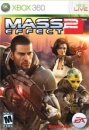
Hang on, so you are saying it is odd that I have Mass Effect 2 on PS3, 360 and PC?


Aprisaiden said:

It is difficult to sell a copy of a game that works on multiple platforms as the hardware manufactures get a cut per game sold and therefore either game prices would go up or SONY/M$/Nintendo would see there profit margins shrink. 

The only risk is that the pricing on PC generally is lower than consoles and so you could see people buying games on Steam to play them on consoles. But you still have many retail stores that are competetive in pricing with Steam (at least where I live), so people's buying habits shouldn't really change.

The difference comes from people being able to play their game on another platform, something they couldn't do before without buying another copy of the game, but since there doesn't seem to be a lot of people rebuying the same games for different platforms, the platform holders shouldn't be feeling a meaningful difference.

Maybe allowing people to play a game on several platforms will attract more people to gaming and actually increase revenue? 


Around the Network
Munkeh111 said:

Hang on, so you are saying it is odd that I have Mass Effect 2 on PS3, 360 and PC?

...yes.


Rainbird said:
Munkeh111 said:

Hang on, so you are saying it is odd that I have Mass Effect 2 on PS3, 360 and PC?

...yes.


Owww, I had to buy Mass Effect on 360 twice so that I could have 3 copies and this might ruin everything for me

But seriously, I would much prefer that I could play people on XBL with my PS3 somehow, though of course owning the games on both consoles would be helpful


You would have to pay more for the game.  MS and Sony make a bit of cash for each game sold on the 360 and PS3.  If you want it to work on both you'd have to pay the fee MS or Sony gets on top of the cost of the game.  I can see console/PC but not PS3/360. 


Similar to the music industry.

They sell you first 128kbps version.

A year or 2 later, they sell you a 192kbps version.

Another few years, they sell you a 320kbps version

And then finally a lossless version.


The OP is the definition of wrong.

When you buy a game some of that money is going to the developer, some of that money is going to the publisher, and some of that money is going to the console manufacter.

If you bought, say, Crysis 2 then that means the profits would have to be split between Crytek, whoever their publisher is, Microsoft, and Sony.  That just would never fly.

People today just expect the world for nothing.