Porcupine_I said:
I would really be interested how he would formulate a definition of the term "Art" that includes movies but excludes games. |
Easily. His (and most classic definitions of Art) does exclude most movies. He's not saying movies are Art automatically, he's saying a (relatively small) number of individuals have shown that the medium of cinema can be used as an Art form. However I suspect 90% of movies released in a year wouldn't scrape past the academic definition of Art.
On Topic - and thinking about this a bit more, I've decided personally it's pretty clear for me:
1 - it's very likely the medium of videogames could be used to create Art
2 - no-one has yet done so, whether due to lack of artistic talent or simply because they're not trying : for examle David Cage with Heavy Rain is arguably trying for Art, or at least to get closer, but much as I enjoyed the title and his efforts I could only consider it a stepping stone forward, not an actual success yet, meanwhile Mario is very much a pure game created for fun, to entertain and I believe with no intention of being Art
3 - the classic elements that go into games as the gameplay mechanics are 99% of the time no more Art from the academic point of view than the rules of Chess
4 - the sometimes beautiful artistic effort to create games, while lovely and often impressive, is craftmanship and the same as a film set or costume designer - individually impressive, often created by very talented people, but as part of the whole merely a context for an entertainment experience that isn't Art. I see this as the confusion that often arises between Craftsmanship and Art - FYI I'm in the camp that believes there is a difference between the two. Many videogames have exhibited fantastic Craftmanship, so much so it is almost tempting to see that alone as an artistic achievement in its own right, but I don't think this is valid personally
5 - as per 1) there are some blurry lines now - for example we're seeing the beginning of the ability to have a true performance in a videogame, we're seeing some better writing, etc. However the challenge here is whether they deliver a credible Art experience or fall under the banner of 4) above. We've also got lovely little things like holding Yorda's hand in Ico and how that's used in the game that show a huge blurring of the lines between a true, classic gameplay mechanic as Ebert considers and something that could arguably be seen as something more.
6 - that as we see more titles like Uncharted 2 or Heavy Rain or Alan Wake (insert any games with a narrative and many of the classic trappings of a film or novel here) there's going to be more confusion and debate around this very area
7 - that despite Ebert himself partially considering it and dismissing it, titles like Flower do raise the concept of leveraging videogames to deliver what to me (having visited a number of Modern Art exhibitions) seems close to a piece of interactive Art where music, visuals and the observers input is used to create an abstract but emotional piece built around the exploration of a theme.
8 - that Ebert's right from a classical point of view, however I suspect (and fully understand why given the poor guy's age, health, etc) that he's not fully observant or aware of some of the work being achieved in videogames.
I also thought hard to consider which videogames I've played felt closest to Art in the classic, academic sense as I understand that definition, and although I'm not sure I'd say they're Art, these are the small number of games I've personally played that felt closest so far:
1 - Silent Hill 2
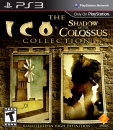
2 - Ico
3 - Shadow of the Colossus
4 - Flower
5 - The Last Guardian (c'mon, you know it's going to make the cut with that pedigree!)
It's an interesting topic, and I do believe that, just as few movies, books, comics, paintings, etc. are really worthy of being labelled Art, being instead either simply entertainment or simple excercises in Craftmanship, by far most videogames should never even be considered as candidates currently.
But the potential is there.
And I think it'll probably be realised sooner than Ebert considered in his blog entry - note this assumes that at some point someone with serious artistic potential is going to decide to take it upon themselves to do so. I really don't expect 99.9% of those currently developing games as entertainment for profit to do so - and why should they and why should I?