









heprof00 said said:
They do the exact same thing. The entire idea of "elite" or "pro" models does exactly the same thing. In fact, Sony probably took the idea from MS in teh first place!
The point was why didn't Xbox do it more often? Sony have almost twice as many SKUs (almost 2 different SKU per PS3 generation) as Xbox 360. Xbox on the other hand, only updates their SKU once every year at most.
You are really, severely misinformed, wlakiz.
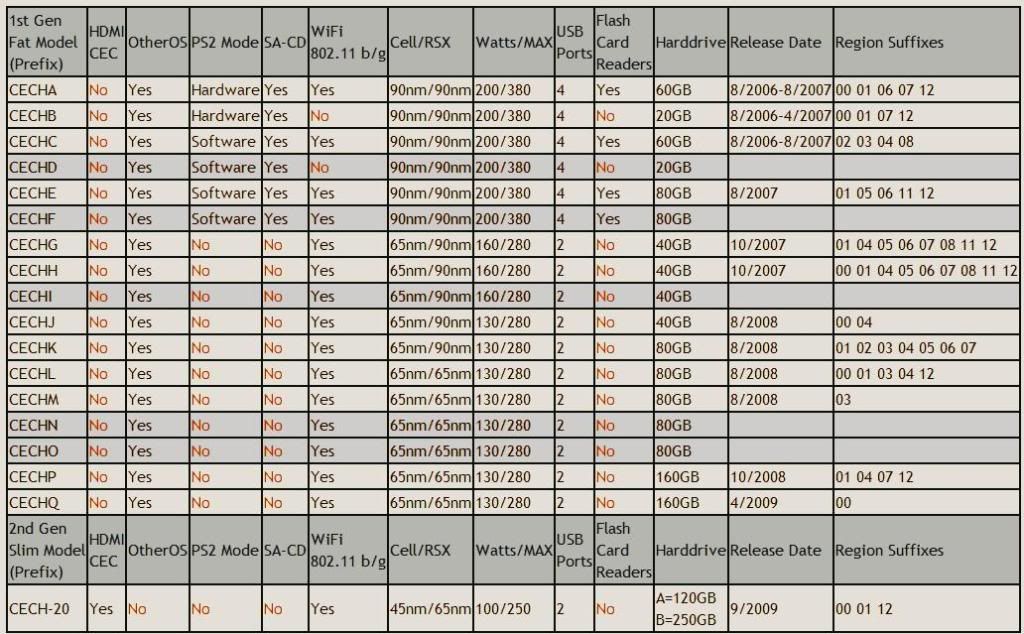

KEEP IN MIND ABOVE THAT THE PS3 MODELS ARE SEPARATED BY REGION. HALF OF THOSE MODELS ARE THE EXACT SAME MODEL SOLD IN A DIFFERENT REGION. 360 HAS THE EXACT SAME THING. TAKE THE NUMBER OF 360 MODELS SHOWN ABOVE AND DOUBLE THEM. NOT ONLY THAT, BUT FOR MOST OF ITS LIFE, 360 HAS HAD 3! MODELS ON THE MARKET AT THE SAME TIME, WHEREAS PS3 HAS ONLY HAD TWO.
First, you'll have to provide source on how much XBox lost vs PS3 lost. Secondly, what are you talking about? I am talking about undercutting PS3's 250gb with their own 250gb which is priced at $400 atm. Both are considered 'complete package' yet the Xbox chose a higher price point on their top SKU, when they should be at least matching the 250gb SKU from Sony.

I don't know where the LTD graph is, but this is end of Fiscal Year 2008, aka, September 2008.
http://vgsales.wikia.com/wiki/2009_fiscal_year
Year end 2009, xbox = 169m$, Sony -600m$
Do the math.
No, they lose money when there is excess supply. Vendors don't want to purchase 250gb when their warehouses are stocked piled with them. Sony's production factories output pretty much a constant number of PS3s/month. They expect to ship all of them out but they can't if the vendors don't want them.
NO, THEY DONT MAINTAIN CONSTANT NUMBER. THERE HAVE BEEN PERIODS IN EVERY VG COMPANY WHERE THEY DON'T PRODUCE ANYTHING FOR MONTHS AT A TIME. Additionally, you have no idea how many are being made at all. You have no idea what a "regular" stock is. You call 250g "excess" but it's not excess. It's just that there are a lot of 250s out there compared to 120s (Sony hasn't been able to keep up with demand on the 120s, so there is a shortage. That doesn't mean the 250 is in excess. It means that there are more, comparitively.
Again, vendors don't want them when they have stockpiled of 250gb in their warehouses.
above.
We are strictly talking about the amount they suit for. If the piece of technology is only deemed to worth 1% then the judge will only grant that 1%. However, apperently both rumble and rim keyboard is worth way more than just 1%.
Also, production is usually never halted until the judge deemed that the an infrigement was made and even so, Sony or Rim or MS would just appeal and the get case re-examined. Thats how microsoft usually get though their infrigement lawsuits... they just re-appeal and eventually after 5 or so years of lawsuit battle, the plantiff would either end up bankrupt or they lose the battle.
Not going to argue this anymore. They paid a lot because it happened in court. End of story.Well first of all, did you just compared the PS3 to a plastic fliptop? Secondly No, the quote did not put "for a piece of hardware" (Do you even know what is a plastic flip top? hereis a picture: http://www.plastcaps.com/photo/1/28mm-plastic-flip-top-caps-yl-ft28.jpg, see the plastic lid that flips up?). Thirdly, did you deliberately ignore the other more relevent royalty rates like say :
You said that the ps3 was made up of little components from every other company (or something like that). The rates they pay for those things are fractions of a percentage, not 15% as you insist.
15% or more. Software licensing royalty rate paid by Dell Computers for highly marketable products
This above has nothing to do with the Sony situation. This is what Dell pays to get licensed software, games, OS, etc etc. Notice it says "highly marketable". This includes things like having Windows/Office/Photoshop on the computer.
or
% to 12% of sales for well-known brands. “Attorneys who deal with licensing issues said most companies that license well-known brands pay a royalty rate of 8 percent to 12 percent of sales.
Brands. Disney. Licensing. I already wrote that. That is what developers pay to make games based on movies or other games. Again, nothing to do with Sony paying licensing fees for a product. Brand fees are for making use of a brand image because a brand image is worth money because it's recognizable and has an established audience and will increase sales. This is not the same as licensing technology or codecs, even if it has similar implications.


