

http://tech.msn.com/products/article.aspx?cp-documentid=21991460>1=40000
The 60-Buck Dilemma
Who decided that $59.99 was just right for video games? No one.
Stroll into a GameStop in Manhattan and ask for a copy of "Wet" for the Xbox 360. How much? $59.99.
Or drop by your local Best Buy in Tempe, Ariz., for the Nintendo Wii version of "The Beatles: Rock Band." $59.99.
"Need for Speed SHIFT" on the PlayStation 3 at Game Crazy in Bend, Ore.? $59.99.
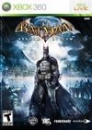
"Batman: Arkham Asylum" on the 360 at Play N Trade in Naples, Fla.? Sadly, they are out of stock right now. But when it comes back in, $59.99.
Coast to coast, across different retailers, consoles and games, when asked, "How much?" the routine reply is: 60 bucks.
The next time you are standing at the counter of your local game emporium, stop talking about how awesome "Muramasa: The Demon Blade" was in the original Japanese and mess with him a little bit:
"So, game-store guy, why do all of these games cost $60?"

If he shrugs his shoulders and goes back to sorting his Pokémon cards, he's just being honest, because easy answers don't come with a topic that dives immediately into conversations about the law and economic price theory.
And no, games don't cost $60 because they are worth it.
"Some games offer a life span into the hundreds of hours -- especially games like 'Call of Duty,' 'Final Fantasy,' 'Madden' and 'Halo' -- while other games may offer a modest 20 to 30 hours of play, with the bottom end offering as high as 10 hours of game play," explains Jesse Divnich, director of analyst services at Electronic Entertainment Design and Research.
"A consumer will pay $60 for a 'Call of Duty' game, log in 100 hours of play (at about 60 cents an hour), and at the same time pay $60 for the first 'BioShock' and only log in about 20 hours of game play (or $3 per hour of entertainment). That is a 400 percent difference in value."
When it comes to game pricing, and the peculiarly common price tag of $59.99, someone needs to ask, "How did this happen?"
It helps to understand how that $60 pie gets sliced up among the many hungry mouths trying to feed their businesses. Divnich figures the typical breakdown works something like this:
- $12 goes to the retailer.
- $5 goes toward discounts, game returns and retail cross-marketing. (You didn't think those cardboard standees were free, did you?)
- $10 goes toward cost of goods sold, which includes manufacturing the game disc, shipping the games to the store and anything else directly related to production and delivery of the game package.

But while this helps us understand just where the money goes, and explains why developers can sell 100,000 games and still end up in the red when development budgets run into the millions, it doesn't say much about why the pie ended up at $60 in the first place. It's not like 60 bucks is a magic number, when you look at what you can buy:
- A barrel of crude oil on a good day.
- An Elle Macpherson La Mere Maternity Bra.
- A three-star hotel in Chicago on a discount Web site.
- A copy of "Gears of War 2." Which is to say, nothing is inherently worth $60.
"Arriving at new price points, generally, is something of an enigma," admits Hal Halpin, president and founder of the Entertainment Consumers Association.
But whether through blind luck, dark magic or something more insidious, video-game console prices have stayed relatively in lock step generation after generation. While gamers once paid $40 for a top game in past generations, now $60 remains the ironclad rule of game pricing. It makes sense to wonder: Why $60, and not some other random number?
The answers fall into three broad categories: sensible greed, consumer stupidity or evil conspiracy. Which explanation fits the fact? That depends on how you look at the facts.