

"What with the explosive departure last June of Tomonobu Itagaki, enfant terrible behind the Ninja Gaiden series, an amicable but unsuccessful takeover bid from Square Enix in August, and a merger - effective from next April - with Dynasty Warriors publisher Koei, Tecmo has been a highly watchable company of late. Despite this whirlwind of corporate politics, the publisher's output shows no sign of stalling. Three new IPs were unveiled last year: Again: Eye of Providence, a DS forensic adventure game, Undead Knights, a zombie mash-em-up on PSP, and Quantum Theory, a high-powered tactical shooter for the PS3.
So utterly stuffed is Tecmo's schedule, that when Kikizo stopped by for a closer look we had to run through all three games, with all three creators, in one go. Join us for a rapid-fire chat with Koichi Yamaguchi, Kohei Shibata and Keisuke Kikuchi (the only one we've met before) - producers for Again, Undead Knights and Quantum Theory respectively.
again: eye of providence. (ds)


Kikizo: It's great to meet you all. So, Again: Eye of Providence. Go!
Yamaguchi: You're going to be playing Jay - an FBI agent. 18 years ago there were a series of murders and incidents that involved his family. He's the only known survivor of the family. Just recently another incident took place that left exactly the same clues behind as from the incident 18 years ago. And now Jay is connecting those two to see if the criminal's still out there, and solve the mystery of why his family has disappeared.
And he has these unique powers. He can see into the past, the place 18 years ago, and that has been reflected in the gameplay. You have your 'past vision' and your 'current vision'. Your past vision is going to be shown on the left-hand side of the screen. And what you basically want to do is pick up what's different between the one on the left and the one on the right, because that's what's going to open up clues, and move the dialogue forward. You can control it just with the D-pad.
The event sequences will be displayed in live action. Initially they were thinking of doing it with CGI cut scenes but these are much better to re-enact each [key] moment. This is just one side of the gameplay. The other side is being able to go out on the town collecting information from people, and then coming back to the past/current vision to see what other hints and clues you can find.
Kikizo: In Trace Memory you use the DS hardware in a lot of very original, creative ways - half-closing the lid to see a reflection onto the bottom screen, for instance. Are there any similar tricks in store with Again?
Yamaguchi: In addition to the past vision and the current vision, we have plans to implement some other ideas into the game. But that's not something we're going to discuss today. [laughs]
Kikizo: It's a very impressive game technically - you have live action on 3D environments. What's going on behind the scenes to achieve that?
Yamaguchi: As far as we know there are no other DS titles that have been able to achieve this level of quality, with both screens showing in 3D. Technically we were told that it would be almost impossible to display both screens in 3D, but we were able to overcome that challenge, and the fact that even in very early builds we have those action sequences running is something we're going to... we still have some time to polish it up.
Some of the scenes are even going to be shot in the States, just so that the actors have a conducive setting... It does become a challenge to find that setting, even though we're talking about a DS game, to mirror the environment correctly. We want to make sure we showcase that this is taking place in America.
Kikizo: Japanese adventure games are popular on the DS all over the world - Hotel Dusk is the most well-received example that springs to mind. Why do you think that is?
Yamaguchi: I think the biggest reason why is that the storyline and the stage-setting take place outside Japan. It's very natural for an overseas gamer to pick up and play because they know that it's an environment they have either seen or lived in or can adapt to easily. I think that is probably the key element in the success of those games. This one is hopefully the next chapter in that success story.
(psp) undead knights.


Kikizo: We wish you luck. So, next up today is Undead Knights. Sock it to us, Shibata-san...
Shibata: Undead Knights is a brand new PSP IP. It's an action game, but it's not your typical hack-and-slash title. Other games, once you destroy your enemies they're basically gone and you go to the next level, but in this case there's sort of a second layer - after destroying your enemies you can transform them into zombies, and utilise them to overcome some of the challenges.
The zombies are AI-controlled, but you can send out limited commands such as 'throw' and 'charge'. In some instances you won't be able to overcome a challenge if you have a small group of zombies - you're going to need a massive troupe of zombies. You might create a zombie ladder so you can climb over a high wall. So these zombies are basically your tools to advance in the game.
The characteristics that enemy soldiers and knights have will be carried over when you transform them into zombies, so there will be a wide variety of zombies. There's actually no limit as to how many enemies can be transformed, so every enemy on-screen - as long as you're good - can be transformed.
Kikizo: Sounds almost like a strategy or puzzle game.
Shibata: When you think of most zombie films and games, it's you against the zombies and the zombies are attacking you, but in this case you, the main character, start out the game by yourself, and what you want to do is increase the number of zombies so that you have allies, in order to conquer the game's four different environments. And executing that is as simple as hitting the main attack button and pointing in the direction you want your troops to go.
So there's a little bit of strategy involved but the main core of the game is still action. It's just that if it was typical hack-and-slash your allies wouldn't really have any purpose. So it adds another layer to the zombie action game
Kikizo: What kinds of zombies can you create?
Shibata: OK, an example of the variety of zombies is a soldier whose main weapon is using bombs, and when that turns into a zombie it can still throw bombs at the soldiers who are alive. If there are gigantic enemies then when they turn into zombies they will be the same height, the same build. All their characteristics can be completely carried over.
It might seem as if we're just randomly throwing zombies around, but there will be instances where you will have to be clever and make good use of the zombies - stacking them up to make a ladder to overcome a wall, or to reach the entrance of a big castle where you're going to have to pick up a big chunk of something, which requires X amount of zombies. At the same time, one of the attractions of an action game is just slashing and hacking tons of enemies at once. It's a balance and combination of those things in Undead Knights. To a certain extent you'll be able to just run through some of the battlefields just hacking and slashing, or creating zombies and not really doing anything with them. But you will eventually have to look at the situation - you may try to go up against something by yourself with a few zombies, and nothing will happen.
So you're going to have to go back, kill more enemies, gather up a larger zombie troupe, and see what other tactics you can use - whether it's shaking a tower or shaking a gate to knock enemies down, then mashing them. So there is a careful balance we're integrating into the game. You won't have to worry too much that you can get through this game without really using the zombies at all.
Kikizo: Was there a particular source of inspiration for Undead Knights? Perhaps from outside gaming?
Shibata: Any zombie film you could name off the top of your head - oh, and the Thriller music video by Michael Jackson. I think what we took from those was how the zombies change and transform, and their movement 'styles'. If we were to just create a regular zombie game where you're being attacked, it wouldn't really matter, but this time around you're the one using the zombies, so we want to make sure they're being portrayed the way they should, that they're moving the way you would expect zombies to move.
Kikizo: Why did you decide to bring it to PSP?
Shibata: I love PSP! [laughs] Because of my special interest in the system, I wanted to challenge myself to create an action game for the PSP. I already had the concept laid out, which worked perfectly, and as we got started on the project it seemed like a perfect fit. I definitely want to make a hit title for PSP, and hopefully this will be that hit.
(ps3) quantum theory.
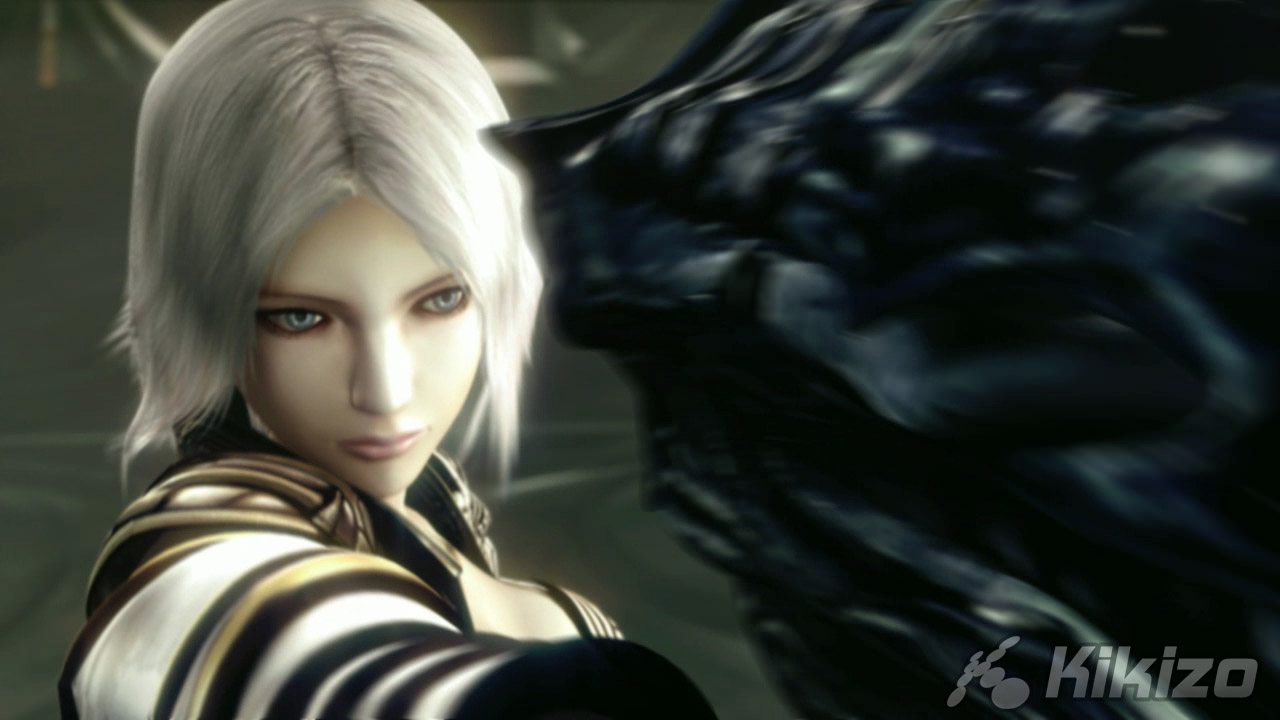


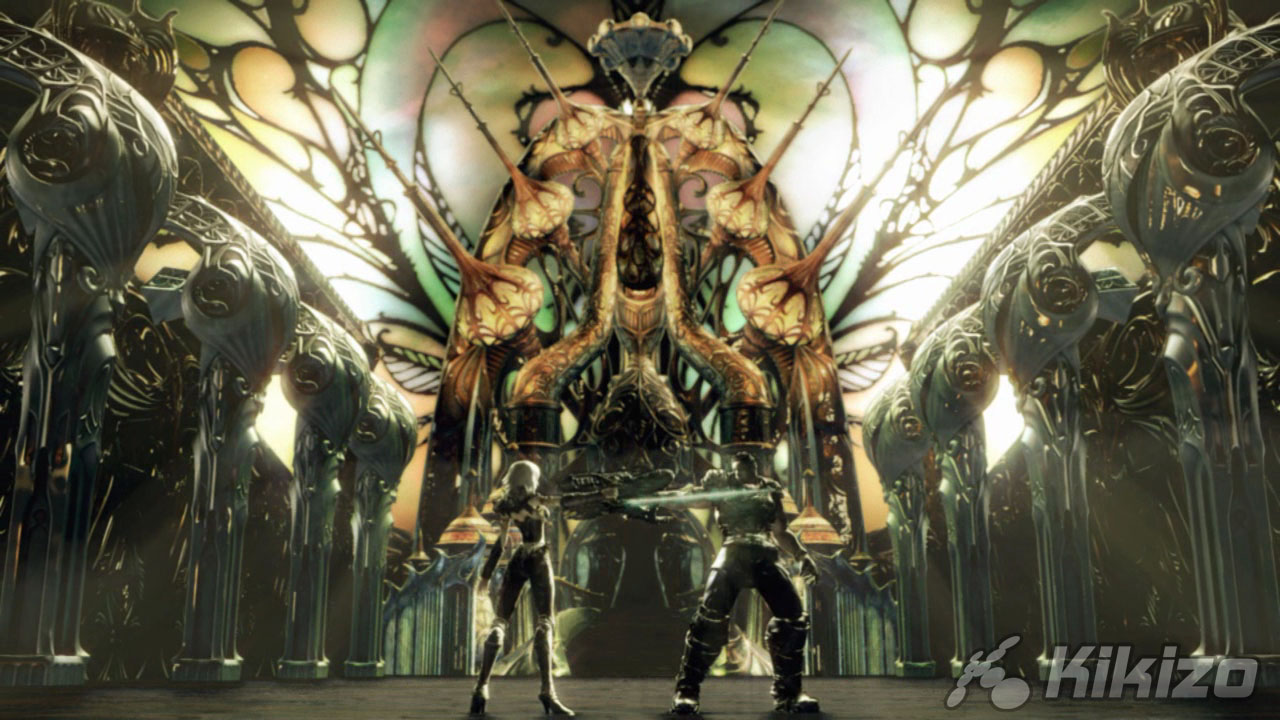


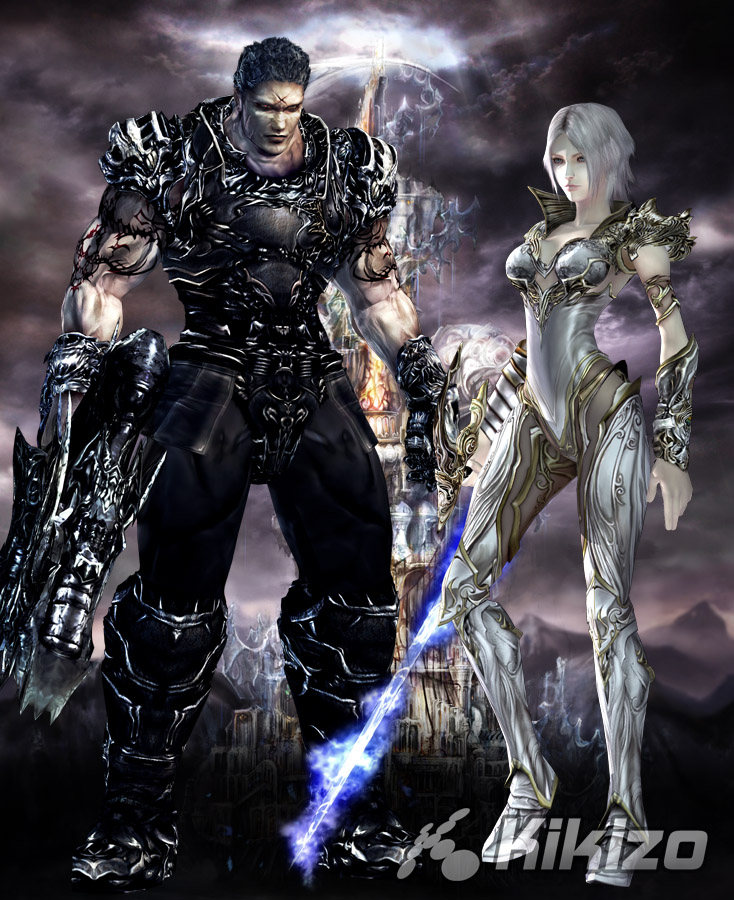


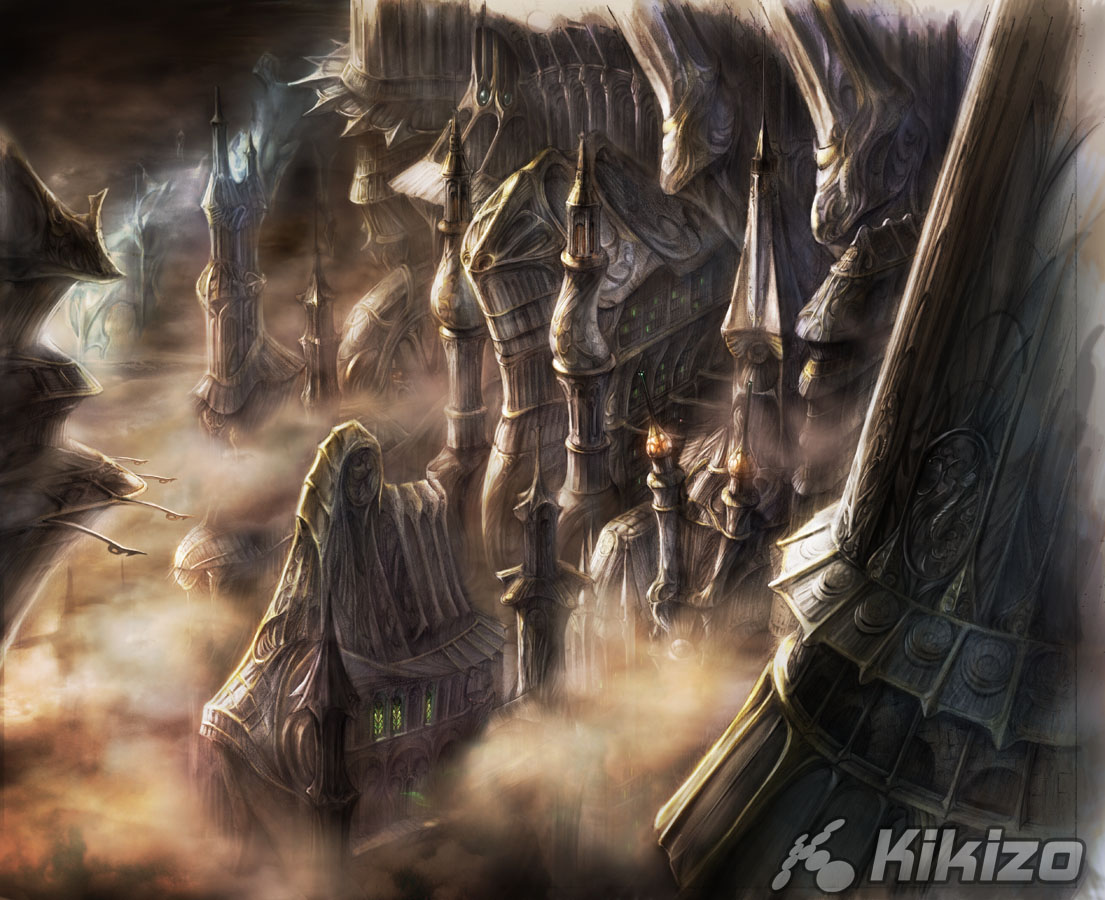
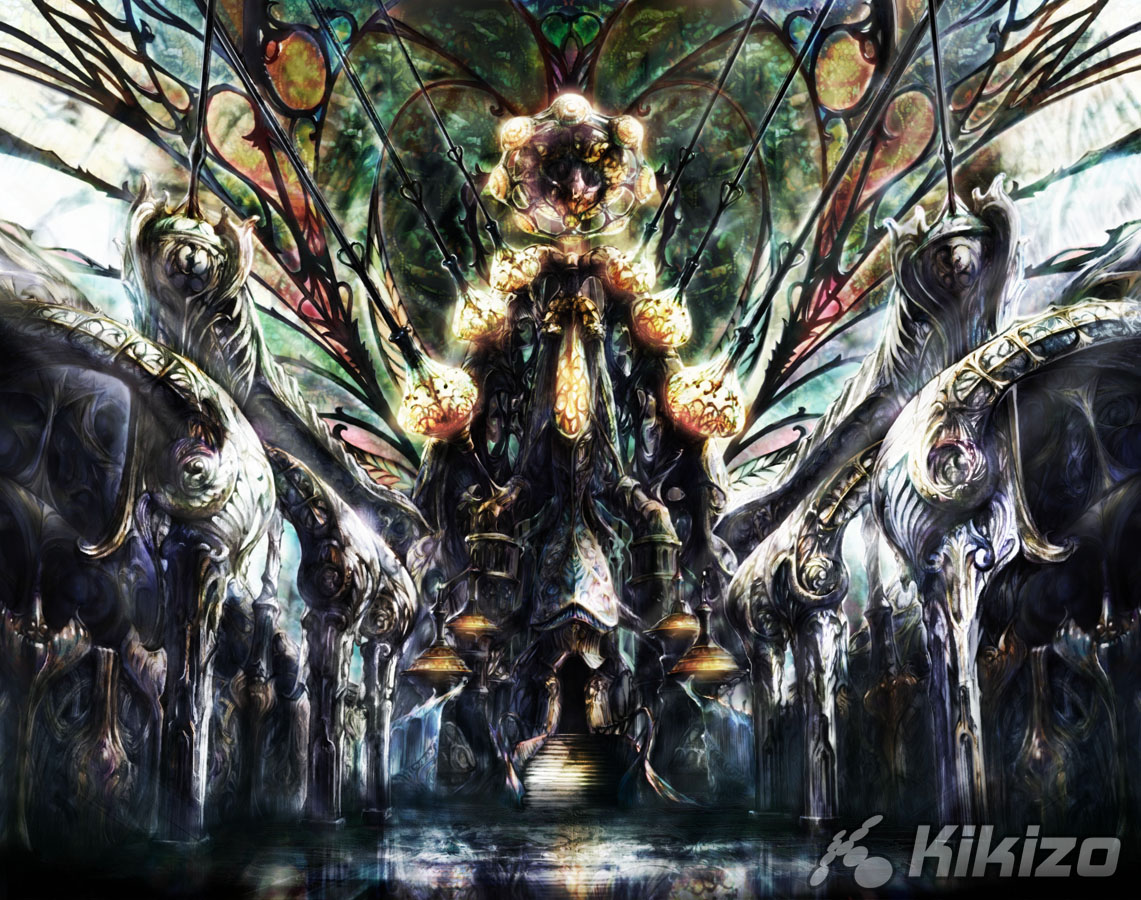


Kikizo: We can't wait... And last but not least is Quantum Theory. Make with the hype, please, Kikuchi-san.
Kikuchi: This is also a brand new IP for Tecmo - actually it's the first shooter game Tecmo has developed. So it's not just a challenge as a new IP, but as a new genre.
Kikizo: We're a bit stumped by the name, truth be told.
Kikuchi: From the trailer, quite a few people have commented that they can't make the connection yet! It's very connected to the storyline. The majority of the gameplay will take place in the Living Tower...
Kikizo: The one they're charging towards at the beginning of the trailer?
Kikuchi: Yes. We can't go into much depth on the storyline at the moment, but there's this Tower that was built after the world was completely destroyed. The main character's purpose is to destroy it, and both characters will start from the bottom moving up. The female character has her own reasons - unravelling a mystery - for getting to the top.
At the beginning of the game these two characters don't know of each other's existence, but at a certain point they meet, and they realise they need to collaborate to destroy parts of the Tower - that's where combination attacks come into play. But in other areas there will be times when they battle each other too. They don't always get along.
The background for these characters assaulting the Tower will be displayed in flashbacks, and the flashbacks will be a combination of playable areas and event sequences. So some of the portions you play will not take place in the Living Tower, but before it was created.
I'm just going to go through some of the big features for the game, and why Tecmo is entering the shooter genre, which we're not necessarily known for. With some of our other franchises we feel we've mastered the action and fighting genres, and given that the third-person shooter genre is very popular in the overseas market, especially in the States, we thought we could bring a different angle to it. Purely from the visual presentation you might say that this is something that could be a fantasy adventure or an RPG - the art direction, the environment and the use of colour in this game is quite different from your typical shooter, a more military experience...
And the second big twist is that the landscape is constantly changing as you play. So this is not going to be the same exact place before and after... and while most of it is not controlled by you, some of the changes can be triggered by your actions, such as destroying part of a wall - something will be growing out of that next time you return. And not only is the landscape changing, but the cover points that your enemies use may also increase in number if you go back to a place after you've accomplished your mission.
So it adds a whole lot of strategy to the gameplay, and that's something that we haven't really seen done in concert with art direction. It's not just your typical Japanese publisher trying to put out a shooter game - we're trying to bring something very unique and different to the genre.
Kikizo: Why did you decide to take the risky, original route rather than going with a tried-and-tested formula?
Kikuchi: He's not here today but the director of this game, [Makoto] Shibata-san, he's all over shooter games! And so there was a desire for the next project to be a shooter, and somehow that worked with the company's decision to go for a new challenge - not a genre or franchise we're already known for. So while it did take a long time to digest within the company, we were pretty confident after doing a lot of research on a variety of shooters that we would be able to bring something unique - both visually and gameplay-wise.
Kikizo: Is there only one playable character?
Kikuchi: There are two main characters - you will play most of the game with the male character, but indirectly you'll be able to control the female character as well.
Kikizo: There's a lot of sword action in that trailer. Is she your side-order of melee combat?
Kikuchi: As we've shown her so far she has a sword style, but her weapons will also change to more of a shooting weapon. Both characters will have a variety of weapons - as you progress through the game there is a weapon levelling and power-up system. So, the characters are not necessarily one or the other. And also they can perform combination actions. There will be instances when they will only be able to overcome hurdles by acting together, and others where they will act separately.
Kikizo: Which shooter would you say Quantum Theory is closest too?
Kikuchi: Simply for the cover system it would be Gears of War, of all the games out there right now.
Kikizo: If you're looking to attract the Gears crowd, why make this exclusive to PS3?
Kikuchi: Initially the game concept was built around this game being a PC game. So the team started working on the gameplay portion on the PC, and the graphics - the project was altered slightly, and we tested out the graphics and visual presentation on the PS3. And looking at that, we were pretty confident that we were going to be able to display and execute what we wanted to using the power of the PS3. The environmental detail you see in the trailer is something we really want to push to the max, and we just thought the PS3 worked better for us.
Kikizo: How closely do the actions in the trailer resemble gameplay? Will the player be riding on dragons and the like?
Kikuchi: While strictly speaking this is a kind of third-person action game /shooter, the main play style skews towards the shooter side. The movements of the characters and their enemies, how they appear and how you attack them... we feel we've already been successful in executing action game elements, as in Ninja Gaiden. So it's mainly a third-person shooter.
Kikizo: Whew! Kikuchi-san, Shibata-san, Yamaguchi-san - thanks for your time.
Again is scheduled for release on DS this spring. The other two titles both have 2009 release dates pencilled in. Interviews conducted by Sharan Dev Jain. Words by Edwin Evans Thirlwell. Produced by Adam Doree. Koichi Yamaguchi photo stolen from Destructoid. Kohei Shibata photo courtesy of Matt-IGN's blog. Keisuke Kikuchi and Tecmo photos courtesy of, er, our previous features. Sharan: remember to take our own photos next time, eh?."
quamtum theory is looking great the interview said really interesting things about the game. what do you guys think of the games?.
here is the link: http://games.kikizo.com/features/interview-whats-next-from-tecmo-p1.asp