By using this site, you agree to our Privacy Policy and our Terms of Use. Close

Forums - Politics - Israel-Hamas war, Gaza genocide

Palestine: Huge influx of aid urgently needed amid catastrophic conditions in Gaza

https://www.doctorswithoutborders.ca/palestine-huge-influx-of-aid-urgently-needed-amid-catastrophic-conditions-in-gaza/

MSF calls for a massive scale-up of lifesaving assistance and unhindered humanitarian access amid the ongoing catastrophe in Gaza, where lives continue to be lost due to sustained violence and persistent aid restrictions imposed by the Israeli authorities. Despite these policies, MSF remains committed to provide assistance in Palestine for as long as possible, working under our registration with the Palestinian Authority.
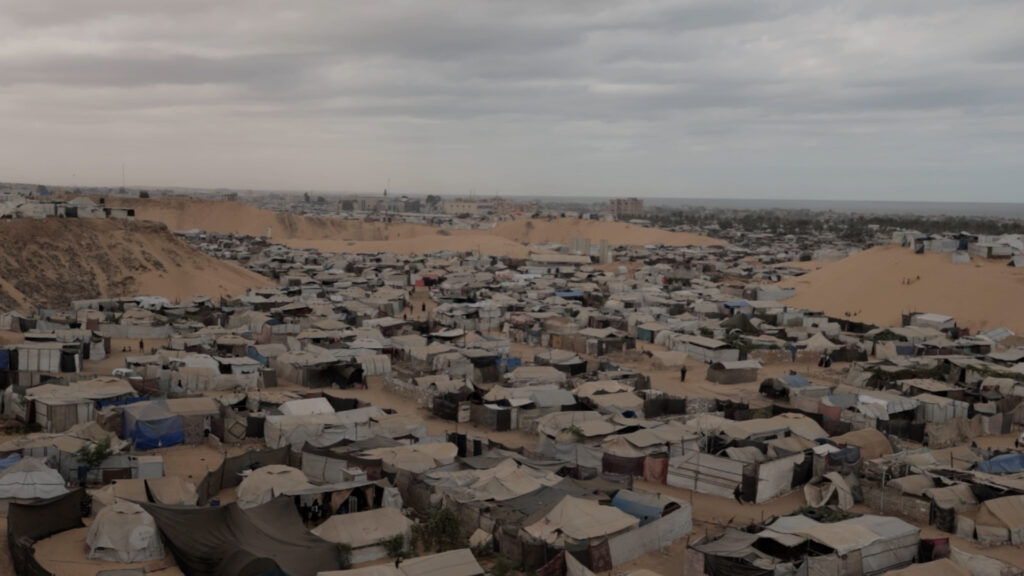


Under international humanitarian law, as the occupying power, Israeli authorities are obliged to ensure the provision of humanitarian assistance. Yet restrictive new rules, which require 37 non-governmental organizations (NGOs) to leave Gaza and the West Bank by March 1, 2026, threaten to drastically reduce already insufficient aid. Governments around the world must ensure the International Court of Justice decisions are respected, including facilitating the provision of humanitarian assistance.

“MSF is working to preserve services for patients in an increasingly constrained environment,” says Christopher Lockyear, MSF secretary general. “The needs are immense and drastic restrictions have deadly consequences. Hundreds of thousands of patients need medical and mental health care and tens of thousands require long-term medical, surgical and psychological follow-up.”

Despite the U.S.-led peace plan, Israeli authorities continue to heavily restrict and even deny water, shelter and medical care. Living conditions are maintained at undignified levels and violence continues to kill and injure Palestinians on a daily basis. In recent weeks, humanitarian aid reaching Gaza has significantly decreased. In the West Bank, medical and humanitarian needs continue to escalate amid alarming increases in violence, forced displacements, armed settler attacks, home demolitions, settlement expansion and obstruction to healthcare.

Israeli army kills Palestinian child, wounds another in Gaza despite ceasefire


People attend the funeral prayer of 3 Palestinians killed in an Israeli attack, despite the ceasefire in Khan Yunis, Gaza on February 27

Israeli artillery fire killed a 15-year-old Palestinian boy and wounded another teenager east of Gaza City on Saturday, marking a fresh breach of the ceasefire in the enclave, Anadolu reports.

Medical sources told Anadolu that Abed Raed Radi was killed near Israeli-controlled areas east of the Zeitoun neighborhood. Salman Yahya al-Malalha, 16, was wounded in the same shelling and remains in moderate condition.

Earlier in the day, two Palestinians were wounded when Israeli naval forces opened fire on fishing boats off Gaza City and in the Sheikh Ajlin area.

A Palestinian woman was also shot in the foot in the Mawasi area west of Khan Younis, the sources added.

Israel has killed 618 Palestinians and wounded 1,663 since a ceasefire agreement took effect last October.


More than 50% of aid movements to Gaza impeded, denied by Israel: UN

The UN said Friday that more than half of humanitarian aid movements to the Gaza Strip were blocked or denied by Israeli authorities in February, worsening shortages for civilians, Anadolu reports.

“Food rations have been cut by half in February, largely because there are not enough supplies in Gaza. Around two-thirds of the aid trucks coming through the Egypt corridor were sent back this month,” said UN spokesperson Stephane Dujarric at a news conference.

Dujarric reported that “inside Gaza, coordinated humanitarian movements with the Israeli authorities also continue.”

“Out of ten missions planned yesterday, four were facilitated – including the collection of fuel, tents and baby kits from the Kerem Shalom/Karem Abu Salem crossing,” he said, noting that “Five missions were impeded, and a request to assess a water, sanitation and hygiene facility in North Gaza was denied outright.”


Around the Network


‘Not again’: Gaza rushes to stockpile amid Iran war, crossing closures

When Hani Abu Issa headed to the Deir el-Balah market on Saturday morning, he was not carrying a long shopping list. He had only intended to buy ingredients for his family’s Ramadan iftar meal, nothing more.

But the sight of crowds gathered in front of grocery shops caught him by surprise and prompted him to ask what was happening. A passer-by told him that Israel had struck Iran and war had broken out.

Hani was shocked as he watched people around him leaving one after another, carrying sacks of flour on their shoulders, and buying whatever food supplies and goods they could manage.

That was how the first hours of the military confrontation between Israel, joined by the United States, and Iran unfolded in Gaza. The scene in the enclave changed completely as people everywhere rushed to the market to buy sugar, flour, cooking oil and yeast. Shelves began to empty, and the price of essential goods increased.

A father of five children, 51-year-old Hani told Al Jazeera that he believes the Israel-US war with Iran “will not directly affect Gaza”. But he admits that people in Gaza are no longer able to react calmly to any military development in the region.

“People have become afraid of everything. Since the morning, everyone rushed to the markets to stockpile, and that led to shortages of many goods and rising prices,” he said, while standing in front of food stalls in the Deir el-Balah market, in central Gaza.

Anxiety among residents intensified after COGAT, the Israeli body managing the Palestinian territory, released a statement on its Facebook page on Saturday evening announcing the closure of crossings leading to Gaza and the occupied West Bank “until further notice”, in light of security developments related to the war with Iran.


Crowds filled Gaza’s markets as residents rushed to stockpile food after news of the war with Iran and the closure of Gaza and West Bank crossings

Hani said the possibility of crossings remaining closed deeply worried him. “Flour, sugar, cooking oil, and yeast… those were the first things to disappear from the market because of the heavy demand,” he said.

“I lived through famine [during Israel’s genocidal war on Gaza] like everyone else. The worst days were when I had to buy a sack of flour for more than 1,000 shekels [$319]. I don’t want to relive that experience.”

He said that stockpiling while the crossings remained closed was not a viable solution. “Goods run out quickly, and the conditions we live in may spoil whatever we store. All we need is for someone to reassure us that the closure of the crossings will not last. “For someone to tell us that we will not be affected.”

Local sources reported that the crossing closures were linked to the Jewish holiday of Purim, which created confusion over how long they would last.

“We cannot be certain or confirm anything. Israel’s word cannot be relied upon, and no specific duration was given,” Hani added in frustration. “Gaza has not recovered from two years of war and famine. All I think about now is traveling and leaving with my two daughters to live in another country. That is enough.”


Gaza's ceasefire had momentum. Now, some fear a new war in Iran will distract the world

https://www.pbs.org/newshour/world/gazas-ceasefire-had-momentum-now-some-fear-a-new-war-in-iran-will-distract-the-world

Some Palestinians say they fear the widening war sparked by U.S. and Israeli attacks against Iran could overshadow the fragile situation in Gaza, just over a week after U.S. President Donald Trump rallied billions of dollars in pledges for the territory's reconstruction and tried to nudge a ceasefire forward.

Residents say they are scared of neglect and deprivation, with Israel in the wake of the weekend strikes closing all crossings into their shattered territory of over 2 million people.

COGAT, the Israeli military body overseeing civilian affairs in Gaza, has closed crossings into the territory and frozen the entrance and exit of humanitarian workers because, it says, the crossings cannot not be safely operated under fire. It said crossings would reopen as soon as the security situation allows.


Hezbollah just restarted the fight that Israel was waiting to finish

https://www.cnn.com/2026/03/02/middleeast/hezbollah-israel-conflict-analysis-intl

In the pre-dawn hours of Monday morning, Hezbollah opened a new front in the US-Israeli war against Iran when it launched “missiles and a swarm of drones” at a military base in northern Israel.

The Iran-backed militant group, which has its power base in southern Lebanon, called it revenge for the killing of Iran’s Supreme Leader Ayatollah Ali Khamenei.


Trump says ‘big wave’ yet to come in Iran as war spirals in Middle East

President Donald Trump told CNN the “big wave” is yet to come in the war with Iran. He is expected to address the conflict later this morning. Meanwhile, US Defense Secretary Pete Hegseth called on Iranians to “take advantage” of the opportunity for regime change, even as he said the war was not about ousting the government in Tehran.

• Expanding war with Iran: A top Iranian official said Tehran “will not negotiate” with the US. Israel and Hezbollah are trading blows as the conflict widens, while explosions have been heard in Gulf cities including Dubai, Abu Dhabi and Doha. Here’s a look at the war in maps and charts.

• Fighter jets shot down: Three US fighter jets were accidentally shot down by Kuwaiti air defenses in an apparent “friendly fire incident,” according to the US military. All crews are in stable condition.

• Global shockwaves: Qatar’s state-run energy company has stopped its production of liquefied natural gas following an Iranian attack on its facility, and Tehran has denied attacking an oil refinery in Saudi Arabia. The war has also disrupted air travel, with airspace closed in the Middle East.


Around the Network

Lebanese civilians flee amid deadly Israeli strikes on Beirut suburbs

Lebanese civilians have fled southern Lebanon and Beirut’s southern suburbs as a deadly escalation erupts between Israel and Hezbollah. Many are seeking sanctuary in makeshift shelters across Lebanon’s capital.

At least 31 people were killed and 149 wounded in overnight Israeli strikes on Beirut’s suburbs and southern Lebanon, according to Lebanon’s Health Ministry.

Highways became gridlocked as people evacuated following Israel’s deadliest assault on Lebanon in over a year. The strikes came shortly after Hezbollah fired missiles into Israel for the first time in more than 12 months.

“I don’t know how long it will take us to reach Beirut,” said Ali Hamdan, who had been travelling for seven hours on what should have been a 30-minute journey from his village to Sidon. “I’m headed towards Beirut, but I don’t know where yet. We don’t have a place to stay.”

In Beirut, public schools transformed into emergency shelters. Families arrived with mattresses and belongings, while volunteers registered names as classrooms and courtyards filled with displaced people.

Hussein Abu Ali, who fled with his family from a southern Beirut suburb, recounted the strikes: “My son began shaking and crying. Where are you supposed to go? I stepped outside, then back in because I was afraid of shooting in the air. I gathered my children and went down to the street.”

Nadia al-Salman, displaced from Majdal Zoun in the south, declared: “They do not intimidate or frighten us, and they will not make us retreat even an inch from the path of resistance.”


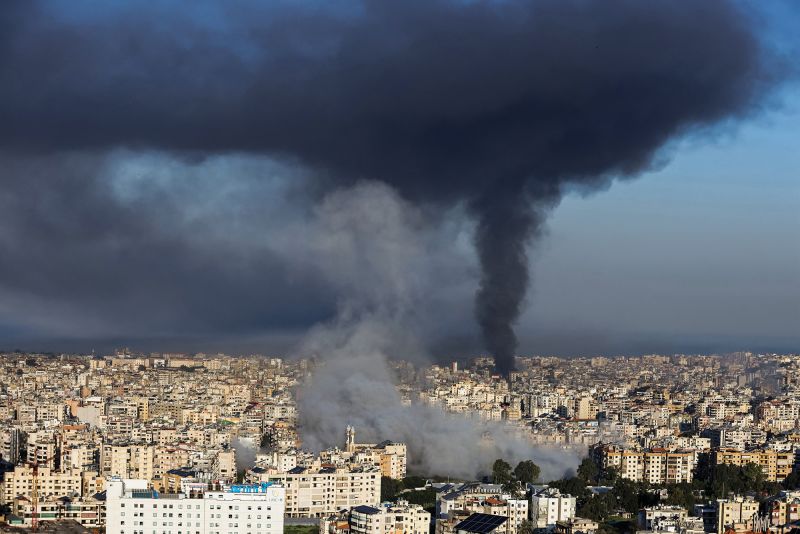
Debris covers a street beside an apartment building hit by an Israeli air strike in Dahiyeh, Beirut's southern suburb.


Qatar says it downed two Iranian fighter jets as conflict widens

Qatar says its air force has “successfully shot down” two Iranian fighter aircraft, as the fallout from United States-Israel attacks on Iran and Iranian retaliation continues across the wider Middle East.

The Qatari Defence Ministry said in a statement on Monday that it downed two SU-24 aircraft while seven ballistic missiles and five drones fired by Iran were also intercepted.

Iran has launched a series of retaliatory strikes on targets in Qatar, Kuwait, the United Arab Emirates, Saudi Arabia and other countries in recent days.

Reporting from the Qatari capital Doha, Al Jazeera’s Zein Basravi said the downing of the Iranian aircraft marks “a major military escalation”. “This represents perhaps the beginning of air-to-air combat, and that is a serious escalation in a conflict that is already spiralling three days in,” Basravi said.


Iran did not immediately comment on the Qatari Defence Ministry’s statement on Monday. A spokesman for Iran’s Ministry of Foreign Affairs recently said the country has the right to defend itself “with all might” in response to the US-Israel attacks, which have killed several senior Iranian officials, including Supreme Leader Ayatollah Ali Khamenei.


UN chief warns of Israeli-made humanitarian crisis in Gaza amid war on Iran

United Nations Secretary-General Antonio Guterres has called for Israel to reopen Gaza’s border crossings, which have been closed by Israel since its forces launched a war against Iran with the United States.

“It is imperative that all crossings be reopened … as soon as possible,” Guterres’s spokesman Stephane Dujarric said on Tuesday. “In recent days, our partners have been forced to ration fuel, prioritise life-saving operations, albeit in reduced capacity as our local stocks are going down.”

Dujarric said there were some stockpiles in Gaza but “when the doors are shut, we obviously stretch whatever we have to make it last longer.”

The Rafah crossing into Gaza from Egypt, the only gateway for Palestinians in Gaza to the outside world that does not pass through Israel, had reopened for the movement of people on February 2, allowing a limited number of people to leave for the first time in months and a trickle to return to the devastated enclave to reunite with family.

Thousands of Palestinians need urgent medical attention outside Gaza but have not yet been allowed to leave.

Israel shut down the crossing again on Saturday as it launched attacks on Iran, citing “security adjustments”. The crossing is considered vital for the delivery of humanitarian aid and the evacuation of critically ill patients.

Israeli authorities said late on Monday that they would reopen the Karem Abu Salem crossing, known as Kerem Shalom to Israelis, to allow for the “gradual entry of humanitarian aid” into the territory. That crossing sits at the intersection of the Gaza Strip boundary with the Israeli and Egyptian borders and was also shut on Saturday.


West Bank tensions spiral

In the meantime, Israeli forces have continued the closure of the Al-Aqsa Mosque in occupied East Jerusalem for the fourth consecutive day on Tuesday.

Palestine’s Jerusalem Governorate reported that the army prevented worshippers from entering the mosque, citing a state of emergency. The compound, the third holiest site in Islam, was sealed off on Saturday morning, hours after the Israeli-US military offensive on Iran began.

For a second consecutive day, Israeli forces raided the Askar refugee camp east of the occupied West Bank city of Nablus, shutting down its entrances and searching several homes.

Last month, the Israeli government approved a plan to claim large areas of the West Bank as “state property” if Palestinians cannot prove ownership, prompting a regional outcry and accusations of “de facto annexation”.More than 80 UN member states condemned the move  and called on Israel to reverse the decision, which they said was contrary to Israel’s obligations under international law.


Israeli troops intensify push in southern Lebanon, in escalation of campaign against Hezbollah

Israeli troops are intensifying their push in southern Lebanon, the military announced Tuesday, seizing more positions on the ground as Israel escalates its offensive against the militant group Hezbollah.

The Israel Defense Forces (IDF) has held five positions in southern Lebanon for months now, using them as a means of observing the border area between the two countries. Now, as Israel intsensifies its strikes against what it sees as Hezbollah targets in Beirut and southern Lebanon, the IDF has occupied more positions, calling it an “enhanced forward defense posture.”

Defense Minister Israel Katz said he and Prime Minister Benjamin Netanyahu had “authorized the IDF to advance and take control of additional strategic positions in Lebanon in order to prevent attacks on Israeli border communities.”


Plumes of smoke rise from the sites of Israeli airstrikes on the southern suburbs of Beirut on Tuesday.


Israel Accused of Resuming “Starvation Policy” After Closing Gaza Border Crossings

In the Gaza Strip, the World Food Programme says a border crossing pivotal to providing food and supplies to Palestinians is reopening, after Israel closed Gaza’s borders on Saturday as it began its attacks on Iran.

Despite the reopening of the Kerem Shalom crossing, human rights and aid organizations have accused Israel of reinstating a “starvation policy” in Gaza.

Philippe Lazzarini, the head of the U.N. agency for Palestinian refugees, wrote, “After more than two years of unspeakable suffering and a spreading man-made famine, people still lack the most basic supplies, despite increases in aid since the ceasefire.”


‘We’ll run out of food this week’: Israel’s Iran war brings new Gaza siege

https://www.theguardian.com/world/2026/mar/02/iran-attacks-gaza-under-siege

Israel closed all crossings into Gaza indefinitely when it attacked Iran, imposing a siege that has already pushed up food prices and threatens to plunge 2 million people into a new hunger crisis.

After more than two years of war, and with Israeli forces in control of about 60% of the territory, almost all of Gaza’s food must be brought in. Humanitarian groups feeding much of the population say the supplies they had on Saturday, when the war began, will only last a few more days.

“If [the borders] stay closed, World Central Kitchen will run out of food this week,” said the organisation’s founder and chief, José Andrés, in a post on social media. “We are cooking 1m hot meals every day. We need food deliveries every single day."


One international food security expert said there was just a week’s supply of fresh food in Gaza. Community bakeries that supply some of the most vulnerable people have only enough flour for about 10 days of bread, and there are about two weeks’ supply of aid parcels.


Israel imposed a total siege on Gaza last spring followed by extreme restrictions on food shipments. Together they caused a famine last summer. Hundreds of people were also killed trying to reach the food distribution points of a new logistics organisation, the Gaza Humanitarian Foundation, which only operated in Israeli-controlled areas.

As news of Israel’s attack on Iran spread, Palestinians haunted by memories of famine and other periods of extreme hunger raced out to buy supplies, pushing up prices. The price of a 25kg sack of flour has tripled to between 80 and 100 shekels, from about 30 shekels last week. Other essentials including sugar, nappies and cooking oil have doubled.

“The return of famine to Gaza is what we fear most, even more than the shelling,” said Sobhi Al-Zaaneen, a 50-year-old father of seven, originally from northern Gaza.


As the occupying power in Gaza, Israel has a legal responsibility to ensure there is sufficient food for civilians there. That obligation is not affected by the war with Iran, said Jan Egeland, head of the Norwegian Refugee Council.


“Community kitchens are already closing, and prices for basic goods have started to rise,” he said in a post on X. “Even amid a widening regional war, international humanitarian law still requires Israel to facilitate relief for civilians under its control.”

The Israeli authority that controls aid and commercial flows into Gaza, Cogat, said it halted shipments into Gaza for security reasons amid the war with Iran. Late on Monday, the organisation said it would reopen the Kerem Shalom crossing on Tuesday for the gradual entry of humanitarian aid.

Israel has kept border crossings with Jordan and Egypt open, and the food logistics chain inside the country is still operating. The Cogat spokesperson said there was adequate food in Gaza, but declined to give any statistics. “Existing stockpiles inside Gaza are expected to suffice for a while,” the statement said.

Gaza shares a border with Egypt, which has been closed for aid since Israeli forces took control of the area in May 2024. The Cogat spokesperson did not respond to questions about why that had not been opened to aid shipments.

Palestinians and international humanitarian organisations have warned for months that essential goods including food are in short supply despite the ceasefire. UN-backed experts said in December that nearly four in five Palestinians in Gaza faced acute food insecurity.

An erratic system of Israeli controls and the destruction of warehouses means there are not enough food supplies inside Gaza to cushion the impact of border crossings, said Bahaa Al-Amawi, secretary of the Chamber of Industry and Commerce of North Gaza.