By using this site, you agree to our Privacy Policy and our Terms of Use. Close

Forums - Nintendo - Ventura Beat: Nintendo Switch are based on Nvidia's Maxwell Architecture not Pascal

A custom tegra is "based" on Maxwell
Pascal is "based" on Maxwell
A custom tegra is "based" on Maxwell
Pascal is "based" on Maxwell
A custom tegra is "based" on Maxwell
Pascal is "based" on Maxwell


Around the Network
Soundwave said:
KLAMarine said:

Where are you getting this information from?

Correction it's 10 watts for the GPU (this is still a lot for a mobile device), the Nvidia Shield console which has the Tegra X1 pushes 20 watts total as a system. 

Keep in mind though the Switch can't just power the GPU and nothing but. The CPU, WiFi, RAM, LCD screen among other components consume electricity too.


The batteries in the Joy-Con's will help out with some of the Switch's power consumption. The wireless setup is in the Joy-Con. The system is confirmed to have THREE batteries.


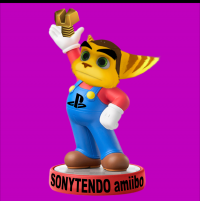
Hey! They got SONY on my amiibo! Wait a minute. Two great gaming tastes that game great together!

Switch FC: SW-0398-8858-1969

superchunk said:
setsunatenshi said:

1st Middle-ware makes x86 to ARM seemless? Either you know something I don't or that's one of the most incorrect statements I have seen on this thread. Can you link me to any resources that prove that point? Edit: just to clarify, I want some resources pointing to how seemless this code transition between x86 and ARM is, especially for game development

2nd - BF4 and Hardline, COD Ghosts, Dead Rising 3, Golf Club, MGS5, SW Battlefront, Quantum Break, BF1, FFXV (between 765 to 900p), Watch Dogs, COD BO3 (1280 x 900), Halo 5 (1152 x 810), Titanfall (792p)... at what resolutions exactly would such games run on a console around 3 times weaker and in a different architecture? (sources: IGN, Otakugame.fr, eurogamer and google in general)

 On your last comment regarding the PCs, they are also X86 architecture based. Actually the games are developed originally on PC and then ported to the respective consoles.

Adding to this, the memory bandwidth limitations on the Switch compared to the other 2 consoles will just make it a nightmare to use the same assets across platforms.

Basically what I'm saying is, this is a handheld and will need to have games designed for it specifically, which Nintendo will do. Some 3rd parties will probably try to port a few more recent games, but there's no way the big AAA games will make it there in any way. I just don't see it, I'm sorry.

1) These both focus on building ARM into x86, but they give the images and overview of building your game in the differing architectures. This is the entire point of using middleware, to remove the biggest pains when porting between difference systems. Its not zero-sum work, but it isn't as hard as some of you think.

https://software.intel.com/sites/default/files/managed/e4/d9/porting-guide-for-unity-game-on-intel-architecture-for-china-market.pdf
https://software.intel.com/en-us/articles/Unreal-Engine-4-with-x86-Support

2) All of those games are still using the same level of textures, AA and other visual settings but at lower resolution so that XO and PS4 are as similar as possible. What do you think is required once you drop textures or AA down? NS will be able to keep either high settings and lower resolution OR lower settings and higher resolution (likely XBO level).

3) Completely disagree with you on pretty much everything.

1) If you think this is how AAA games get ported across architectures, you must be terribly misinformed. Especially in lower powered machines, the code needs to be written specifically to make the most out of the hardware you have. For example, when coding the game for PS4, the developer has access to 218 Gb/s (on PS4Pro mode), while on the Switch we're hearing about 25Gb/s. This limitation alone means a ton of compromises will have to be made.

If you would be porting from a lower specced machine to a higher specced one, then yeah, porting through middleware solutions (who add inneficiencies to the code) wouldn't be as much of a problem.

2) It's not just textures we need to be worried about, it's the actual game logic. For example in open world games (like the witcher, etc) in areas with plenty of NPCs the game goes from being GPU to CPU bound. No amount of low res textures will help the game play better on a shitty CPU machine. So the developers will necessarily need to adjust the game itself (as in, lowering the amount of NPCs in any given area for example) so the game will not come to a standstill. Another example would be in a game like Battlefield where you have 64 player servers in which a ton of physics and calculations need to be done every single frame. The impact 1 player dropping a bomb which causes a building to collapse and how said building not only makes permanent changes to the map as well as the impact on every player. I don't think these are very controversial examples, so you should be able to think about it for a moment and realize I might just be right on this one.

3) I think you should read my previous 2 points and re'evaluate this 3rd one.


Miyamotoo said:
curl-6 said:

I reckon Nintendo fans should be happy with those specs. Better-than-Mario-Kart-8 graphics on the go is pretty good.

Of Course, that's basically around 3x more power than Wii U, and enuf power for instance to run MK8 at 1080p with AA and some other effects.


bonzobanana said:

Still seems too high.  The Tegra spec with the extra denver cores  and  50GB/s memory gets 750 gflops yet stripping out the denver cores and only 25.6GB/s memory speed still achieves 600 gflops and then its likely based onthe older architecture anyway. No those figures are not realistic at all. For me the absolute top figure is around 500 gflops with the lowest at perhaps 300 gflops so I've gone for a middle position of 400 gflops. That I feel might even be optimistic going by Nintendo's past record but for me 600 gflops is just a fantasy figure. I don't even want 600 flops because the more I think about it the more I hate the idea of only 3hrs battery life and if its 600 gflops docked with 1080p output it still probably needs 300 plus gflops when portable at 720p which will be terrible battery life.

Even 400 gflops with 25.6GB/s is restrictive. The wii u had 12.8GB/s memory with 176 gflops but had a 32MB of ultra fast memory built into the chipset. Unless Switch has a similar arrangement the Switch will be bottle-necked by memory speed even at 400 gflops.

Doesn't seems at all too high, just basic Tegra X1 without active cooling can achieve around 512 gflops on stock clocks, but Nintendo is using custom Tegra so we dont know what improvements Nintendo made (my bet is 50 GB/s for memory and something else), and actualy has active cooling. So 500-600 Gflops does not sound high or unrealistic at all, not to mentionle fantasy figure, lol. :)    Actually your 400 gflops estimate is lowest estimate I saw until now on Neogaf or here in threads, actually most of people expecting around 300-400 gflops for portable mode.

Definitely Switch will have some improvements compared to custom Tegra X1, it still custom Tegra.


Nintendo's history is that their custom designs are lower performance not higher and if the development kit spec is correct then it still is 25GB/s not 50GB/s. There is a difference between expected performance and desired performance.  We have lots of indicators that Nintendo have gone for a lower spec design than the reference Tegra design and that battery life may have improved to 5-8hrs. In the case of the wii u in the past it was speculated that the wii u would have 800 gflops at the beginning and final actual value was 176 glops and I wonder if we will get a similar ratio here. Maximum claim so far is 1.5 terraflops and that would distill down to 375 gflops for a similar ratio.

Lets not forget that the wii u had an absolutely hopeless cpu arrangement of about 9,000 mips but the Switch's quad Arm A57's are going to be 3-4x that power so that memory bandwidth of 25.6GB/s will also be under greater strain.

Lets take a realistic approach here and work with that 25.6GB/s memory bandwidth and what would be a performance level based on that. The wii u memory bandwidth was half that so you could say using the wii u that would give you 352 gflops and 18,000 mips cpu performance. The ps3 has 25.6GB/s for its video memory and about 19,200 GB/s for its main memory so the Switch represents a reduction in memory bandwidth over the ps3. I think 360 was something like 25.6GB/s for its shared memory with 10MB of high speed memory.

Realistically  if the Switch has some high speed embedded memory like 32MB or 64MB somewhere then maybe up to 500 gflops could be achieved with some bottlenecking issues in memory access but without the high speed embedded memory then a fair bit lower.

With the wii u we can see the memory bandwidth of 12.8GB/s was perfectly judged for a low performance 32bit cpu arrangement and 176 gflops gpu and there is no reason to believe the Switch won't be equally well set up with memory bandwidth being no more or less than needed for the cpu and gpu performance.

I hope no one is disappointed if its as low as 400 gflops or perhaps even a bit lower. Remember Nintendo makes reliable, dependable hardware designed to take some abuse it doesn't make hardware at the cutting edge of technology. We can hope for higher performance but its not really required for a product like Switch.


Unless someone is right there tearing apart the system guts this is right back to speculation territory as to what the system can do. There is little possibility that it is a straight reusage of the original chip set because, Nintendo has always customized their hardware so we have to wait and see what the system is capable of still.


Around the Network
bonzobanana said:
Miyamotoo said:

Of Course, that's basically around 3x more power than Wii U, and enuf power for instance to run MK8 at 1080p with AA and some other effects.


Doesn't seems at all too high, just basic Tegra X1 without active cooling can achieve around 512 gflops on stock clocks, but Nintendo is using custom Tegra so we dont know what improvements Nintendo made (my bet is 50 GB/s for memory and something else), and actualy has active cooling. So 500-600 Gflops does not sound high or unrealistic at all, not to mentionle fantasy figure, lol. :)    Actually your 400 gflops estimate is lowest estimate I saw until now on Neogaf or here in threads, actually most of people expecting around 300-400 gflops for portable mode.

Definitely Switch will have some improvements compared to custom Tegra X1, it still custom Tegra.


Nintendo's history is that their custom designs are lower performance not higher and if the development kit spec is correct then it still is 25GB/s not 50GB/s. There is a difference between expected performance and desired performance.  We have lots of indicators that Nintendo have gone for a lower spec design than the reference Tegra design and that battery life may have improved to 5-8hrs. In the case of the wii u in the past it was speculated that the wii u would have 800 gflops at the beginning and final actual value was 176 glops and I wonder if we will get a similar ratio here. Maximum claim so far is 1.5 terraflops and that would distill down to 375 gflops for a similar ratio.

Lets not forget that the wii u had an absolutely hopeless cpu arrangement of about 9,000 mips but the Switch's quad Arm A57's are going to be 3-4x that power so that memory bandwidth of 25.6GB/s will also be under greater strain.

Lets take a realistic approach here and work with that 25.6GB/s memory bandwidth and what would be a performance level based on that. The wii u memory bandwidth was half that so you could say using the wii u that would give you 352 gflops and 18,000 mips cpu performance. The ps3 has 25.6GB/s for its video memory and about 19,200 GB/s for its main memory so the Switch represents a reduction in memory bandwidth over the ps3. I think 360 was something like 25.6GB/s for its shared memory with 10MB of high speed memory.

Realistically  if the Switch has some high speed embedded memory like 32MB or 64MB somewhere then maybe up to 500 gflops could be achieved with some bottlenecking issues in memory access but without the high speed embedded memory then a fair bit lower.

With the wii u we can see the memory bandwidth of 12.8GB/s was perfectly judged for a low performance 32bit cpu arrangement and 176 gflops gpu and there is no reason to believe the Switch won't be equally well set up with memory bandwidth being no more or less than needed for the cpu and gpu performance.

I hope no one is disappointed if its as low as 400 gflops or perhaps even a bit lower. Remember Nintendo makes reliable, dependable hardware designed to take some abuse it doesn't make hardware at the cutting edge of technology. We can hope for higher performance but its not really required for a product like Switch.

History in this matter doesn't mean anything, with Switch Nintendo is doing lots a things 1st time in history, but if you really want to go with history, Nintendo always pay attention on memory performance, so hard that memory performance will be only arount 2x times better than Wii Us when rest of specs will be stronger. Those leaked dev kits were not final dev kits, and Emily and Laura said they around 90% accurate not 100% accurate. We dont have any "indicators that Nintendo has gone for a lower spec design than the reference Tegra design". Switch doesn't have anything with Wii U, all around Wii U is totally different compared to Switch, going from intial reveal and hardver/tech, Nintendo is managing Switch for now totaly difrent compared to Wii U.

Also why Switch need active cooling even in portable mode if we know that in portable mode clocks will be lower, and even for stock Tegra X1 easily working without active cooling, so why then active cooling for lower clocks in portable Switch mode!? If you really think that Switch in portable mode will have around Gflops, then passive cooling would be more than enuff.

I dont think all people will be very disappointment with 400 gflops, its not that big difrence compared to 500-600 gflops, but thats basicly worst posible case for Switch in docked mode (and definlty worst posible case that I read that somebode wrote until now), most realistic is 500-600 gflops, high expectations are that Switch will have more SMs that means gflops well beyond 600 gflops around 1TF but that isn't too much likely scenarion same like 400 gflops.


curl-6 said:
Soundwave said:
You'll probably see a Pascal based Switch in 2018 that has considerably better battery life.

Yeah, a New 3DS/DSi type mid-gen upgrade to the Switch is very likely.


nuckles87 said:

Treyarch had to build a completely new version, completely from the ground up, for the Wii. Using completely different assets and technology. This was the story with basically every HD "port" to the Wii, with the exception of sidescrollers like Rayman. It was basically a de-make.

Same would be required for Dark Souls 3, or any any game that was built to run exclusively on current gen hardware. The 360, PS3, and Wii U can't just "run" character models and environments using way more polygons, textures, and details than they were ever capable of running. They would require all new models and environments designed to run on them. This is why certain games like Assassin's Creed Unity were not released for Xbox 360 or PS3, which instead received their own Assassins Creed games released at the same time. Because a whole new game would basically need to be built whether it was a port or something else.

So it is very much a question of power as well as cost. If anything, the two go hand in hand: less powerful systems can be more costly to port to because a whole new game needs to be built, with all new assets and changes in design to accommodate a difference in power. More powerful systems that can receive simple ports of another system's games, same assets and everything, are less of an investment. But of course, it's still not always worth the investment even when a direct port is possible, but it at least makes it more likely.

Money is a bigger deciding factor than hardware power.

 Switch isn't going to be able to run PS4/Xbone games without downgraded assets either; how many ports it gets will depend on how well said ports and the hardware itself sell.

COD on Wii was still viable in spite of the heavy re-engineering required, because they consistently cleared the million mark. Likewise, PS3 and 360 got PS4/Xbone multiplats like Advanced Warfare because they sold well enough to justify porting costs. On the other hand, Wii U missed out on plenty of PS3/360 games that it could easily have run because of poor sales.

That Switch could get a port of Dark Souls 3 tells us practically nothing about it's power level, because the 240 Gigaflop Xbox 360 could've gotten a port of Dark Souls 3, if the game had released back when 360 was still a healthy platform.

I didn't just say downgraded assets, I said NEWLY BUILT assets, which is what the Wii required, and which is what cost it MANY multiplatform games despite being a popular console. This is why most multiplatform titles on the Wii aren't even the same game, but a completely different game from a different developer. Because the gulf between HD and Wii was so significant that direct ports from one to the other wasn't even possible. Hence, they basically made a new game, which is more expensive to do, even when it's a demake like Modern Warfare. Hence why, in the end, power is a bigger factor than hardware: cheap hardware can make a port MORE EXPENSIVE, and less worth it. I'm not even saying money isn't also important, honestly I'd say it's a near equal factor. But as you said, Call of Duty Wii sold well. So how come it received so few other high profile multiplatform games in its lifespan?

Now, I admit, Advance Warfare is an interesting case. As far as I know, most cross gen games were made to be cross gen from the get go, but Advanced Warfare, was, according EuroGamer, made for next gen. But then we also have the instance of Assassins Creed Unity on modern consoles and Rogue Flag on last gen consoles, something that is rather pointless to do if Xbox 360 and PS3 were perfectly capable of running games built specifically for PS4 and Xbox One. This type of practice is only done when the less advanced hardware can't handle the main game, which as I've already pointed out was common on the Wii. 

The reason why I harp on Dark Souls 3 is because Digital Foundry regarded it as a very visually,impressive game. Because even PS4 couldnt run Dark Souls 3 or Bloodborne at more than 30 fps, despite the games  being built for it, while both it and Xbox One could run Advanced Warfare at 1080p and 50 to 60 fps. I harp on it because nothing about the rumor indicated that From built completely new assets to make their Switch port happen, but instead ported it down DIRECTLY from what the PS4 and One were running.

What I'm basically trying to get at here, is that porting between console generations is rarely ever a matter of "turning down the graphic settings". The gulf of power has, in the past, usually been too great to overcome through any means other than what I highlighted earlier. We have had instances of this happen this generation with the Wii U, with stuff like Project Cars and Yooka Laylee being the most infamous examples. These games weren't canned for the same reason as other less advanced indie titles (because the Wii U was dying) but because the system literally could not run the games well enough to be playable. This generation has been defined by cross gen and games and last gen remasters because companies were slow to invest in this generation, but I'm still not really convinced this has changed. But if I'm wrong, and all of this gen's games, like Dark Souls 3, are scalable to last gen hardware and Switch can receive all the Xbox One and PS4 games it can handle? Then I don't consider its performance to be particularly important at all, I guess, and I don't really have anything else to discuss here. As I see it, what's important to the Switch is that it be powerful enough to run its competitor's games, and receive all the big multiplatform games that Wii and Wii U could not technologically handle. It needs to be able to get the next Dark Souls, the next Red Dead, the next Bioshock, the next GTA. If all it needs to do is sell, then great! I hope it sells well enough to get these titles, and I hope Switch owners buy them when they arrive so we can get more.

in terms of power, I guess we will get a better idea Monday, assuming Seasons of Heaven is ACTUALLY running on Switch. If not....January 12 can't come soon enough. 


Miyamotoo said:
bonzobanana said:


Nintendo's history is that their custom designs are lower performance not higher and if the development kit spec is correct then it still is 25GB/s not 50GB/s. There is a difference between expected performance and desired performance.  We have lots of indicators that Nintendo have gone for a lower spec design than the reference Tegra design and that battery life may have improved to 5-8hrs. In the case of the wii u in the past it was speculated that the wii u would have 800 gflops at the beginning and final actual value was 176 glops and I wonder if we will get a similar ratio here. Maximum claim so far is 1.5 terraflops and that would distill down to 375 gflops for a similar ratio.

Lets not forget that the wii u had an absolutely hopeless cpu arrangement of about 9,000 mips but the Switch's quad Arm A57's are going to be 3-4x that power so that memory bandwidth of 25.6GB/s will also be under greater strain.

Lets take a realistic approach here and work with that 25.6GB/s memory bandwidth and what would be a performance level based on that. The wii u memory bandwidth was half that so you could say using the wii u that would give you 352 gflops and 18,000 mips cpu performance. The ps3 has 25.6GB/s for its video memory and about 19,200 GB/s for its main memory so the Switch represents a reduction in memory bandwidth over the ps3. I think 360 was something like 25.6GB/s for its shared memory with 10MB of high speed memory.

Realistically  if the Switch has some high speed embedded memory like 32MB or 64MB somewhere then maybe up to 500 gflops could be achieved with some bottlenecking issues in memory access but without the high speed embedded memory then a fair bit lower.

With the wii u we can see the memory bandwidth of 12.8GB/s was perfectly judged for a low performance 32bit cpu arrangement and 176 gflops gpu and there is no reason to believe the Switch won't be equally well set up with memory bandwidth being no more or less than needed for the cpu and gpu performance.

I hope no one is disappointed if its as low as 400 gflops or perhaps even a bit lower. Remember Nintendo makes reliable, dependable hardware designed to take some abuse it doesn't make hardware at the cutting edge of technology. We can hope for higher performance but its not really required for a product like Switch.

History in this matter doesn't mean anything, with Switch Nintendo is doing lots a things 1st time in history, but if you really want to go with history, Nintendo always pay attention on memory performance, so hard that memory performance will be only arount 2x times better than Wii Us when rest of specs will be stronger. Those leaked dev kits were not final dev kits, and Emily and Laura said they around 90% accurate not 100% accurate. We dont have any "indicators that Nintendo has gone for a lower spec design than the reference Tegra design". Switch doesn't have anything with Wii U, all around Wii U is totally different compared to Switch, going from intial reveal and hardver/tech, Nintendo is managing Switch for now totaly difrent compared to Wii U.

Also why Switch need active cooling even in portable mode if we know that in portable mode clocks will be lower, and even for stock Tegra X1 easily working without active cooling, so why then active cooling for lower clocks in portable Switch mode!? If you really think that Switch in portable mode will have around Gflops, then passive cooling would be more than enuff.

I dont think all people will be very disappointment with 400 gflops, its not that big difrence compared to 500-600 gflops, but thats basicly worst posible case for Switch in docked mode (and definlty worst posible case that I read that somebode wrote until now), most realistic is 500-600 gflops, high expectations are that Switch will have more SMs that means gflops well beyond 600 gflops around 1TF but that isn't too much likely scenarion same like 400 gflops.

Active cooling because its primarily a gaming device not a standard tablet and because Nintendo makes robust, reliable hardware. Some markets have excessive outdoor temperatures, Australia for example. Many android tablets run excessively hot with passive cooling when used for long sessions of gaming. Lets not forget it could still be a 20nm fabrication process if using the older Tegra. In portable mode the fan may not even be active unless required where as docked it may operate 100% of the time. 

There was a claim at the beginning that Switch would be 2.5x wii u performance overall. Again 400 gflops fits in with that but 600 gflops is probably a ratio of at least 4x performance. 600 gflops seems completely wrong and extremely unlikely but at least we are agreed with 500 gflops is a possibility although that is my maximum figure and your lowest.


bonzobanana said:
Miyamotoo said:

History in this matter doesn't mean anything, with Switch Nintendo is doing lots a things 1st time in history, but if you really want to go with history, Nintendo always pay attention on memory performance, so hard that memory performance will be only arount 2x times better than Wii Us when rest of specs will be stronger. Those leaked dev kits were not final dev kits, and Emily and Laura said they around 90% accurate not 100% accurate. We dont have any "indicators that Nintendo has gone for a lower spec design than the reference Tegra design". Switch doesn't have anything with Wii U, all around Wii U is totally different compared to Switch, going from intial reveal and hardver/tech, Nintendo is managing Switch for now totaly difrent compared to Wii U.

Also why Switch need active cooling even in portable mode if we know that in portable mode clocks will be lower, and even for stock Tegra X1 easily working without active cooling, so why then active cooling for lower clocks in portable Switch mode!? If you really think that Switch in portable mode will have around Gflops, then passive cooling would be more than enuff.

I dont think all people will be very disappointment with 400 gflops, its not that big difrence compared to 500-600 gflops, but thats basicly worst posible case for Switch in docked mode (and definlty worst posible case that I read that somebode wrote until now), most realistic is 500-600 gflops, high expectations are that Switch will have more SMs that means gflops well beyond 600 gflops around 1TF but that isn't too much likely scenarion same like 400 gflops.

Active cooling because its primarily a gaming device not a standard tablet and because Nintendo makes robust, reliable hardware. Some markets have excessive outdoor temperatures, Australia for example. Many android tablets run excessively hot with passive cooling when used for long sessions of gaming. Lets not forget it could still be a 20nm fabrication process if using the older Tegra. In portable mode the fan may not even be active unless required where as docked it may operate 100% of the time. 

There was a claim at the beginning that Switch would be 2.5x wii u performance overall. Again 400 gflops fits in with that but 600 gflops is probably a ratio of at least 4x performance. 600 gflops seems completely wrong and extremely unlikely but at least we are agreed with 500 gflops is a possibility although that is my maximum figure and your lowest.

Actually most recent Switch patent shows that fan is working even in handheld mode but at low mode, while at high mode in dock.

I dont recall those claims about 2.5x Wii U power, and they are based on what exactly? Probably on that Tegra is 512 Gflops while Wii U is 176 Gflops, but that makes around 3x more power than Wii U. Emily actually said that Switch is very capable, less powerful than XB1 but compatible with it. Like I wrote, 400 (or less) Gflops is actually worst possible case and lowest prediction I saw until now, 500-600 is far more realistic, but its clear we don't agree about expectations, hopefully we will know more in January. ;)


So much debate for a system that will supposately be weaker than Xbox One and PS4. Plus given the nature of the console and Nintendo very few third party games will be released in it. It's really funny to get detail to the molecular level for the weaker system (compared to current gen). Anyways good read. Back to gaming.