


http://www.theguardian.com/technology/2015/jun/19/the-last-guardian-fumito-ueda-sony
As The Last Guardian world appears on the large cinema screen, it is unmistakably the work of Ueda. We’re in a beautiful but ruined chamber, the intricately carved stone pillars cracked and crumbling, the paving stones punctured with weeds. The light is hazy, the air filled with dust. Pigeons gather and peck at each other in darkened corners, colourful butterflies flutter above. The atmosphere is pure Ico: beauty, solitude and silence.
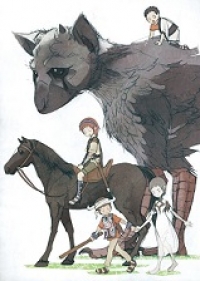
This creature is glorious. Vast and feathery, but with a sad-eyed canine face, it seems to be the culmination of Ueda’s childhood interest in animals. During the demo he explains that Trico is inspired by family pets – dogs, cats, birds – because he wanted players to develop the same sort of affinity for Trico as they would for the creatures they look after in their own homes. Clearly, there is a communication system for giving orders to this giant – the boy can call for him, and enact actions like jumping, to tell Trico what to do.
But Ueda was also keen to give this giant pet its own stubbornness and intelligence. “It is based on pets, and people think of their pets as cute, so Trico is cute,” he explains. “But it is also a wild animal, and sometimes even with household pets, you don’t have total control over them. That’s part of the design.”
We see an element of this in the demo. The boy needs to reach a balcony, high up on the wall in order to escape the chamber. He orders Trico to reach up to the ledge with its front legs; the creature does as he’s told, but as the boy attempts to climb up his “pet” to reach the higher level, Trico gets back down again. He needs to be encouraged, once again, to get up on his hind legs and form the bridge to the platform. “Sometimes when you’ve taught your pet a trick, you invite your friends around to show them, but he won’t do it,” says Ueda. “Trico is like that.”
The scene is important for two reasons. It shows that this is very much the game that Team Ico was making all those years ago. Screenshots released in 2009 seem to show this very sequence. But now, Trico is rendered with much more detail and character. The glossy feathers ripple across his body, catching the light as he moves, and his beautiful, globe-like eyes, his little movements, the way he watches the boy wherever he goes, these are animations filled with life and authenticity. Uedo wants us to think of Trico as our own pet, and when we see its head bob upwards with concern when the boy climbs high or gets close to an edge, it is almost heartbreakingly resonant.
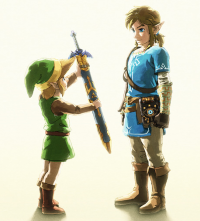
It is beautiful and frightening, the atmosphere accompanied and enhanced by a rush of symphonic music. But Ueda stresses that these aren’t cinematic cut-scenes: this is gameplay. As with his previous titles, Ueda’s desire is to bring the player into the narrative, the moments of drama are emergent and personal; the worlds are vast but quiet and understated. He calls his approach “design through subtraction”, chipping away at superfluous detail until the heart of the thing is clear. His stories are about epic minimalism. The grandeur of even the smallest tokens of love. Two hands joining together. A boy removing an spear.