


DamnTastic on 30 July 2013
The industry is probably gonna crash in the future...
The question is when
















The industry is probably gonna crash in the future...
The question is when



| DamnTastic said: The industry is probably gonna crash in the future... The question is when |
I'm going to perdict mid next year.
“Don’t follow the hype, follow the games”
| — |
Here a little quote I want for those to keep memorize in your head for this coming next gen. By: Suke |





Production values have been going through the roof for some time, and it's only a matter of time before we hit a crash. Square Enix just got bit by this one bad: Tomb Raider was a significant commercial and critical success, and yet they still had to go through a restructuring right after it's launch.


Suke said:
|
I'd put it early 2015. There are enough AAA titles in the pipe and enough cash on hand to push things out the door that these companies will stagger through another Christmas in hopes that it will recoup their losses, and when it doesn't they'' be forced to fold. One or two will need to restructure after New Years, but this will be synchronized with holliday sales.


| Suke said: Because of sequels and lack of new IPs, but that could be my personal opinion. As much I'm excited for the next Zelda, I wish they'll just end the series and move on. :/ |
New IPs from Nintendo since 2011: Xenoblade Chronicles, The Last Story, Pandora's Tower, Sing Party, The Wonderful 101, Steel Diver, Freakyforms, Pushmo, Dillon's Rolling Western, Harmoknight, and The Denpa Men. Also debatably Kid Icarus: Uprising (reimagining), Spirit Camera (spinoff franchise), Lego City (new IP within Lego gaming franchise), X (not confirmed to be part of Xenoblade franchise, yet), and Kiki Trick (Japan only).
And we also know that Miyamoto is working on a new IP.
Note that in most of these cases, the games are NOT made with the aim being to create some annualised series. Compare with most AAA new IPs shown off by other publishers, where they pretty much come right out and say "we're trying to make a new series".
As for wishing they'd end the Zelda series, that's just absurd. They release one console Zelda maybe every 4-5 years (not counting the remake of WW, of course). Mario titles follow a similar pattern of being fairly well-spaced. Galaxy 2 only existed because they had leftover ideas and needed to fill a gap in their lineup. Other than that, we get maybe one 2D mario per console, and one 3D mario per console. We get just one Mario Kart, too. Animal Crossing, also. All of Nintendo's big-hitters tend to be once-per-platform, maybe twice if one is a launch title, in which case the second one is late in the generation.
The funny thing is, most gamers actually complain about Nintendo not making ENOUGH sequels - they complain about the lack of a new Metroid, or Star Fox, or F-Zero, or Wave Race, etc. And then they complain about the lack of any new IP, despite games like the ones at the start of my post. I don't think I've heard anybody complain that Nintendo are releasing too many Zeldas, though.



I read all the time that "Nintendo needs new IPs". It is kind of ridiculous.
1doesnotsimply


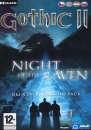
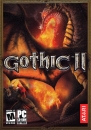


The Witcher says "Hi" three times to Dyack.
Surely, the biggest and least nimble publishers and devs will need more and more to be prudent as dev costs grow, but when marketing costs exceed dev ones, maybe the problem lies there, otherwise smaller, emerging studios could never ever produce excellent games or even masterpieces, while instead it's a thing that happens quite regularly.
And this whining happens each time a new gen begins, and dev tools are sttill immature and devs still need to gather experience in the new environment.
A big videogame industry crash is very unlikely with the current wide diversification of platforms, and the availability of two, big, low dev cost and royalty-free platforms, PC and Android, but surely some big devs and publishers cannot consider themselves by any means safe.
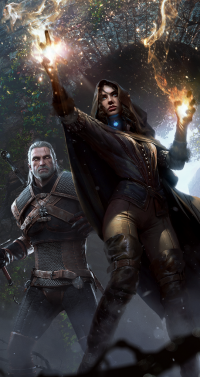


| Alby_da_Wolf said: The Witcher says "Hi" three times to Dyack. Surely, the biggest and least nimble publishers and devs will need more and more to be prudent as dev costs grow, but when marketing costs exceed dev ones, maybe the problem lies there, otherwise smaller, emerging studios could never ever produce excellent games or even masterpieces, while instead it's a thing that happens quite regularly. And this whining happens each time a new gen begins, and dev tools are sttill immature and devs still need to gather experience in the new environment. A big videogame industry crash is very unlikely with the current wide diversification of platforms, and the availability of two, big, low dev cost and royalty-free platforms, PC and Android, but surely some big devs and publishers cannot consider themselves by any means safe. |
The Witcher games arn't AAA tho (well mabe 3 is borderline) they are relatively small budgeted games without huge marketing campaigns. I love them (and I would put up 2 and hopefully 3 above any of the recent AAA games in the genre) but they are not AAA. AAA is stuff like Assassin's Creed and Call of Duty, 20m+ budgets with even bigger marketing spends. AAA games are mostly very sucessful which is why all the publishers are pushing to make all their games AAA even when the IP and gameplay aren't going to sell AAA numbers. But now that the smaller publishers (THQ etc) have killed themselves or refocused on more reasonably budgeted games and the major publishers have mostly focused on a few core franchises AAA flops should be much rarer. Of course this will mean more bitching about AAA games being overly focus tested and designed for the lowest common denominator. But now that digital is finally hitting critical mass and retail shelf space isn't so much of an issue we should see some more B teir games and the constant stream of indie and experemental stuff with tiny budgets bubbling up.
AAA games are the summer blockbusters of the game world they have massive budgets and they are designed to have as wide an appeal as possible. With a heavy reliance on franchises and known quantities. Occasionally you will get an interesting or risky new and different movie/game (Bioshock, The Last of Us, Inception, Pacific Rim etc) but it is not the place to look for innovative and risky ideas and anyone who expects too is silly.
The industry needs to be better at making games that aren't AAA and aren't also tiny downloadable/mobile/indie that is for sure. But the AAA industry is pretty safe (not that it won't change and evolve as it must) people calling dooom and for a AAA crash are just silly. True AAA games like GTA, Assasin's Creed, Battlefeild etc do make money and lots of it. They will always be flops from time to time trends will wane and others will rise but they aren't going to crash and burn any time soon there is far too much money being made.

 @TheVoxelman on twitter
zarx said:
AAA games are the summer blockbusters of the game world they have massive budgets and they are designed to have as wide an appeal as possible. With a heavy reliance on franchises and known quantities. Occasionally you will get an interesting or risky new and different movie/game (Bioshock, The Last of Us, Inception, Pacific Rim etc) but it is not the place to look for innovative and risky ideas and anyone who expects too is silly. The industry needs to be better at making games that aren't AAA and aren't also tiny downloadable/mobile/indie that is for sure. But the AAA industry is pretty safe (not that it won't change and evolve as it must) people calling dooom and for a AAA crash are just silly. True AAA games like GTA, Assasin's Creed, Battlefeild etc do make money and lots of it. They will always be flops from time to time trends will wane and others will rise but they aren't going to crash and burn any time soon there is far too much money being made. |
Well, sometimes budgets that aren't AAA bring results with AAA quality and near-AAA sales numbers (although surely not AAA marketing budget can in many case prevent to reach higher sales), but sometimes AAA budgets, both for development and marketing, may not reach the necessary sales numbers to recoup investments, some other times, AAA budget for marketing, but senseless savings on dev, or bad management of human and other resources in development, despite adequate budget, can bring sub-par quality results and from then on drag a previously successful franchise towards its demise. In these non-ideal cases of AAA budget games, relatively small budget projects that nevertheless deliver top quality and near-AAA sales could have a thing or two to teach to larger publishers and devs.
The problem with AAA games is that they have things like motion capture and other details which we don't appreciate or care about a lot. A game doesn't have to be technically impressive or have real time physics to be great or AAA.

About Us |
Terms of Use |
Privacy Policy |
Advertise |
Staff |
Contact
Display As Desktop
Display As Mobile
© 2006-2026 VGChartz Ltd. All rights reserved.


