By using this site, you agree to our Privacy Policy and our Terms of Use. Close

Forums - General - Barack Obama's radical review on nuclear weapons reverses Bush policies

Rath said:

You're taking the history of the world wars from a very Hollywood point of view where the Americans swept in and saved the incompetent Europeans. In reality America was very late to both world wars and was there for her own interests, in WWI it was merchant shipping and in WWII it was pearl harbour. While America was undoubtably a large player in the war, I don't think Europe owes you a great deal of gratitude for your conduct.

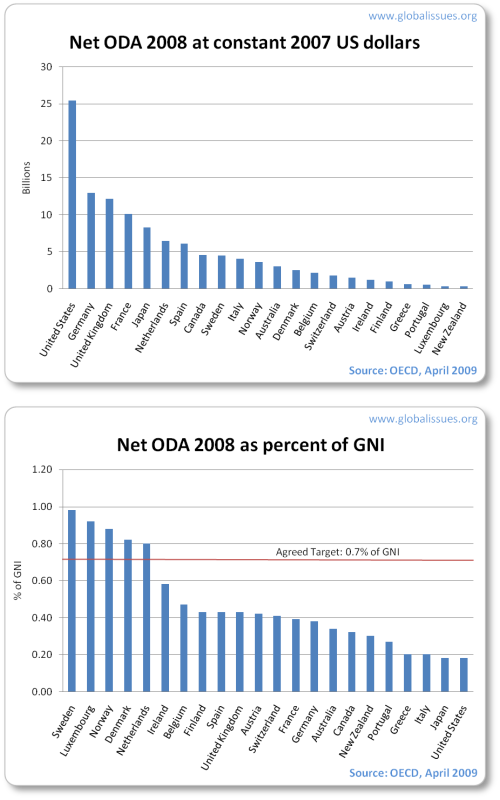
Also your aid to the world isn't fantastic actually, it's big numerically but if you look at percentages...

You're actually last in the OECD.


I can say that most Kiwis (and I think Aussies too actually) look quite fondly upon Britain despite the fact that we are now very thoroughly independent from them. Goodwill does last.


As for the Cold War, the only thing that the nuclear deterrent stopped was nuclear war. The cold war wasn't necessarily going to go to open warfare anyway, both countries had more to lose than to gain. I also disagree that chemical and biological weapons are in the same category as nuclear weapons, for two reasons. One being that none of the danger you are talking about have actually been created and the other being that no country has major stockpiles of them (so there is no mutually assured destruction).

Couldn't disagree more in WW2.

Pearl Harbor only happened because of all the support the US was already giving the allies.  It was considered a foregone conclusion the US was going to enter the war... everywhere but the US amusingly.  FDR was hellbent on getting the US into the war even though he lied about it on the campaign trail.  It's a really interesting story the Churchill/FDR plots... they even had someone falsely imprisoned.

Without US support, that was often given on loans that weren't expected to be paid back...WW2 would of been different even before the US entered the war.



Around the Network
Rath said:

You're taking the history of the world wars from a very Hollywood point of view where the Americans swept in and saved the incompetent Europeans. In reality America was very late to both world wars and was there for her own interests, in WWI it was merchant shipping and in WWII it was pearl harbour. While America was undoubtably a large player in the war, I don't think Europe owes you a great deal of gratitude for your conduct.

Also your aid to the world isn't fantastic actually, it's big numerically but if you look at percentages...

You're actually last in the OECD.


I can say that most Kiwis (and I think Aussies too actually) look quite fondly upon Britain despite the fact that we are now very thoroughly independent from them. Goodwill does last.


As for the Cold War, the only thing that the nuclear deterrent stopped was nuclear war. The cold war wasn't necessarily going to go to open warfare anyway, both countries had more to lose than to gain. I also disagree that chemical and biological weapons are in the same category as nuclear weapons, for two reasons. One being that none of the danger you are talking about have actually been created and the other being that no country has major stockpiles of them (so there is no mutually assured destruction).

Your reply is to make excuses (justified or not) about why good will is not given in the examples I cite.  And this doesn't just confirm what I was saying....how?

On the subject of foriegn aid its not good enough that we give double what anyone else gives? Are we really going to scoff at it because of some statistical comparison to GNI?   By the way, I did love how you found a graph that holds the US's wealth against it.  That's pure irony for the point I'm making, I honestly got a good chuckle at that.

On the subject of WW I and II, I didn't say Europe owes us a debt of gratitude (although some countries certainly do) but you'd think our actions would garner at least some good will no?  And as you say good will goes a "very very long way" so we should still see it right?  But still you try to find a reason that no good will should be given, and yet you don't see how this makes my point for me?

I have to confess a bit, I picked both of these examples because I knew they were typical points of contention for Europeans where the US has done something worthy of good will even if the amount is debateable.  Your reaction on both points makes my point for me about how good will very rarely goes far at all. 

The problem is that good will is by definition a currency held by one person at the whim of another.  Quite literally asking someone to accept good will as payment is telling them you will give them whatever you see fit to give.  That is how incredibly folly this policy truly is, it trades quite literally something of real unquestionable value for something that has value only so long as the people you bargain with allow it to.


To Each Man, Responsibility

No my point is that goodwill has to be earned, then it goes a long way. I don't think in the cases you cited America has earned any. Goodwill only goes far when it exists in the first place.

In other places America has, in certain places in Africa if you are an American people will love you for it.


You made two examples which just didn't make sense. Especially the charity one, USA gives the least of its money for aid out of any OECD country. How on earth is that meant to get you goodwill? And how is turning up for a war late and only when basically forced to meant to get you much goodwill?

I really think I must be completely missing your point.


Rath said:
No my point is that goodwill has to be earned, then it goes a long way. I don't think in the cases you cited America has earned any. Goodwill only goes far when it exists in the first place.

In other places America has, in certain places in Africa if you are an American people will love you for it.


You made two examples which just didn't make sense. Especially the charity one, USA gives the least of its money for aid out of any OECD country. How on earth is that meant to get you goodwill? And how is turning up for a war late and only when basically forced to meant to get you much goodwill?

I really think I must be completely missing your point.

If good will can't be earned by comitting a nations military to fight a war in defense of another continent then I don't see how changing a policy is going to earn it.  Having had some reasons of our own obviously isn't a concern in this instance since your entire point is that it would benefit us to change the policy (ie our interests)...so why is self-interest some huge good will overriding issue for entering the war, but not for the policy change?  Furthermore, we have resisted this kind of policy in the past and are coming very late to the game to these sorts of policies compared to other countries...and yet that lateness isn't a reason we won't get good will, but being late is apparently a good enough reason why we deserve nothing in the way of good will for our war efforts?

As for the aid, you make no attempt to even justify your ridiculous attempt to disregard the work we do.  Your argument with those graph quite literally amounts to "Well the US has done quite well for themselves and because of that wealth we will give them less credit per dollar than we give other nations that haven't done as well for themselves.".    Your own chart shows we give twice as much in aid as any other country and you have the gaul to think we deserve nothing in the way of good will for that...all while trying to convince me this policy change is worthwhile for the good will it will produce for the US.

Contradictions anyone?  Sending hundreds of billions of dollars every year, and far more than any other nation isn't "earning" good will, but signing a paper to change a policy is?  Sending thousands of men to die on foriegn soil in an effort to free other nations from Nazi tyranny doesn't earn good will, but signing a paper to change a policy will? 

I actually find it pretty insulting that you honestly believe the US has earned zero good will from its humanitarian and WW efforts.  But I'd be lying if I said I found it surprising.  But what is truly astonishing to me is that you don't see how much it proves my point about how fickle and worthless good will can be. 


To Each Man, Responsibility

As far as humanitarian efforts go you really have no earned any good will, there are reasons why the targets are set as percentage of GNI rather than as absolute terms. In fact if anything there would be ill-will from other western nations who could rightfully view you as being scrooges on the money. From countries where you have put aid into though there will be good will (and lasting good will at that, see my comment on Africa again).

As for the World War thing, I personally don't have much good will towards your efforts there as it was done (at least in WWII, I'm not that knowledgeable on WWI) clearly and entirely in the interests of your own pride and power. It wasn't a valiant effort to save other countries. But in any case, you should be asking Europeans (especially the French really) whether they feel there was ever any good will earned, not a New Zealander.


I'm done with this, it's just going to end up being circular.


Around the Network
Rath said:
As far as humanitarian efforts go you really have no earned any good will, there are reasons why the targets are set as percentage of GNI rather than as absolute terms. In fact if anything there would be ill-will from other western nations who could rightfully view you as being scrooges on the money. From countries where you have put aid into though there will be good will (and lasting good will at that, see my comment on Africa again).

As for the World War thing, I personally don't have much good will towards your efforts there as it was done (at least in WWII, I'm not that knowledgeable on WWI) clearly and entirely in the interests of your own pride and power. It wasn't a valiant effort to save other countries. But in any case, you should be asking Europeans (especially the French really) whether they feel there was ever any good will earned, not a New Zealander.


I'm done with this, it's just going to end up being circular.

We have no earned good will because nobody gives us the credit we're due.  I honestly think it is incredibly sad that you, among others, cannot see the tremendous good that is done by the immense amount of effort the US puts forth in foriegn aid.  Scoffing and saying "well you're wealthy, you should give more" is a typical liberal/progressive/socialist/and others/etc.. mindset, so I'm not surprised by it.  But to have the gaul to say what we do give is worthy of no good will at all, and it in fact should earn us scorn because we don't give as much as you think we should....well that is downright pathetic.  To look at the people who give the most, and do the most and say "you haven't earned any credit because we still think you should give more!...even though we give less..." would be comical if it weren't so pretentious and sad.

I'm sorry Rath, but I have no respect for that position whatsoever.  I don't feel at all compelled to dull my words in saying that anyone who believes in that kind of ungratefulness should be profoundly ashamed of themselves. 

I'd say I'm sorry if that offends you, but given how much your position offends me I wouldn't mean it.  Hopefully that won't poison future discussions but I won't back down from saying something I believe that strongly when I feel it needs to be said.


As for the larger point, you never made an attempt to explain why the issues you claim mean we should get no credit on aid and WWI/II don't also apply to this new policy even though the exact same factors exist. If you want to say we get no good will for those factors in the examples then you have to explain why those factors suddenly don't apply to this policy. This is why the conversation went circular, we got cought up on a side issue rather than trying to bring it back to the main issue.


Even so, it's clear you don't want to proceed so I'll leave it at that.  I feel I've made a strong argument for my position, and I'll presume you feel the same, if so there isn't much more we can do anyways, is there?

Edit: Also looking at some of your numbers a little closer you're focusing entirely on government aid.  If you look at private philanthropy rankings from the Charitable Aid Foundation (a UK charity itself) the US tops the list, only this time in both raw and % of GDP (ie no excuses not to give credit).  In the countries they looked at on the % of GDP list the US was at 1.67% followed by the UK at 0.73%.  Oh and new zealand was on that list at 0.29%.  And you would argue by the logic presented that personal charity is far more worthy of good will than government charity since with governments there is a larger factor of self-interest than there is in private donations.


To Each Man, Responsibility

just to point this out: the threat of nuclear annihilation has had an incalculable positive impact for the state of the world since 1945. If they did not exist, there would have been at least 4 (Berlin Airlift/Korean War/Cuban Missile crisis/Vietnam War), probably 5 (China-Russia split in the early 60s) and maybe even 6 (US-Russia relations in Reagan's first term : "the Evil Empire) major fullscale conflicts between world power-status nations in the last 65 years but the aura of terror provided by nukes prevented the leaders of the respective countries from acting rashly and made them talk it out long enough to come to a satisfying agreement.

Now I am totally for reducing the number of nukes out there and I also support not developing them anymore, but regardless it cannot be denied they have had a major across the board positive impact on the nature of state-vs-state warfare. and by this I mean they have effectively eliminated it on all levels, conventional or otherwise. This has bought us enough time to develop a truly global economy for further deterrence (for example, if China somehow managed to take out the US without incurring any damage, they would still be taking out 35-40% of their export market in the process), precision weapons that cause few or no collateral casualties, modern communication technology, and a lot more. I'm not saying we wouldn't have done so otherwise, but it is far from a remote possibility that we would have not. For example, imagine if Charles Townes (born in 1915), the guy who invented the laser, had been killed in Operation Coronet or a much larger-scale version of the Korean War...

Again, I fully support Obama's decision here though I don't think it was the best idea to tell everyone about it (though I do understand why he would want to) but anyone who says nukes have done nothing but bad is just plain wrong


Not trying to be a fanboy. Of course, it's hard when you own the best console eve... dang it